CM Fadnavis Calls Maharashtra One of World's Fastest-Growing Sub-National Economies
Synopsis
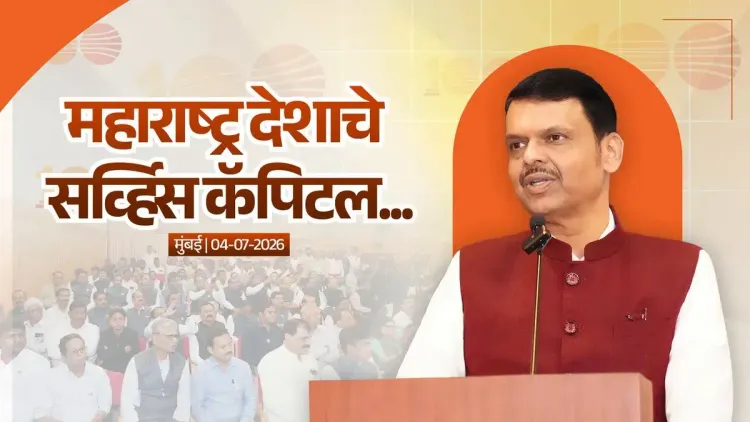
Chief Minister Devendra Fadnavis addressed MACCIA's Executive Board 2026–2028 inaugural meeting in Mumbai on 4 July 2026, positioning Maharashtra as one of the world's fastest-growing sub-national economies and signalling continued focus on investment attraction and industrial competitiveness.
Key Takeaways
CM Devendra Fadnavis declared Maharashtra one of the world's fastest-growing sub-national economies at a Mumbai event on 4 July 2026 .
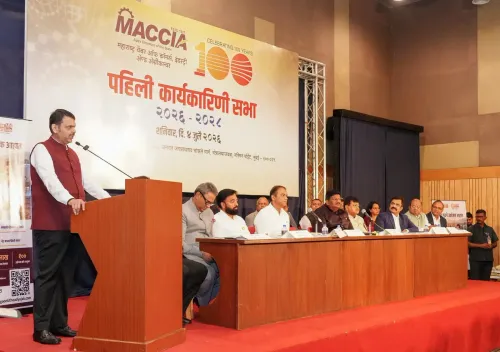
The remarks were made at the first meeting of MACCIA's Executive Board 2026–2028 , an apex body representing trade, industry, and agriculture in the state.
Maharashtra is India's most industrialised state and the largest contributor to national GDP, with Mumbai as its financial capital.
The state has previously hosted the 'Magnetic Maharashtra' investor summit ( 2018 ) and operates under an Industrial Policy framework dating to 2013 .
The Chief Minister's framing sets the agenda for MACCIA's two-year term and signals continued government focus on investor confidence and economic competitiveness.
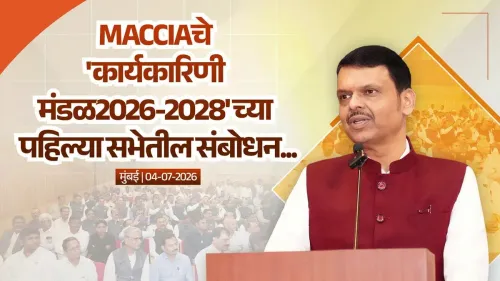
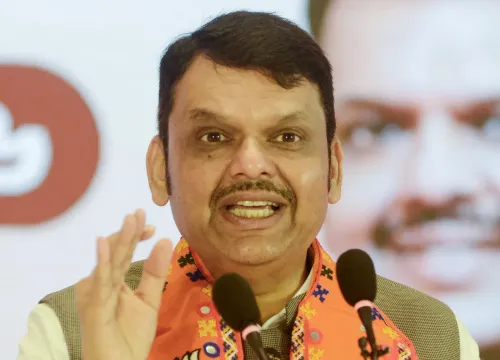
Maharashtra Chief Minister Devendra Fadnavis on Saturday, 4 July 2026, declared that Maharashtra ranks among the fastest-growing sub-national economies in the world, making the assertion at the inaugural meeting of the Maharashtra Chamber of Commerce, Industry and Agriculture (MACCIA) Executive Board 2026–2028 in Mumbai.
Context
Addressing the first sitting of MACCIA's newly constituted executive board, CM Fadnavis stated — in both Marathi and Hindi — that Maharashtra's economy is 'जगातील सब-नॅशनल इकोनॉमीमध्ये सर्वाधिक वेगाने विकसित होणाऱ्या अर्थव्यवस्थांपैकी एक' ('one of the fastest-growing sub-national economies in the world'). The remarks were directed at a gathering of senior trade and industry representatives who will steer MACCIA's agenda through 2028. The Chief Minister's choice to anchor his address in economic competitiveness signals an intent to sustain investor confidence at the state level.
Policy Backdrop
Maharashtra is India's most industrialised state and its largest contributor to national GDP, with Mumbai functioning as the country's financial capital. The state has pursued an aggressive investment-attraction strategy over the years, including the landmark 'Magnetic Maharashtra' investor summit of 2018 and an Industrial Policy framework introduced in 2013. These efforts have been part of a broader federal competition among leading states — including Gujarat, Tamil Nadu, and Karnataka — to attract domestic and foreign capital by benchmarking industrial output and services growth.
The concept of sub-national economic performance has gained prominence in Indian policy circles as states increasingly position themselves as distinct investment destinations within the country's federal structure. Highlighting a state's rank among global sub-national economies is a messaging tool aimed at both international investors and domestic business chambers.
Stakeholders and Impact
MACCIA — the Maharashtra Chamber of Commerce, Industry and Agriculture — is one of the state's most prominent apex business bodies, representing trade, industry, and agriculture interests. Its executive board shapes advocacy priorities, engagement with government, and the business climate narrative for the state. The board's 2026–2028 term begins at a moment when the state government is actively projecting economic momentum.
For MSMEs, investors, and business chambers operating in Maharashtra, the Chief Minister's framing carries practical weight: it sets the tone for policy asks, ease-of-doing-business reforms, and potential investment facilitation measures that MACCIA may pursue with the government over the next two years. Broader stakeholders include infrastructure developers, logistics firms, and foreign companies evaluating Maharashtra as an entry point into the Indian market.
What's Next
Attention will now turn to whether the state government follows the Chief Minister's remarks with quantified targets — such as GDP growth projections or investment pipeline figures — in the forthcoming state economic survey or at subsequent MACCIA or government-convened investment events. The MACCIA Executive Board 2026–2028 is expected to set its advocacy agenda in the coming weeks, which could include formal representations to the state on infrastructure, taxation, and regulatory ease. How the government translates this positioning into measurable policy commitments will be closely watched by the business community and competing states alike.
Point of View
A messaging shift that targets foreign investors as much as local business. This fits a broader pattern of Indian states competing fiercely on investment attraction within the federal structure, where the Chief Minister's public statements at industry forums often serve as soft signals ahead of formal policy announcements. Whether the rhetoric translates into specific growth targets or ease-of-doing-business measures will determine its lasting impact.
NationPress
4 Jul 2026
Frequently Asked Questions
What did CM Devendra Fadnavis say about Maharashtra's economy at MACCIA?
CM Fadnavis stated that Maharashtra is one of the fastest-growing sub-national economies in the world, making the remark at the inaugural meeting of MACCIA's Executive Board 2026–2028 in Mumbai on 4 July 2026.
What is MACCIA and why is its executive board meeting significant?
MACCIA stands for the Maharashtra Chamber of Commerce, Industry and Agriculture, one of the state's most prominent apex business bodies. The Executive Board 2026–2028 sets the chamber's advocacy priorities for the next two years, making its inaugural meeting an important signal of the business-government relationship ahead.
Is Maharashtra really one of the fastest-growing sub-national economies in the world?
CM Fadnavis made this claim at the MACCIA event; Maharashtra is India's most industrialised state and its largest GDP contributor, and Indian states routinely benchmark sub-national economic performance to attract investment, though specific rankings depend on the methodology used.
What is a sub-national economy?
A sub-national economy refers to the economic output and activity of a state, province, or region within a country, as distinct from the national economy. In India's federal structure, states like Maharashtra are often compared globally on this basis to attract foreign and domestic investment.
What has Maharashtra done previously to attract investment?
Maharashtra launched the 'Magnetic Maharashtra' investor summit in 2018 and has operated under an Industrial Policy framework since 2013, positioning itself as a preferred destination for domestic and foreign capital alongside competing states such as Gujarat, Tamil Nadu, and Karnataka.