CM Fadnavis Distributes ₹2 Cr to 1,000 Girls in Mumbai
Synopsis
Maharashtra CM Devendra Fadnavis distributed a ₹2 crore cheque at a Mumbai event, enrolling 1,000 girls under Sukanya Samriddhi Yojana and NPS Vatsalya with a ₹20,000 annual contribution per girl for 10 years under the SPRJ Kanyashala Trust's 'Empowering Her Future' initiative.
Key Takeaways
₹2 crore distributed as the first-year contribution for 1,000 girls at a Mumbai event on July 31, 2026 .
Each girl receives ₹20,000 annually for 10 years — a per-girl commitment of ₹2 lakh — under Sukanya Samriddhi Yojana and NPS Vatsalya .
The initiative is led by SPRJ Kanyashala Trust , with political participation from MLC Prasad Lad and MLA Ram Kadam .
Private-sector CEO Gaurav Bhandari of Monarch Networth Capital Ltd. was among the dignitaries present.
CM Fadnavis linked the drive explicitly to PM Narendra Modi 's Beti Bachao, Beti Padhao programme, launched in 2015 .
Both central schemes — Sukanya Samriddhi Yojana and NPS Vatsalya — were launched to build long-term financial security for girl children.
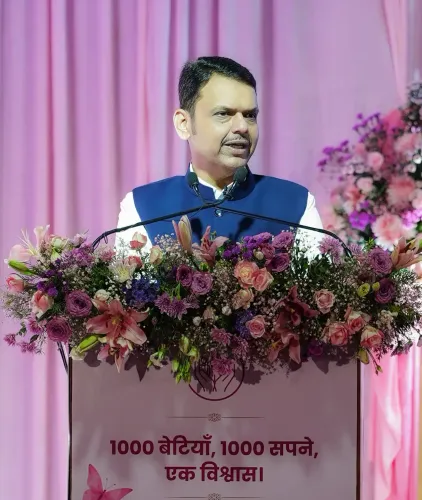
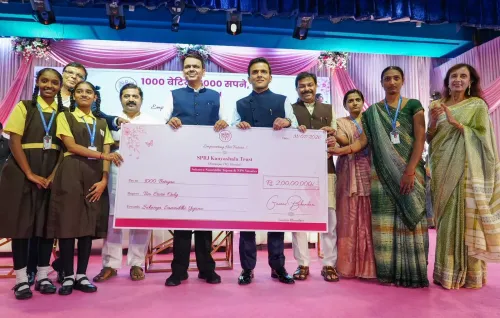
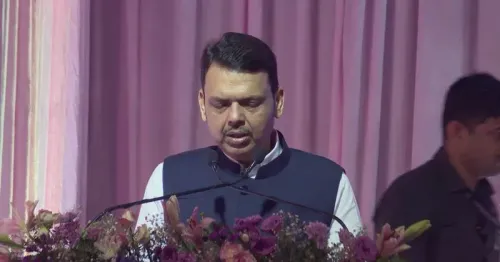
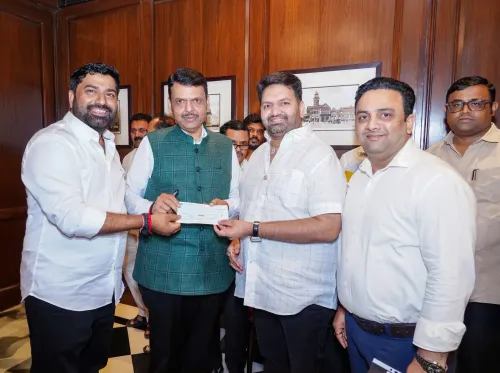
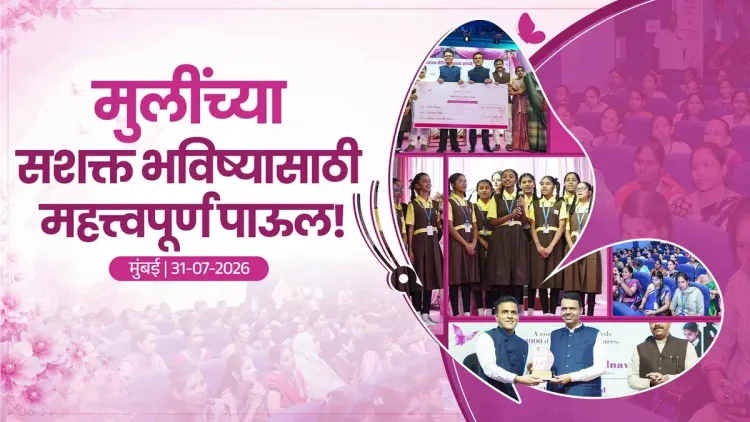
A cheque worth ₹2 crore — and the promise of ten more years of contributions — landed in the hands of 1,000 girls in Mumbai on Friday, July 31, as Maharashtra Chief Minister Devendra Fadnavis joined the SPRJ Kanyashala Trust for the 'Empowering Her Future' initiative, enrolling every beneficiary under two central government schemes designed to secure their financial futures.
What ₹20,000 a Year Means for 1,000 Families
Each of the 1,000 eligible girls received an initial contribution of ₹20,000 — split across accounts under the Sukanya Samriddhi Yojana and the NPS Vatsalya scheme — with the same amount committed annually for the next 10 years. That is a ₹2 lakh per-girl commitment over the decade, building a corpus earmarked for education and long-term financial independence. The aggregate cheque of ₹2 crore distributed at the event represents only the first instalment of what the trust has pledged.
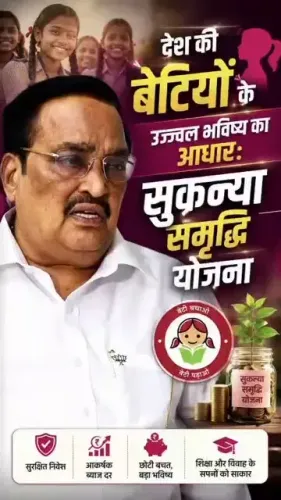
The Sukanya Samriddhi Yojana, launched in 2015 under the Beti Bachao, Beti Padhao national programme, is a high-interest government savings instrument specifically for the girl child, aimed at covering education and marriage expenses. NPS Vatsalya, a newer variant of the National Pension System, allows parents to open pension accounts in a minor's name — an unusual but forward-looking tool that begins building retirement security from childhood.
Trust, Politicians, and a Private-Sector CEO at the Table
The event brought together a cross-section of Maharashtra's political and corporate establishment. MLC Prasad Lad and MLA Ram Kadam represented the political wing, while Gaurav Bhandari, CEO of Monarch Networth Capital Ltd., signalled private-sector participation. SPRJ Kanyashala Trust trustees Meenatai Khetani and Piyush Avlani anchored the philanthropic side of the effort.
Fadnavis framed the initiative explicitly within Prime Minister Narendra Modi's Beti Bachao, Beti Padhao agenda, stating that 'a nation can truly progress only when its daughters are educated, empowered and given equal opportunities.' The 'Empowering Her Future' initiative positions itself as a local amplifier of that national commitment — a trust-led enrolment drive doing the last-mile work that government schemes alone often cannot.
Maharashtra's Role in the Broader Girl-Child Finance Push
The pattern here is deliberate and replicable. Since 2015, central schemes have provided the architecture — guaranteed returns, tax benefits, long lock-in periods — while state leaders and private trusts have mobilised beneficiaries and contributed seed capital. Friday's event in Mumbai is a textbook example of that layered model at work. The trust's ten-year contribution pledge is the differentiator: it converts a one-time enrolment into a sustained financial relationship with each girl's future.
Whether similar drives expand to other districts of Maharashtra — or inspire parallel efforts from other trusts — will determine how far this model travels beyond a single Mumbai event.
Point of View
While state politicians and private trusts supply the mobilisation muscle and seed capital that schemes alone rarely generate. For CM Fadnavis, the optics are doubly useful — he reinforces alignment with PM Modi's signature girl-child agenda while showcasing Maharashtra's philanthropic-corporate ecosystem as a force multiplier. The ten-year contribution pledge is the structural detail that separates this from a one-off cheque distribution; if sustained, it converts symbolic politics into measurable financial outcomes for a thousand families. The inclusion of a capital-markets CEO alongside elected officials also signals an emerging template where private wealth is drawn into welfare delivery under political stewardship.
NationPress
1 Aug 2026
Frequently Asked Questions
What is the 'Empowering Her Future' initiative by SPRJ Kanyashala Trust?
It is a Mumbai-based trust initiative that enrolled 1,000 eligible girls under the Sukanya Samriddhi Yojana and NPS Vatsalya scheme, contributing ₹20,000 to each girl's account annually for 10 years, with a total first-year outlay of ₹2 crore.
What is the Sukanya Samriddhi Yojana?
Sukanya Samriddhi Yojana is a central government savings scheme launched in 2015 for the girl child, offering high interest rates and tax benefits to build a corpus for education and marriage expenses.
What is NPS Vatsalya?
NPS Vatsalya is a variant of the National Pension System that allows parents or guardians to open a pension account in a minor's name, building long-term retirement savings from childhood.
What did CM Devendra Fadnavis do at the Mumbai event on July 31?
CM Fadnavis distributed a cheque worth ₹2 crore representing the first-year contribution for 1,000 girls enrolled under Sukanya Samriddhi Yojana and NPS Vatsalya as part of the SPRJ Kanyashala Trust's 'Empowering Her Future' initiative.
What is Beti Bachao Beti Padhao and how does this initiative relate to it?
Beti Bachao Beti Padhao is a national programme launched in 2015 by PM Narendra Modi to improve child sex ratio and promote girls' education and protection. The 'Empowering Her Future' initiative builds on this framework by using its associated schemes to financially empower girl children in Maharashtra.