CM Fadnavis Flags Maharashtra's 444 Tigers at Nagpur Event
Synopsis
At International Tiger Day 2026 in Nagpur, CM Devendra Fadnavis declared Maharashtra home to 444 tigers across six reserves and announced AI-based monitoring to curb human-wildlife conflict, pledging the state will become India's leading tiger-conservation hub.
Key Takeaways
Maharashtra now hosts 444 tigers across six tiger reserves , according to CM Devendra Fadnavis at the International Tiger Day 2026 event in Nagpur .
India holds approximately 75 percent of the global tiger population; tigers survive in only 13 countries worldwide.
The state is deploying AI-based early warning systems and camera monitoring to reduce human-wildlife conflict, particularly in Nagpur district.
A five-point conservation strategy has been outlined with the goal of making Maharashtra the leading tiger-conservation state in India.
Representatives from Bhutan , Cambodia , and Bangladesh attended the Nagpur event, reflecting regional cooperation on transboundary tiger corridors.
Project Tiger , India's national in-situ conservation programme, has been running since 1973 and underpins the recovery that Maharashtra's numbers reflect.
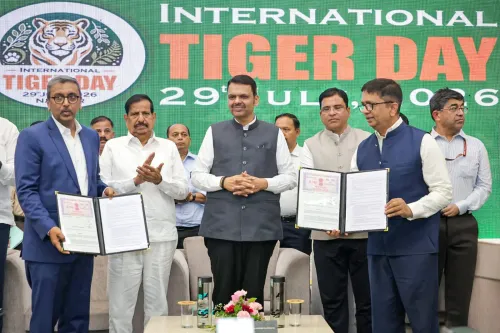
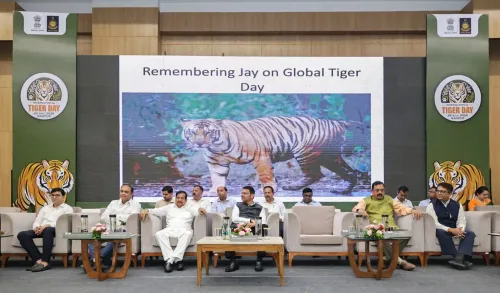
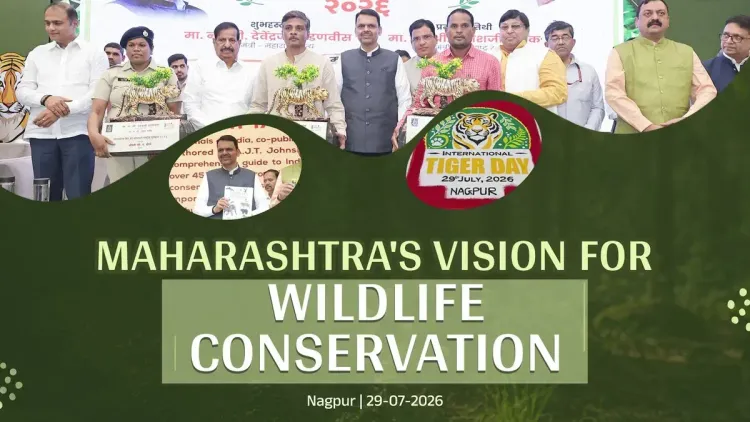
On International Tiger Day, 29 July 2026, Maharashtra Chief Minister Devendra Fadnavis stood in Nagpur — the city that sits at the heart of India's tiger country — and made a declaration: Maharashtra is coming for the top spot in national tiger conservation, and the numbers are already making the case. The state now shelters 444 tigers across six tiger reserves, a figure Fadnavis called the result of three decades of unbroken governmental will.
444 Tigers, Six Reserves, One Ambition
India holds roughly 75 percent of the world's tiger population — an extraordinary concentration given that tigers now survive in only 13 countries. Maharashtra's slice of that inheritance spans reserves including Tadoba-Andhari, long regarded as one of the country's most productive tiger habitats. Fadnavis credited the tally to 'protecting natural habitats, adopting scientific conservation practices and working closely with local communities' — the three pillars that have driven India's recovery story since Project Tiger was launched nationally in 1973.
The Chief Minister outlined a five-point conservation strategy without detailing each plank publicly, but the direction is clear: Maharashtra intends to surpass states like Madhya Pradesh and Karnataka that have historically led All-India tiger counts. That is an audacious target, and the state is leaning on technology to close the gap.
AI on the Forest Edge
Fadnavis highlighted the deployment of AI-based early warning systems and camera monitoring networks — tools now reducing human-wildlife conflict in districts such as Nagpur, where the urban-forest boundary is a daily negotiation between people and big cats. This is not ceremonial tech-talk. Human-wildlife conflict has historically been the single largest drag on community support for conservation; cutting it with predictive AI changes the political economy of the forest.
The Forest Department received direct congratulations from the Chief Minister for its 'dedicated efforts' — a public acknowledgement that matters when frontline rangers work in conditions that rarely attract headlines.
Bhutan, Cambodia, Bangladesh at the Table
The Nagpur event carried an explicitly international dimension. Representatives from Bhutan, Cambodia, and Bangladesh were present alongside state ministers — Ganesh Naik, MoS Dr. Pankaj Bhoyar, and MoS Adv. Ashish Jaiswal — and MLA Sumit Wankhede. Their presence reflects the growing urgency of transboundary tiger corridor diplomacy: tigers do not recognise borders, and climate change is compressing the habitat on every side. South and Southeast Asian nations are increasingly coordinating on corridor protection, and Maharashtra's event becoming a regional platform signals that India's states are stepping into that conversation.
'By protecting the tiger, we are preserving biodiversity and securing a healthier future for generations to come,' Fadnavis said — framing conservation not as an ecological niche but as a civilisational wager on the future. With climate pressures accelerating and forest cover under stress across the subcontinent, the bet has never carried higher stakes.
Point of View
Lending technocratic credibility to what is fundamentally a political commitment. The presence of Bhutan, Cambodia, and Bangladesh delegates elevates Maharashtra's profile in South Asian environmental diplomacy, a space traditionally monopolised by the central government. Upcoming All-India Tiger Estimation results will be the hard test of whether the 444 figure holds and whether the five-point strategy delivers measurable gains.
NationPress
29 Jul 2026
Frequently Asked Questions
How many tigers does Maharashtra have in 2026?
Maharashtra Chief Minister Devendra Fadnavis stated on 29 July 2026 that the state is home to 444 tigers across its six tiger reserves .
Which are the tiger reserves in Maharashtra?
Maharashtra has six tiger reserves . Tadoba-Andhari is the most prominent and among the most productive in India; the others include Melghat, Pench, Sahyadri, Navegaon-Nagzira, and Bor.
What is India's share of the world's tiger population?
India is home to approximately 75 percent of the world's tiger population. Tigers are found in only 13 countries globally.
What is Project Tiger and when was it launched?
Project Tiger is India's national in-situ tiger conservation programme, launched in 1973 . It focuses on protecting tiger habitats through designated reserves and scientific management.
How is Maharashtra using AI for tiger conservation?
Maharashtra has deployed AI-based early warning systems and camera monitoring networks in forest-edge districts such as Nagpur to predict and reduce human-wildlife conflict, protecting both communities and tigers.