CM Fadnavis Launches MMRDA Projects, Cuts Mumbai Travel Times
Synopsis
Maharashtra CM Devendra Fadnavis inaugurated SCLR Phase 2, opened Chembur Metro station on Line 2B, launched TBM Arjuna for the Thane-Borivali Twin Tunnel, and named the BKC connector flyover after former CM Barrister Babasaheb Bhosale at a major MMRDA event in Mumbai on 13 August 2026.
Key Takeaways
Phase 2 of the Santacruz-Chembur Link Road (SCLR) was inaugurated, completing an east-west arterial corridor whose first phase opened in 2014.
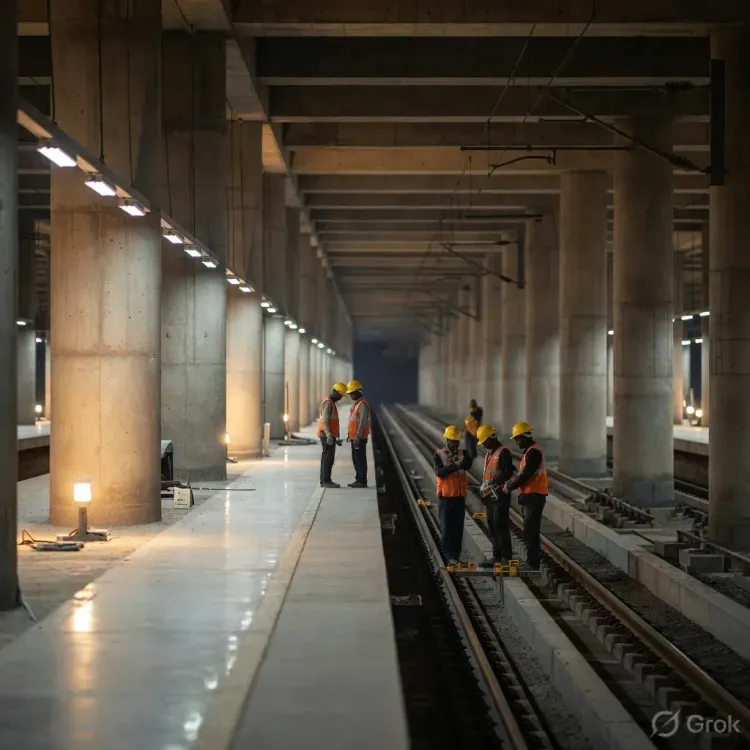
The Chembur Metro station under Metro Line 2B, Phase 1A was formally opened, expanding Mumbai's metro grid.
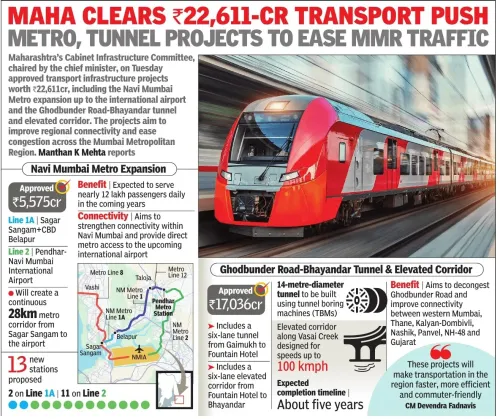
TBM 'Arjuna' was launched for the Thane-Borivali Twin Tunnel , which aims to cut travel time from ~90 minutes to just 12–15 minutes.
The BKC–Eastern Express Highway connector flyover was named after former Maharashtra CM Barrister Babasaheb Anantrao Bhosale , credited with establishing the Chhatrapati Sambhajinagar High Court bench and creating Gadchiroli district.
60–70 km of new metro network is expected to become operational in 2026, potentially serving an additional 70 lakh passengers .
New-generation AC local trains are slated to arrive from 2027 , with full fleet replacement targeted by 2030 .
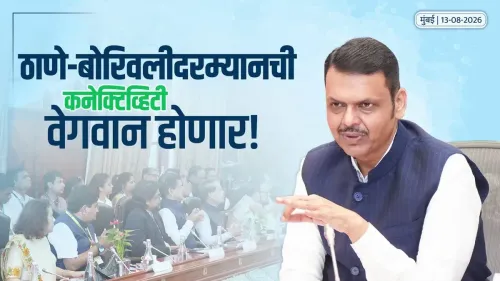
A tunnel boring machine named Arjuna broke ground on Thursday, 13 August 2026, as Maharashtra Chief Minister Devendra Fadnavis inaugurated a sweeping slate of infrastructure projects that promise to rewire how millions of Mumbaikars move through their city every day. From a new metro station in Chembur to a flyover renamed in honour of a forgotten former chief minister, the event staged by the Mumbai Metropolitan Region Development Authority (MMRDA) was among the most consequential single-day infrastructure rollouts the region has seen in years.
What opened, launched, and was named on August 13
The ceremony, held in Mumbai alongside Deputy Chief Minister Sunetra Pawar, covered four distinct milestones. Phase 2 of the Santacruz-Chembur Link Road (SCLR) — an east-west arterial corridor whose Phase 1 opened back in 2014 — was formally inaugurated, completing a connectivity spine designed to drain traffic from clogged central corridors. The Chembur Metro station, part of Metro Line 2B, Phase 1A, was also opened, adding another node to Mumbai's fast-expanding underground grid. The TBM 'Arjuna' was launched to begin boring the Thane-Borivali Twin Tunnel. And the BKC–Eastern Express Highway connector flyover was named after former Maharashtra Chief Minister Barrister Babasaheb Anantrao Bhosale.
The Thane-Borivali tunnel: 90 minutes to 12
The headline number from the day is stark: the Thane-Borivali Twin Tunnel, once complete, is projected to slash travel time between the two nodes from nearly 90 minutes to just 12–15 minutes. That is not a marginal improvement — it is a structural rerouting of daily life for hundreds of thousands of commuters who currently crawl through surface roads linking Mumbai's eastern and western suburbs. The TBM 'Arjuna' — named with a pointed nod to the Mahabharata's archer — is now the instrument of that promise.
Metro's expanding footprint and the 2027 train overhaul
Fadnavis stated that 60–70 km of metro network is expected to become operational this year, with the expanded grid projected to serve an additional 70 lakh passengers — figures that, if achieved, would materially ease pressure on Mumbai's legendary but strained suburban railway. The suburban rail story has its own timeline: new-generation automatic, air-conditioned trains are slated to begin arriving from 2027, with a full fleet replacement targeted by 2030. These are forward-looking commitments, and their realisation will depend on procurement and rollout progress.
Naming the flyover: Bhosale's legacy recalled
The renaming of the BKC connector flyover after Barrister Babasaheb Anantrao Bhosale gave the infrastructure event a historical dimension. Bhosale, a former Chief Minister of Maharashtra, is credited with championing girls' education, establishing the Chhatrapati Sambhajinagar Bench of the Bombay High Court, and carving out Gadchiroli as a separate district. Attaching his name to a flyover at one of Mumbai's most commercially dense intersections is a deliberate act of institutional memory — and a recurring feature of state infrastructure politics.
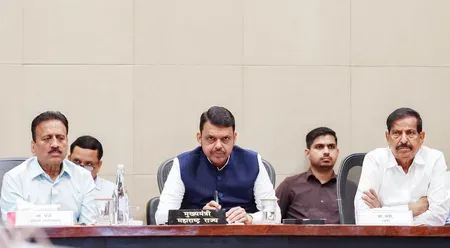
Ministers Mangal Prabhat Lodha, Girish Mahajan, Ashish Shelar, Minister of State Madhuri Misal, and members of the state legislature were present at the event.
Mumbai has waited decades for its infrastructure to catch up with its ambitions. With tunnels boring, metro lines multiplying, and new trains on order, the gap is finally, visibly, closing.
Point of View
If delivered on schedule, would produce one of the most dramatic commute-time reductions in Indian urban history and hand the Fadnavis administration a legacy infrastructure win. The metro expansion and 2027 train order, meanwhile, signal an attempt to finally integrate Mumbai's fragmented transport layers — road, metro, suburban rail — into a coherent network rather than competing silos. Naming the BKC flyover after Barrister Bhosale is consistent with a broader Maharashtra tradition of using infrastructure assets to settle political debts to historical figures, particularly from the Maratha political tradition.
NationPress
13 Aug 2026
Frequently Asked Questions
What is the Thane-Borivali Twin Tunnel project?
The Thane-Borivali Twin Tunnel is a major road infrastructure project under MMRDA that will create a direct underground link between Thane and Borivali, cutting travel time from nearly 90 minutes to just 12–15 minutes. TBM 'Arjuna' was launched to begin boring on 13 August 2026.
What is Metro Line 2B and where is the Chembur station?
Metro Line 2B is part of Mumbai's expanding metro network being executed by MMRDA. The Chembur station, inaugurated on 13 August 2026 as part of Phase 1A, is a key node on this line aimed at improving east-west connectivity in Mumbai.
Who was Barrister Babasaheb Anantrao Bhosale?
Barrister Babasaheb Anantrao Bhosale was a former Chief Minister of Maharashtra known for promoting girls' education, establishing the Chhatrapati Sambhajinagar Bench of the Bombay High Court, and creating Gadchiroli as a separate district. The BKC–Eastern Express Highway connector flyover was named after him on 13 August 2026.
When will new AC local trains arrive in Mumbai?
According to CM Fadnavis, new-generation automatic and air-conditioned local trains are expected to begin arriving from 2027, with the entire fleet targeted for replacement by 2030.
What is the Santacruz-Chembur Link Road Phase 2?
The Santacruz-Chembur Link Road is an east-west arterial road in Mumbai designed to reduce travel time and ease congestion. Phase 1 opened in 2014; Phase 2 was inaugurated by CM Fadnavis on 13 August 2026, completing the corridor.