CM Fadnavis, Maharashtra Mark GST Day 2026
Synopsis
The Chief Minister's Office of Maharashtra marked GST Day on 1 July 2026, the ninth anniversary of India's unified indirect tax regime, with a post tagging CM Devendra Fadnavis. Maharashtra is one of India's top GST-collecting states, making the occasion significant for fiscal and policy observers.
Key Takeaways
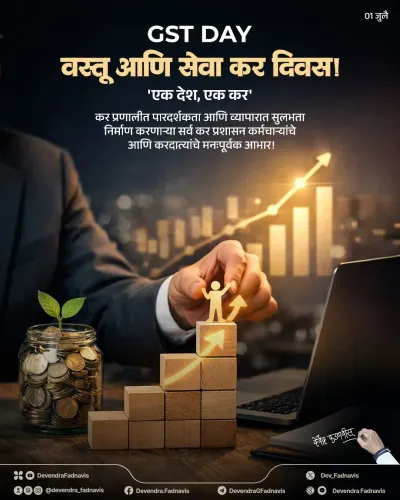
The Chief Minister's Office of Maharashtra posted on X to mark GST Day, 1 July 2026 , the ninth anniversary of the GST rollout.
Chief Minister Devendra Fadnavis was tagged in the post, signalling the state government's recognition of the occasion.
GST was introduced on 1 July 2017 , subsuming central excise duty, service tax, and state VAT into a single indirect tax framework.
Maharashtra consistently ranks among India's top GST-collecting states due to its manufacturing and services economy.
Annual GST Day observances highlight compliance achievements, revenue performance, and coordination between the Centre and state governments.
Attention will now turn to state GST revenue figures and potential GST amendments in the upcoming monsoon session of Parliament.
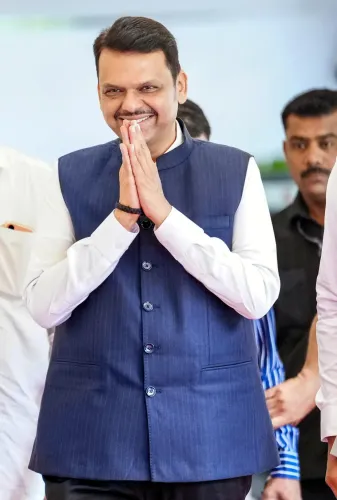
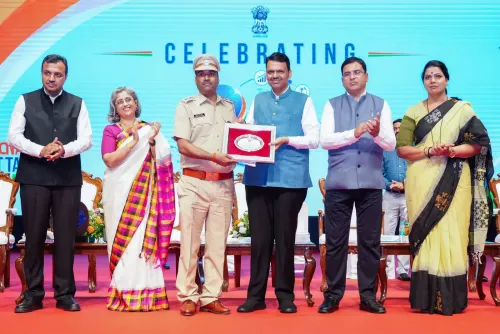
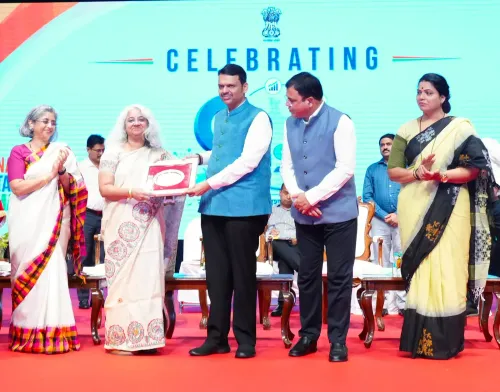
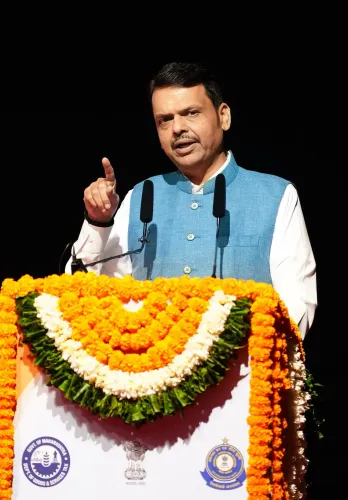
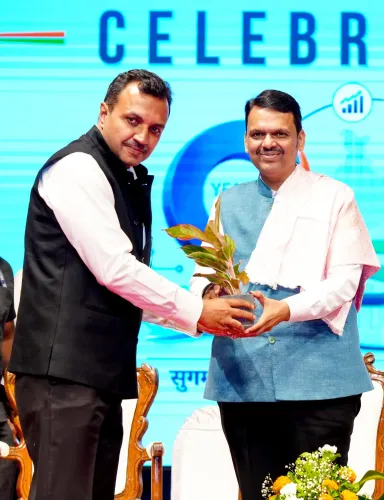
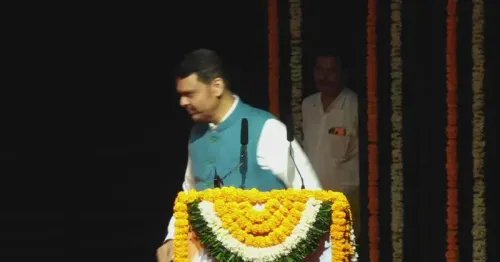
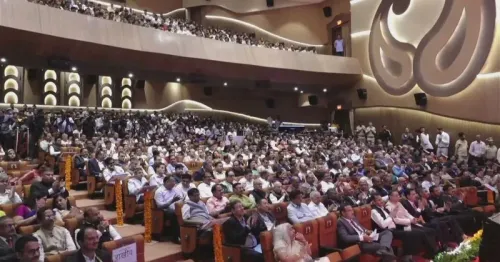
The Chief Minister's Office of Maharashtra acknowledged GST Day on Wednesday, 1 July 2026, marking the ninth anniversary of the Goods and Services Tax regime with a post on X that tagged Chief Minister Devendra Fadnavis and highlighted the occasion under the hashtags #Maharashtra, #DevendraFadnavis, and #GSTDay.
Context
GST Day is observed every year on 1 July to commemorate the rollout of the unified indirect tax regime, which came into effect on 1 July 2017. The tax subsumed a web of earlier levies — including central excise duty, service tax, and state value-added tax — into a single, destination-based framework administered jointly by the Centre and the states. This year's observance marks nine years of the GST system.
Maharashtra, India's most industrialised state, has consistently ranked among the top contributors to national GST collections owing to its large manufacturing base and dominant services sector. Annual GST Day observances by state governments serve as an occasion to highlight compliance achievements and revenue performance under the unified system.
Policy Backdrop
The GST Council, a constitutional body comprising the Union Finance Minister and state finance ministers, governs rate revisions and administrative reforms to the tax. Maharashtra's state revenue department works in coordination with the Central Board of Indirect Taxes and Customs to implement Council decisions at the ground level.
State-level events on GST Day often underscore the role of local administrative machinery in driving taxpayer registration, return filing, and anti-evasion measures. Chief Minister Devendra Fadnavis has been associated with state-level implementation of central economic reforms, and the CMO's acknowledgement of the occasion signals the government's emphasis on fiscal compliance and revenue mobilisation.
Stakeholders and Impact
The GST framework directly affects traders, businesses, manufacturers, and service providers across Maharashtra and the rest of India. For the state government, robust GST revenue is central to funding infrastructure, social welfare, and capital expenditure programmes.
Maharashtra's position as a leading GST-collecting state means that policy shifts — whether rate rationalisation or changes in input tax credit rules — have an outsized impact on its revenue arithmetic. Businesses in the state, from large conglomerates in Mumbai to small and medium enterprises in Pune, Nashik, and Aurangabad, are direct stakeholders in how the GST framework evolves.
What's Next
Observers will watch for the release of state GST revenue figures for the preceding financial year, which are typically highlighted around GST Day as a performance benchmark. Any proposed amendments to the GST law tabled in the upcoming monsoon session of Parliament will also be closely tracked by Maharashtra's trade and industry bodies.
As the GST system enters its tenth year, pressure is likely to grow for further rate rationalisation and simplification of compliance procedures — areas where Maharashtra's feedback to the GST Council carries significant weight given the state's economic size and taxpayer base.
Point of View
The ruling dispensation reinforces its economic governance credentials ahead of potential fiscal announcements. As the GST system enters its tenth year, state governments that have performed well under the regime — Maharashtra foremost among them — have a stronger hand in GST Council deliberations on rate rationalisation and revenue-sharing with states.
NationPress
1 Jul 2026
Frequently Asked Questions
What is GST Day and why is it celebrated on 1 July?
GST Day is observed every year on 1 July to mark the anniversary of the Goods and Services Tax coming into effect on 1 July 2017. It replaced a complex web of central and state taxes with a single unified indirect tax framework across India.
How much GST does Maharashtra collect compared to other states?
Maharashtra is consistently one of the top GST-collecting states in India, driven by its large manufacturing sector and dominant services economy. Exact figures for the most recent financial year are expected to be released around GST Day.
Who is Devendra Fadnavis and what is his role in GST implementation?
Devendra Fadnavis is the Chief Minister of Maharashtra and heads the state government responsible for implementing GST at the state level, coordinating with the Central Board of Indirect Taxes and Customs and the GST Council.
What taxes did GST replace in India?
GST subsumed multiple levies including central excise duty, service tax, and state value-added tax (VAT), along with several other cesses and surcharges, into a single destination-based tax.
What changes to GST can be expected in 2026?
Observers are watching for proposed amendments to GST law that may be tabled in the monsoon session of Parliament, as well as the release of state-wise GST revenue figures for the preceding financial year.