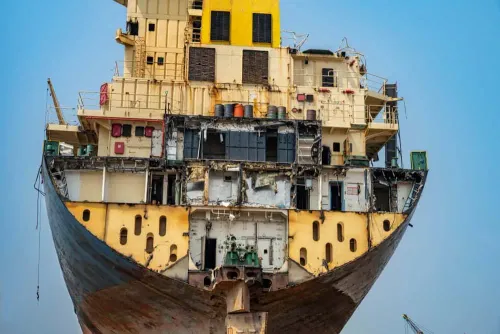
India to recycle 16,000 ships in a decade with $8 bn investment: Sonowal

Synopsis
India is not just leading global ship recycling by volume — it is now gunning for regulatory legitimacy. With a $8 billion investment pledge, a 60 per cent jump in recycled tonnage in a single year, and three yards already eligible for EU certification, India's ship recycling ambition has moved well beyond Alang's beaches into the realm of international standards diplomacy.
Key Takeaways
Sarbananda Sonowal announced India's target to recycle nearly 16,000 ships over the next decade on 1 July .
India has committed $8 billion in investment across shipbuilding and ship recycling sectors.
India's global ship recycling share rose from 30.1% in 2024 to 35.4% in 2025 , per UNCTAD estimates.
Ship recycling volume grew nearly 60% year-on-year, from 1.86 million GT in 2024 to 2.99 million GT in 2025.
More than 30 Indian yards have applied for EU Ship Recycling Regulation (EUSRR) recognition; 3 yards have completed compliance.
The EU proposed a Joint Working Group for closer India-EU regulatory cooperation in sustainable ship recycling.
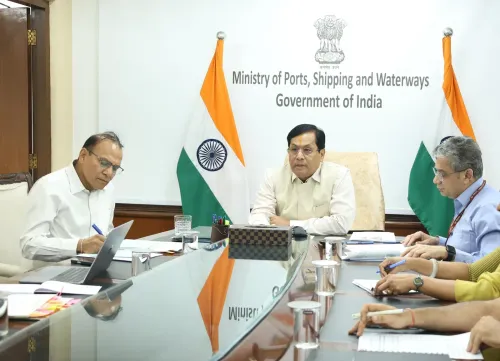
Union Minister for Ports, Shipping and Waterways Sarbananda Sonowal on Wednesday, 1 July announced that India targets recycling nearly 16,000 ships over the next decade, backed by an investment commitment of $8 billion across the shipbuilding and ship recycling sectors. The announcement came after high-level talks with European Commissioner for Environment, Water Resilience and a Competitive Circular Economy Jessika Roswall in New Delhi, underscoring India's ambition to consolidate its position as the world's foremost hub for sustainable ship recycling.
India's Rising Share in Global Ship Recycling
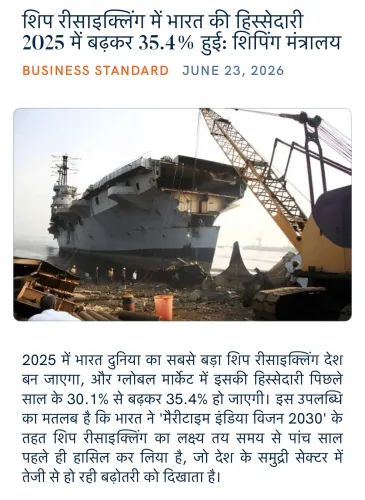
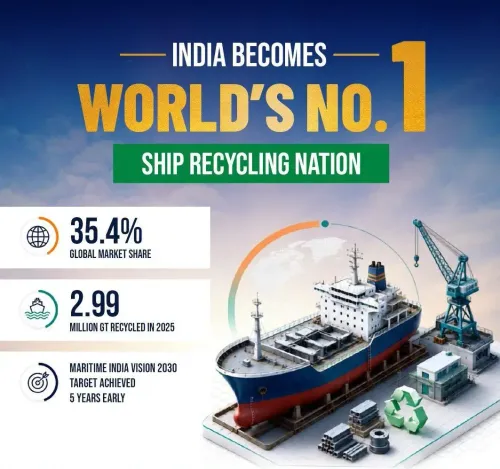
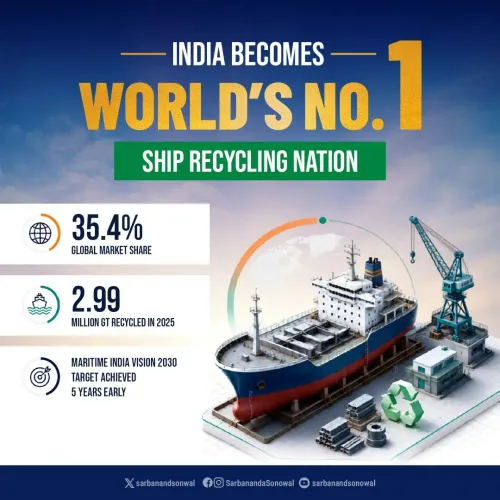
India's share in global ship recycling has climbed from 30.1 per cent in 2024 to 35.4 per cent in 2025, according to the latest estimates from the UN Conference on Trade and Development (UNCTAD). The country recycled 2.99 million gross tonnes (GT) of ships in 2025, reflecting nearly 60 per cent growth over the 1.86 million GT processed in 2024. This positions India as the undisputed global leader in the sector by volume.
EU Regulatory Recognition in Progress
More than 30 Indian ship recycling yards have applied for recognition under the European Union Ship Recycling Regulation (EUSRR). Of these, six facilities are currently undergoing the compliance and approval process, while three yards have completed all mandatory compliance procedures and are now eligible to seek formal inclusion under the EU regulatory framework. This marks a significant step toward aligning Indian yards with international environmental and safety benchmarks.
Infrastructure and Worker Welfare Upgrades
Sonowal said Indian ship recycling facilities have invested heavily in upgrading infrastructure, environmental safeguards, and worker welfare to meet global standards. The yards are equipped with effluent treatment plants, scientific waste management systems, dedicated healthcare facilities, and housing for workers. Periodic and surprise inspections are conducted to ensure ongoing compliance with environmental and safety norms.
India-EU Joint Working Group Proposed
European Commissioner Jessika Roswall welcomed the progress made by India and proposed establishing a Joint Working Group to facilitate closer regulatory cooperation between the two sides. Both India and the European Union reaffirmed their commitment to expanding collaboration in sustainable ship recycling and promoting environmentally responsible maritime practices. This comes amid growing global scrutiny of ship dismantling practices and increasing pressure on major recycling nations to adopt greener standards.
What's Next
With the Joint Working Group proposal on the table and three Indian yards already eligible for EU listing, the immediate focus will be on formalising EUSRR recognition for more facilities. The $8 billion investment pipeline, if realised, could significantly modernise India's recycling infrastructure and generate substantial employment along the Gujarat coastline, where the majority of India's ship-breaking yards are concentrated. The next decade will test whether India can sustain volume leadership while meeting the environmental bar set by European regulators.
Point of View
But the real strategic play is regulatory convergence with the EU. EUSRR recognition would give Indian yards preferential access to European-flagged vessels — a commercially significant prize. The fact that only three yards have cleared full compliance out of thirty-plus applicants signals that the gap between India's ambitions and European standards remains wide. The proposed Joint Working Group is diplomatically useful, but without a credible timeline for mass EUSRR listing, the $8 billion investment story risks outpacing the regulatory reality that underpins it.
NationPress
2 Jul 2026
Frequently Asked Questions
What is India's ship recycling target for the next decade?
India aims to recycle nearly 16,000 ships over the next ten years, supported by an $8 billion investment commitment in the shipbuilding and ship recycling sectors, as announced by Union Minister Sarbananda Sonowal on 1 July.
How much has India's share in global ship recycling grown?
India's share in global ship recycling rose from 30.1 per cent in 2024 to 35.4 per cent in 2025, according to UNCTAD estimates. The country recycled 2.99 million gross tonnes in 2025, nearly 60 per cent more than the 1.86 million GT recycled in 2024.
What is the EU Ship Recycling Regulation and why does it matter for India?
The European Union Ship Recycling Regulation (EUSRR) sets environmental and safety standards for facilities that recycle EU-flagged vessels. More than 30 Indian yards have applied for recognition under this framework, and three have completed all mandatory compliance steps, making them eligible to handle European ships.
What did India and the EU agree on during the July 1 meeting?
European Commissioner Jessika Roswall and Minister Sonowal agreed to explore the formation of a Joint Working Group to facilitate closer regulatory cooperation. Both sides reaffirmed their commitment to expanding India-EU collaboration in sustainable and environmentally responsible ship recycling.
Where are most of India's ship recycling yards located?
The majority of India's ship recycling facilities are concentrated along the Gujarat coastline, particularly around Alang, which is one of the world's largest ship-breaking sites. These yards have been upgrading infrastructure, effluent treatment, and worker welfare facilities to meet global standards.