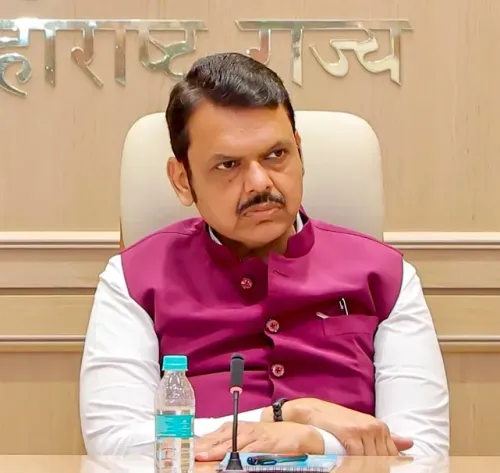
CM Fadnavis: No CIBIL Score Needed for Farmer Loans

Synopsis
Maharashtra CM Devendra Fadnavis declared on 7 August 2026 that no farmer will need a CIBIL score to obtain a new loan, removing a key credit barrier for rural borrowers across the state. The move builds on Maharashtra's history of farm debt interventions and fits a broader national pattern of relaxing credit norms for agriculture.
Key Takeaways
CM Devendra Fadnavis announced on 7 August 2026 in Mumbai that CIBIL score conditions are removed for new farm loans in Maharashtra.
The declaration was made in both Marathi and Hindi , signalling intent to reach farmers across linguistic communities.
TransUnion CIBIL scores had previously allowed banks to reject loan applications from farmers with overdue debts, even after prior loan waivers.
Maharashtra launched a farm loan waiver in 2017 for cooperative and nationalised bank debts, but that did not restore CIBIL scores for affected farmers.
Implementation will hinge on bank-level circulars ; actual impact will be visible in kharif season agricultural credit disbursement data.
Millions of Maharashtra farmers with bruised credit histories just got a lifeline. Maharashtra Chief Minister Devendra Fadnavis announced on 7 August 2026 in Mumbai that no farmer will be required to meet a CIBIL score condition to access a new agricultural loan — a direct strike at one of the most stubborn barriers between rural borrowers and institutional credit.
Posting in both Marathi and Hindi for maximum reach, Fadnavis stated: 'कुठल्याही शेतकऱ्याला नवीन कर्जासाठी सिबिल स्कोअरची अट असणार नाही' — 'No farmer will face a CIBIL score condition for obtaining a new loan.' The bilingual declaration signals a deliberate effort to communicate the relief directly to farming communities across linguistic lines.
Why CIBIL Scores Shut Farmers Out
TransUnion CIBIL Ltd, India's primary credit information company, assigns scores that banks routinely use to gatekeep lending. For farmers already carrying overdue cooperative or nationalised bank debts — often the result of crop failures or price crashes, not financial recklessness — a low CIBIL score has meant automatic rejection for fresh credit, trapping them in a cycle of distress borrowing from informal lenders at punishing rates.
This is not a new problem in Maharashtra. The state has one of India's largest agricultural sectors and a long history of farm credit interventions. In 2017, the state government announced a farm loan waiver covering cooperative and nationalised bank debts for small farmers. But waivers address past debt; they do not automatically restore creditworthiness. A farmer whose old loan was waived could still find every new loan application bounced on CIBIL grounds — until now.
A Pattern Across Indian States
Maharashtra's move fits a broader national pattern. Indian states have periodically relaxed or bypassed standard credit checks for agricultural loans to meet Reserve Bank of India priority sector lending targets and to cushion farmers during periods of acute rural distress. What makes this announcement notable is its categorical framing: not a relaxation for a specific scheme or a defined window, but a blanket removal of the CIBIL condition for any new farm loan.
The critical question now is implementation. Bank-level circulars from public sector and cooperative lenders will determine whether the relief reaches the last-mile borrower or stalls in procedural ambiguity. Watchers will also track whether agricultural credit disbursement figures rise meaningfully in the ongoing kharif season — the first real test of whether the announcement translates into cash in farmers' hands.
For Maharashtra's farmers, the message from Fadnavis is blunt and unambiguous: a bad credit score will no longer be the wall between them and a fresh start.
Point of View
And Fadnavis is clearly aware of that calculus. By framing the announcement categorically — no farmer, no condition — rather than tying it to a specific scheme, he raises the stakes for delivery: a gap between the promise and bank-level execution will be visible and attributable. The measure also reflects a wider tension in Indian agricultural finance, where RBI priority-sector mandates push credit toward farmers while risk-management frameworks push lenders the other way. Whether this becomes a durable policy shift or a seasonal relief measure will define its long-term significance.
NationPress
7 Aug 2026
Frequently Asked Questions
What did CM Devendra Fadnavis announce about farmer loans?
CM Fadnavis announced on 7 August 2026 that no farmer in Maharashtra will be required to have a CIBIL score to obtain a new agricultural loan, removing a key credit eligibility barrier.
What is a CIBIL score and why does it matter for farmers?
A CIBIL score is a credit rating issued by TransUnion CIBIL Ltd that banks use to assess a borrower's creditworthiness. Farmers with overdue or waived past loans often have low scores, which had led banks to reject their applications for fresh credit.
Will banks in Maharashtra have to follow this CIBIL waiver for farmers?
The announcement sets the policy direction, but implementation will depend on bank-level circulars from public sector and cooperative lenders detailing how the condition is to be removed in practice.
Has Maharashtra done anything similar for farmers before?
Yes. In 2017, the Maharashtra government announced a farm loan waiver covering cooperative and nationalised bank debts for small farmers, though that measure addressed past debt rather than future credit access.
When will the impact of this farmer loan CIBIL waiver be visible?
The kharif season is the immediate test — a rise in agricultural credit disbursement figures in the months following the announcement would indicate the policy is reaching farmers on the ground.