CM Fadnavis: No Load Shedding Anywhere in Maharashtra
Synopsis
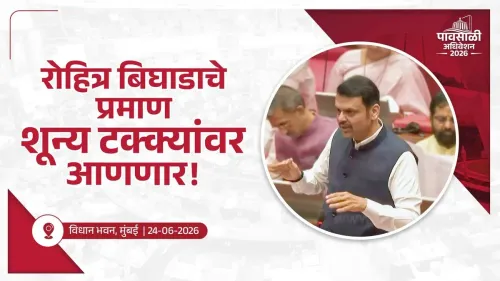
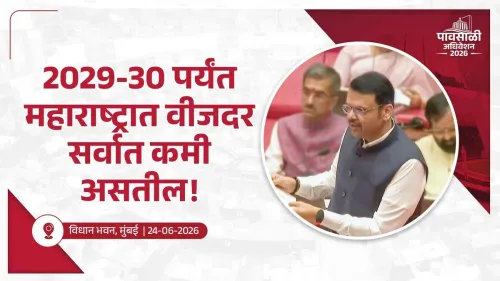
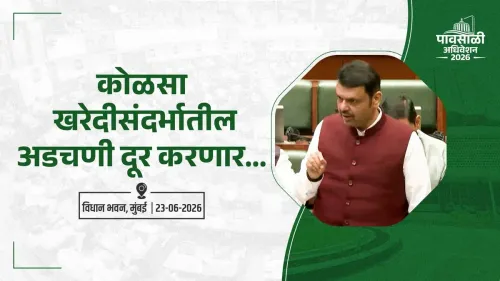
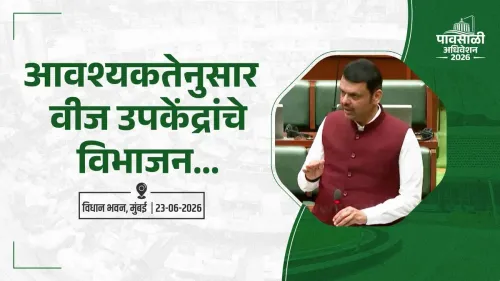
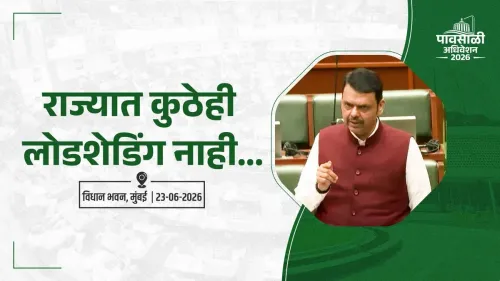
Maharashtra Chief Minister Devendra Fadnavis declared during the Monsoon Session 2026 at the Vidhan Sabha in Mumbai that there is no load shedding anywhere in the state — a claim that places the government's power-supply record firmly on the legislative record.
Key Takeaways
CM Devendra Fadnavis declared zero load shedding across Maharashtra on 10 July 2026 .
The announcement was made from the floor of the Maharashtra Vidhan Sabha during the Monsoon Session 2026 in Mumbai .
The statement was issued in both English and Marathi, placing it formally on the legislative record.
Maharashtra joined the central government's UDAY scheme in 2015 to improve distribution company finances and reduce outages.
Opposition parties and MSEDCL supply data are expected to serve as verification checks on the claim.
Sustained zero load shedding through the monsoon season would mark a significant infrastructure milestone for the state.
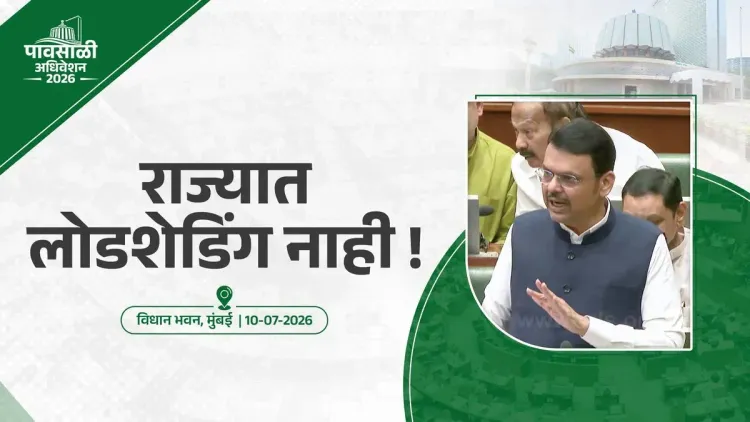
Maharashtra Chief Minister Devendra Fadnavis declared on Friday, 10 July 2026, that there is no load shedding anywhere in the state, making the announcement from the floor of the Maharashtra Vidhan Sabha in Mumbai during the ongoing Monsoon Session 2026.
Context
Fadnavis made the statement in both English and Marathi — 'राज्यात कोठेही लोडशेडिंग नाही' ('There is no load shedding anywhere in the state') — signalling the government's intent to place the claim firmly on the legislative record. The announcement came during a session of the Maharashtra Vidhan Sabha, the state's unicameral lower house, which convenes its Monsoon Session in Mumbai each year.
Load shedding — the practice of rotating power cuts to manage demand that outstrips supply — has historically been a persistent grievance for both urban and rural Maharashtra. Statewide declarations of zero load shedding carry significant political weight, particularly when made inside the assembly.
Policy Backdrop
Maharashtra joined the central government's UDAY (Ujjwal DISCOM Assurance Yojana) scheme in 2015, which aimed to restructure the finances of electricity distribution companies and reduce the frequency of outages. The scheme required states to absorb a portion of their distribution company debt and implement operational efficiencies in exchange for cheaper power financing.
Over the following decade, Maharashtra pursued incremental improvements in both generation capacity and distribution infrastructure. Indian states with large industrial bases — Maharashtra is among the country's top manufacturing and commercial hubs — have faced particular pressure to ensure uninterrupted supply to factories, data centres, and commercial establishments, alongside residential consumers.
Claims of zero load shedding during legislative sessions have become a recurring feature of Maharashtra's political discourse, typically cited by the ruling dispensation as a benchmark of governance delivery.
Stakeholders and Impact
The declaration, if borne out by distribution data, would benefit Maharashtra's estimated tens of millions of power consumers, spanning residential households, small businesses, and large industrial units. Industrial clusters in regions such as Pune, Nashik, Aurangabad, and the Mumbai Metropolitan Region are particularly sensitive to supply reliability, as unplanned outages translate directly into production losses.
Agricultural consumers in the state's interior districts — who have historically received fewer guaranteed supply hours than urban areas — would also stand to gain if the zero-load-shedding claim extends to rural feeders. Opposition parties are expected to scrutinise the claim through questions and data demands in the ongoing session.
What's Next
The government's assertion will likely face verification pressure from the Maharashtra State Electricity Distribution Company Limited (MSEDCL)'s own supply data and from opposition benches within the Vidhan Sabha. Any official data release on feeder-wise or district-wise supply hours during the Monsoon Session period will be closely watched as a check on the claim.
If the zero-load-shedding status is sustained through the monsoon months — traditionally a period of high demand and grid stress — it could become a key plank in the ruling coalition's governance narrative ahead of future electoral cycles.
Point of View
Making it harder for critics to dismiss as a press release. The timing — mid-monsoon, when grid stress peaks — amplifies the political significance if the claim holds. This fits a broader pattern of BJP-led state governments using infrastructure metrics, particularly power supply, as proxies for administrative competence in the post-UDAY era. The real test will come from feeder-level data and opposition scrutiny within the same session.
NationPress
10 Jul 2026
Frequently Asked Questions
Is there load shedding in Maharashtra in July 2026?
Maharashtra Chief Minister Devendra Fadnavis stated on 10 July 2026 from the Vidhan Sabha floor that there is no load shedding anywhere in the state. The claim is subject to verification from official MSEDCL supply data.
What did CM Fadnavis say about electricity in the Monsoon Session 2026?
During the Monsoon Session 2026 at the Maharashtra Vidhan Sabha in Mumbai, CM Fadnavis declared in both English and Marathi that there is no load shedding anywhere in Maharashtra.
What is UDAY scheme and how does it relate to Maharashtra's power supply?
The UDAY (Ujjwal DISCOM Assurance Yojana) scheme was launched by the central government to restructure electricity distribution company finances. Maharashtra joined the scheme in 2015, which helped reduce outages by improving distribution efficiency and reducing debt burdens on power companies.
What is the Maharashtra Monsoon Session of the Vidhan Sabha?
The Monsoon Session is one of the regular sittings of the Maharashtra Vidhan Sabha, held in Mumbai typically during the mid-year monsoon months. It is a key forum for the government to present policy updates and face legislative scrutiny.
Who oversees electricity distribution in Maharashtra?
The Maharashtra State Electricity Distribution Company Limited (MSEDCL) is the primary body responsible for power distribution across the state, and its supply data is the standard reference for verifying load-shedding claims.