CM Fadnavis clears ₹89,731 cr projects, 20,000 jobs
Synopsis
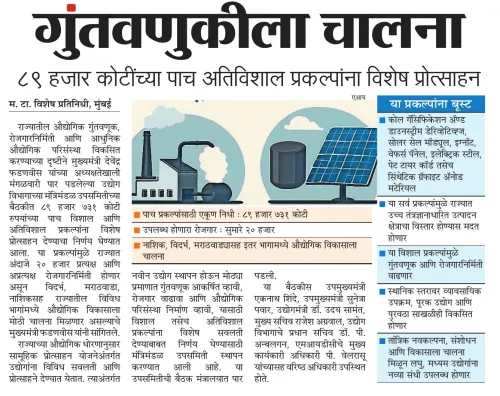
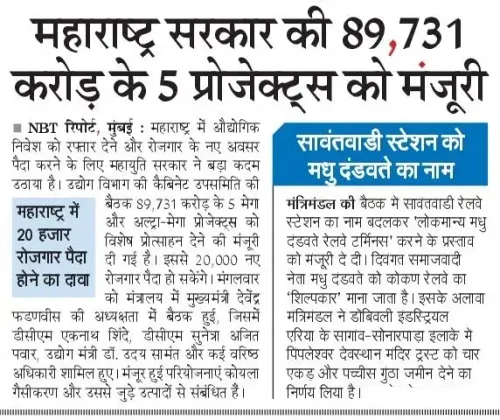
Chief Minister Devendra Fadnavis chaired a cabinet sub-committee meeting in Mumbai on 26 May 2026 that approved special incentives for five mega and ultra-mega industrial projects worth ₹89,731 crore, projected to create 20,000 jobs across Maharashtra including in Vidarbha, Marathwada and Nashik.
Key Takeaways
Five mega and ultra-mega projects worth approximately ₹89,731 crore received special promotional incentives from Maharashtra's Industries Department cabinet sub-committee.
The projects are projected to generate around 20,000 direct and indirect jobs across the state.
Sectors covered include coal gasification, solar cell manufacturing, electric steel, PET tyre cord , and synthetic graphite anode material — all high-technology and future-facing industries.
Targeted regions include Vidarbha, Marathwada , and Nashik , addressing long-standing regional development imbalances.
The meeting was attended by Deputy CMs Eknath Shinde and Sunetra Ajit Pawar and Industries Minister Uday Samant .
Downstream benefits are expected to include MSME growth, supply chain development, and youth skill-development programmes.
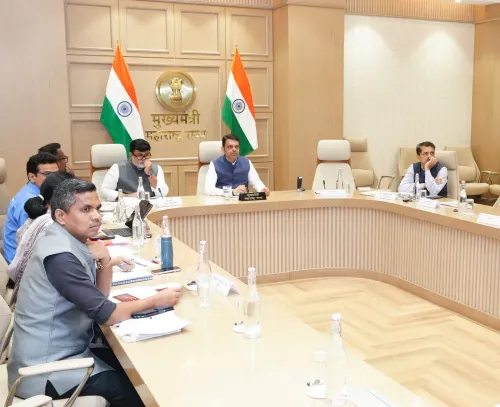
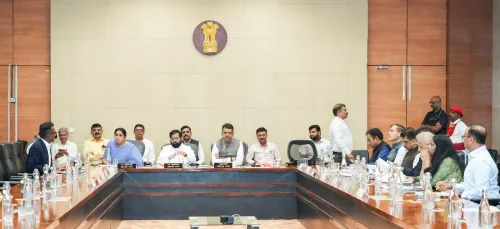
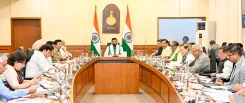
The Chief Minister's Office of Maharashtra announced on Tuesday, 26 May 2026 that a cabinet sub-committee meeting of the Industries Department, chaired by Chief Minister Devendra Fadnavis at Mantralaya, Mumbai, approved special incentives for five mega and ultra-mega industrial projects worth approximately ₹89,731 crore.
Context
The meeting cleared special promotional support for five high-technology projects spanning sectors including coal gasification and downstream derivatives, solar cell modules, ingots, wafers and panels, electric steel, PET tyre cord, and synthetic graphite anode material. Chief Minister Fadnavis stated that the projects are expected to generate approximately 20,000 direct and indirect jobs across the state. The approvals were accompanied by a commitment to develop a modern industrial ecosystem in Maharashtra.
The official post, originally in Marathi, described Maharashtra as becoming an 'udyoganchey powerhous' (powerhouse of industries), signalling the government's intent to position the state as a destination for sunrise-sector manufacturing. Present at the meeting were Deputy Chief Minister Eknath Shinde, Deputy Chief Minister Sunetra Ajit Pawar, Industries Minister Uday Samant, and senior officials.
Policy Backdrop
The approvals align with a longer arc of Maharashtra's industrial policy that has consistently sought to direct investment toward historically underserved regions. Vidarbha and Marathwada — two regions that have long lagged the state's coastal belt in manufacturing output — are among the areas specifically cited for industrial development under this round of approvals, along with Nashik.
India's national push for domestic capacity in green energy and advanced materials, accelerated since 2020 through Production Linked Incentive frameworks, has shaped the contours of state-level incentives. Maharashtra's decision to prioritise solar manufacturing and synthetic anode materials mirrors those national priorities, placing the state in direct competition with other industrialised states for domestic and global capital in these sectors.
Stakeholders and Impact
The five projects are expected to catalyse broader economic activity beyond direct employment. The government noted that local commercial enterprises, ancillary industries, and supply chains would develop around the approved units. Micro, small and medium enterprises (MSMEs) are expected to find new opportunities as tier-2 suppliers to these large facilities.
The official statement also highlighted that local youth would benefit from training and skill development programmes tied to emerging technology sectors, improving employability in advanced manufacturing. Technical innovation, research and development activity are anticipated to receive a fillip as the projects become operational.
What's Next
The government's claims on investment inflows and job creation will be tested over the coming 12 to 18 months as project implementation timelines are formalised and ground-level work begins. Observers will watch whether the stated regional spread — particularly in Vidarbha and Marathwada — translates into actual factory construction and hiring in those districts.
Further details on individual project locations, investors, and incentive structures are likely to emerge through the state's industrial policy framework and subsequent budget announcements. The approvals reinforce Maharashtra's positioning as a high-technology manufacturing hub at a time when states across India are competing aggressively for large-scale industrial capital.
Point of View
Using high-value industrial clearances as a visible governance benchmark. By explicitly naming Vidarbha and Marathwada as beneficiary regions, the government is addressing a persistent political vulnerability — the perception that development remains concentrated along the Konkan coast and in the Mumbai metropolitan region. The sectoral choices — solar, advanced materials, downstream carbon products — also show the state aligning its industrial strategy with national green-transition priorities, making it easier to attract both central government support and private capital. Whether the approvals translate into ground-level investment will be the real test of this policy posture.
NationPress
10 Oct 2026
Frequently Asked Questions
What projects were approved at the Maharashtra Industries Department meeting on 26 May 2026?
Five mega and ultra-mega industrial projects worth approximately ₹89,731 crore were approved for special incentives, covering coal gasification, solar cell modules, electric steel, PET tyre cord, and synthetic graphite anode material.
How many jobs will the new Maharashtra industrial projects create?
The Maharashtra government estimates the five approved projects will generate approximately 20,000 direct and indirect jobs across the state.
Which regions of Maharashtra will benefit from the new industrial projects?
Chief Minister Devendra Fadnavis specifically mentioned Vidarbha, Marathwada, and Nashik as regions that will receive a major boost from the approved industrial investments.
Who chaired the Maharashtra Industries Department cabinet sub-committee meeting?
Chief Minister Devendra Fadnavis chaired the meeting at Mantralaya, Mumbai, on 26 May 2026. Deputy Chief Ministers Eknath Shinde and Sunetra Ajit Pawar, along with Industries Minister Uday Samant, were also present.
What is Maharashtra's strategy for attracting high-technology industries?
Maharashtra has been offering special promotional incentives — including financial support and policy facilitation — to mega and ultra-mega projects in sunrise sectors such as renewables, advanced materials, and downstream manufacturing, targeting both job creation and regional development.