CM Fadnavis opens Abhijat Marathi Bhasha Saptah 2026 in Mumbai
Synopsis
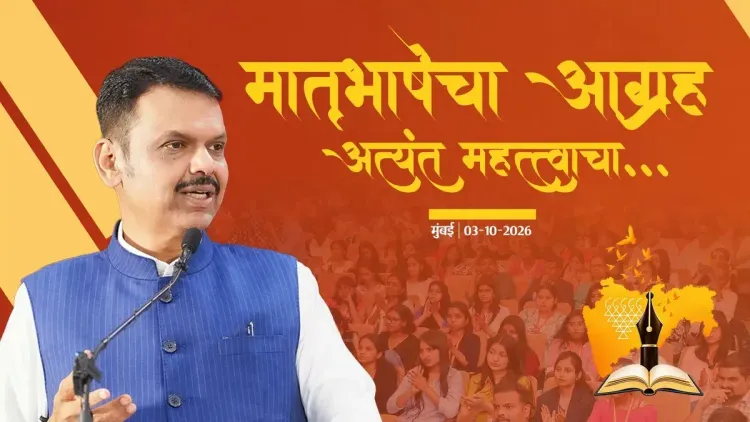
Maharashtra CM Devendra Fadnavis inaugurated Abhijat Marathi Bhasha Saptah 2026 in Mumbai on 3 October, declaring that insisting on one's mother tongue is essential for building society's future — anchoring the week-long celebration of Marathi's Classical Language status.
Key Takeaways
Abhijat Marathi Bhasha Saptah 2026 was inaugurated by CM Devendra Fadnavis in Mumbai on 3 October 2026 .
Fadnavis stated that 'insisting on mother tongue is extremely important for building the future of society.' The week-long event celebrates Marathi's Classical Language status, conferred by the Union government in 2024 .
Classical Language designation brings academic chairs, research grants, and a national promotion mandate for Marathi.
Mumbai's selection as the venue underscores the state's assertion of Marathi identity in its commercial capital.
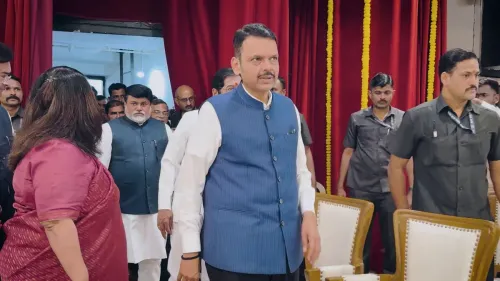
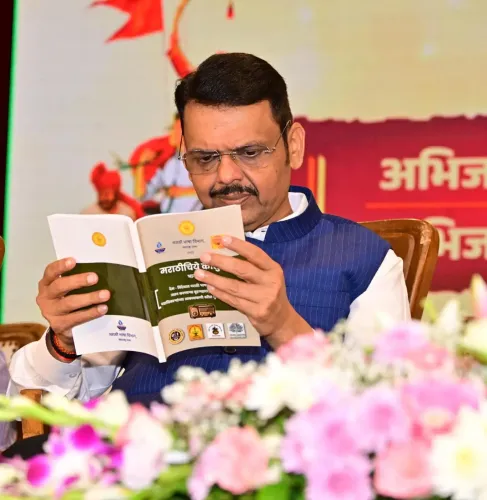
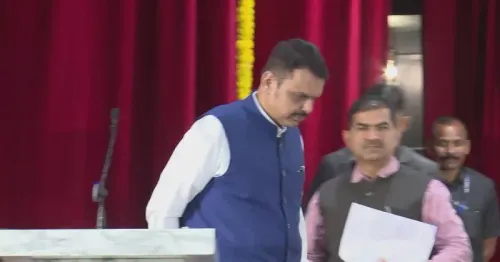
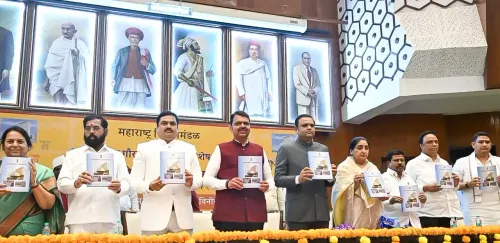
The mother tongue, Maharashtra Chief Minister Devendra Fadnavis declared on Saturday, 3 October 2026, is not merely a medium of communication — it is the very architecture of a society's future. Speaking at the inauguration of Abhijat Marathi Bhasha Saptah 2026 (Classical Marathi Language Week) in Mumbai, Fadnavis underlined that insisting on one's mother tongue is indispensable to shaping the generations ahead.
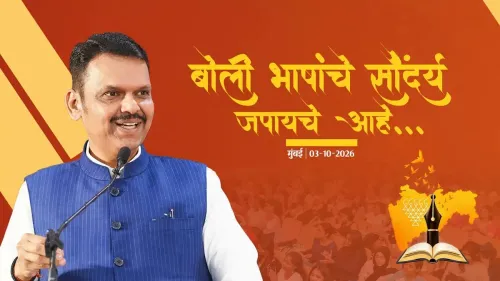
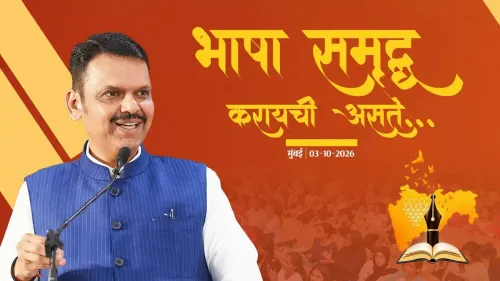
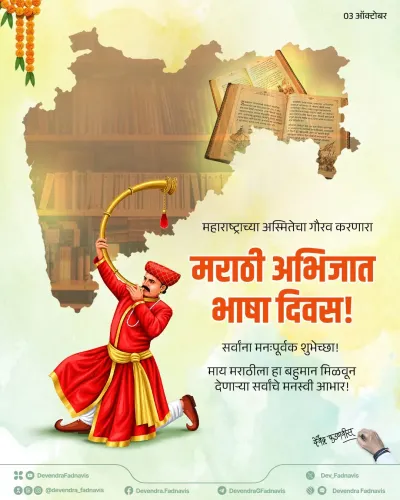
Posting on X, the Chief Minister quoted his own address: 'समाजाचे भविष्य घडवण्यासाठी मातृभाषेचा आग्रह अत्यंत महत्त्वाचा आहे' — 'The insistence on mother tongue is extremely important for building the future of society.' The week-long celebration marks Maharashtra's formal recognition of Marathi as a Classical Language, a status the central government conferred on Marathi in 2024, placing it alongside Sanskrit, Tamil, Telugu, Kannada, Malayalam, and Odia in that distinguished category.
What 'Classical' status means for Marathi
Classical Language designation by the Union government unlocks dedicated academic chairs, research grants, and a national-level promotion mandate — a substantial policy dividend for a language spoken by roughly 83 million people as their first tongue. For Maharashtra, the tag is both a point of cultural pride and a policy lever: it strengthens arguments for Marathi-medium schooling, official-language enforcement, and digital-content development in the language.
Fadnavis's framing — tying mother-tongue advocacy directly to societal future-building — signals that the state intends to use Classical status as more than a ceremonial honour. A week-long saptah (festival) with a formal inauguration by the Chief Minister himself elevates it to a state priority, not a departmental footnote.
Mumbai as the stage for a cultural assertion
Holding the inauguration in Mumbai carries its own weight. The city, Maharashtra's commercial capital, has long been a pressure point in debates over Marathi identity — with periodic friction over language use in public life, signage, and employment. A high-profile Classical Language Week, inaugurated by the CM, plants a clear flag: Marathi belongs at the centre of Mumbai's public culture, not at its margins.
The event also arrives at a politically resonant moment. With civic and local-body politics perennially charged in the Mumbai Metropolitan Region, cultural affirmations of Marathi pride have historically carried electoral as well as cultural weight — making Fadnavis's personal presence at the inauguration a statement of intent on both registers.
One week, one language, one unmistakable message: Maharashtra's government is betting that the future it builds will speak Marathi.
Point of View
The BJP-led Maharashtra government aligns cultural identity with its broader governance narrative. The choice of Mumbai — Maharashtra's most linguistically contested city — as the venue is deliberate: it claims the Marathi cultural ground firmly, particularly ahead of any future civic-body electoral cycle. Classical Language status, leveraged this visibly, becomes as much a soft-power tool as a linguistic honour.
NationPress
3 Oct 2026
Frequently Asked Questions
What is Abhijat Marathi Bhasha Saptah?
Abhijat Marathi Bhasha Saptah is a week-long state-organised celebration of the Marathi language, held to mark and promote its Classical Language status granted by the Government of India.
When did Marathi get Classical Language status?
The Union government conferred Classical Language status on Marathi in 2024 , placing it alongside Sanskrit, Tamil, Telugu, Kannada, Malayalam, and Odia.
What are the benefits of Classical Language status for Marathi?
Classical Language status unlocks dedicated academic chairs at central universities, research grants, and a national mandate to promote the language — benefits that support scholarship, publishing, and digital presence.
What did CM Fadnavis say at the Abhijat Marathi Bhasha Saptah inauguration?
Fadnavis said that 'the insistence on mother tongue is extremely important for building the future of society,' framing mother-tongue promotion as essential to Maharashtra's social development.
Where was the Abhijat Marathi Bhasha Saptah 2026 inauguration held?
The inauguration was held in Mumbai on 3 October 2026 , with Maharashtra Chief Minister Devendra Fadnavis presiding over the ceremony.