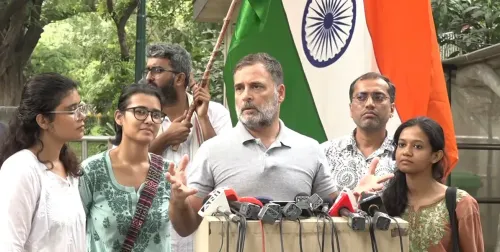
Rahul Gandhi demands Amit Shah answer over Jantar Mantar crackdown
Synopsis
Congress leader Rahul Gandhi confronted Home Minister Amit Shah over Delhi Police's alleged misconduct against women journalists and protesters at Jantar Mantar on October 3, 2026, demanding an FIR be registered and asking who the government is actually protecting.
Key Takeaways
A woman journalist alleged misconduct by a Delhi Police officer at Jantar Mantar on October 3, 2026 .
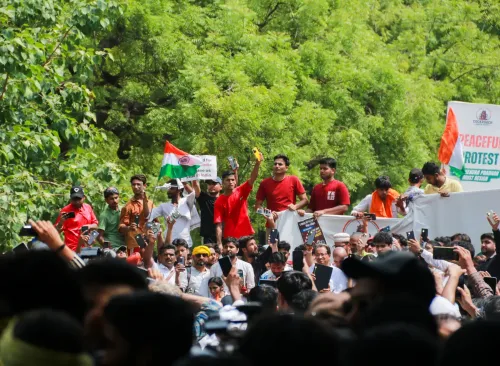
Hundreds of journalists staged a sit-in demanding an FIR be registered; police did not file one for hours.
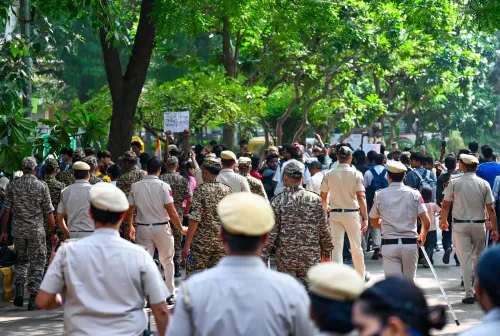
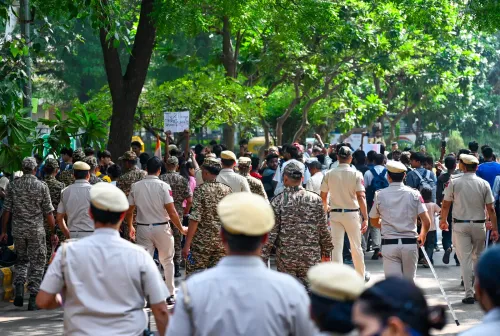
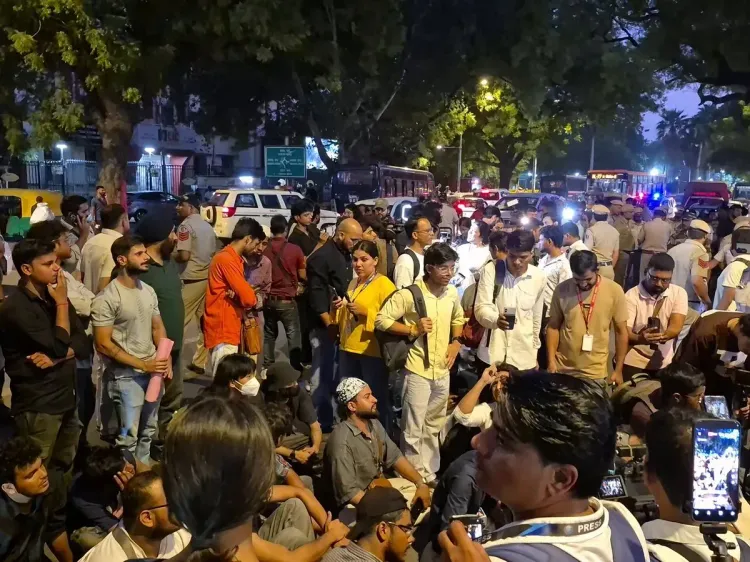
Hundreds of protesters were detained the same day; allegations of cameras being snatched and journalists being dragged emerged.
Rahul Gandhi cited prior video evidence of police misconduct against women, calling it a pattern.
Delhi Police operates under the Union Ministry of Home Affairs , making Amit Shah constitutionally accountable.
Gandhi directly asked Amit Shah: 'Where are you?
You are the one who has to answer.'
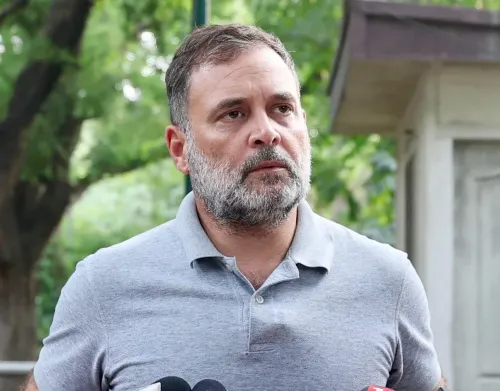
A woman journalist's allegation of misconduct by a police officer at Jantar Mantar on Saturday, October 3, 2026 has ignited a sharp political confrontation — with Congress leader and Leader of the Opposition Rahul Gandhi directly demanding accountability from Union Home Minister Amit Shah, under whose ministry Delhi Police operates.
What happened at Jantar Mantar on October 3
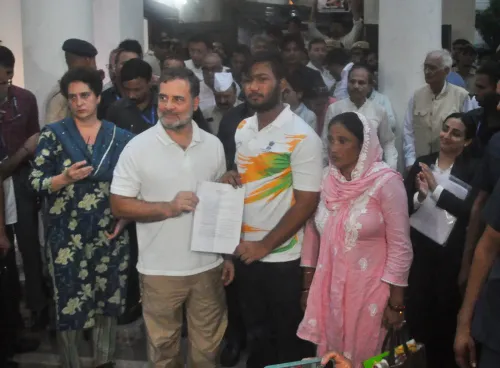
Hundreds of journalists gathered at the iconic protest site with a single, procedural demand: that a First Information Report (FIR) be registered against a police officer accused of misbehaving with a woman journalist. Hours passed. No FIR was filed. Gandhi called it a dereliction of the most basic police duty — 'ये तो पुलिस का बुनियादी काम है न?' ('Isn't this the most basic job of the police?').
The same day, hundreds of protesters were detained at the site. Allegations of misconduct against women demonstrators surfaced, with reports of cameras being snatched and journalists being physically dragged away. Gandhi posted four videos alongside his statement, citing what he described as documented, video-evidenced patterns of police officers committing 'ghastly misconduct' against women.
Women's safety protests meet police force — the central contradiction
The protest itself was rooted in women's safety anxieties. Women and students across Delhi, Gandhi wrote, are gripped with fear about their own security and are staging satyagrahas — non-violent sit-ins — demanding protection. The bitter irony he highlighted: the very force tasked with protecting women stands accused of raising hands against them.
'And a government that is afraid to register the complaint of one woman — whose protection is it actually providing?' Gandhi asked, framing the question as one of institutional accountability, not just a single incident.
The constitutional chain: Delhi Police, MHA, and Amit Shah
Gandhi's closing lines were pointed and direct. Delhi Police does not report to the elected Delhi government — it functions under the Union Ministry of Home Affairs (MHA), making Amit Shah constitutionally answerable for its conduct. 'Where are you, Amit Shah ji? You are the one who has to answer,' Gandhi wrote, placing accountability squarely at the Home Minister's door.
This structural reality — that the national capital's police force answers to the Centre, not to the city's own administration — has been a recurring flashpoint in Delhi's politics. It means every controversy involving Delhi Police becomes, by design, a question for the Union government.
A pattern Gandhi says is on video
Gandhi did not frame Saturday's events as an isolated breakdown. He explicitly referenced prior incidents where, he said, video evidence showed police officers engaging in 'disgusting misconduct' against women. The four videos attached to his post are central to his argument — shifting the charge from allegation to documented record, at least in Congress's telling.
The refusal to file an FIR — a legally mandated step under the Code of Criminal Procedure once a cognisable offence is reported — is the procedural fault line Gandhi is pressing hardest. If a complaint is made and no FIR is registered, the law provides for escalation to a magistrate. That the journalists reportedly sat for hours without the basic step being taken gives the protest its legal, not just political, weight.
Whether Delhi Police responds, whether the Home Ministry issues a statement, and whether the woman journalist's complaint is ultimately registered will determine if this becomes a sustained pressure point — or the latest in a long line of clashes that fade before accountability arrives.
Point of View
Congress attempts to move the debate from allegation to dereliction of duty. The timing, amid reported women's safety protests in the capital, amplifies the political stakes: the opposition is framing the BJP-led Centre as both the enforcer of the crackdown and the obstacle to redress. How the Home Ministry responds — or whether it does at all — will set the terms of this confrontation.
NationPress
3 Oct 2026
Frequently Asked Questions
What happened at Jantar Mantar on October 3 2026?
Hundreds of journalists gathered at Jantar Mantar on October 3, 2026, demanding an FIR be registered against a Delhi Police officer accused of misconduct against a woman journalist. Hundreds of protesters were also detained the same day, with allegations of cameras being seized and journalists being dragged.
Why is Rahul Gandhi asking Amit Shah about Delhi Police?
Delhi Police is not under the Delhi state government — it functions under the Union Ministry of Home Affairs, headed by Home Minister Amit Shah. This makes the Centre constitutionally responsible for the conduct of Delhi Police, which is why Gandhi directed his questions at Shah.
Was an FIR filed in the woman journalist's misconduct case?
According to Rahul Gandhi's post, hours after the woman journalist's complaint was made, no FIR had been registered despite hundreds of journalists staging a sit-in specifically demanding that basic step be taken.
What is a satyagraha and why are women holding one in Delhi?
A satyagraha is a form of non-violent protest or civil resistance. According to Gandhi's post, women and students across Delhi were holding satyagrahas over fears about their personal safety in the city.
What legal right do complainants have if police refuse to file an FIR?
Under Indian criminal procedure law, if police refuse to register an FIR for a cognisable offence, the complainant can approach a magistrate directly, who can order the police to investigate. The refusal to file an FIR itself is considered a procedural violation.