CM Fadnavis: PMAY Houses in Every Nagpur Constituency
Synopsis
The Chief Minister's Office of Maharashtra announced on 13 July 2026 that houses under the Pradhan Mantri Awas Yojana will be built in every Vidhan Sabha constituency of Nagpur, underlining CM Devendra Fadnavis's focus on constituency-level delivery of the central housing scheme in his home city.
Key Takeaways
The Chief Minister's Office of Maharashtra announced PMAY housing construction across every Nagpur Vidhan Sabha constituency on 13 July 2026 .
Chief Minister Devendra Fadnavis , who represents a Nagpur constituency, was tagged in the announcement.
The Pradhan Mantri Awas Yojana was launched in 2015 with a 'Housing for All' mandate, targeting pucca homes for urban and rural poor.
A constituency-wise rollout framework is designed to ensure equitable geographic spread of PMAY benefits across Nagpur.
District-level implementation reports and state budget provisions for Nagpur housing will be key indicators of follow-through.
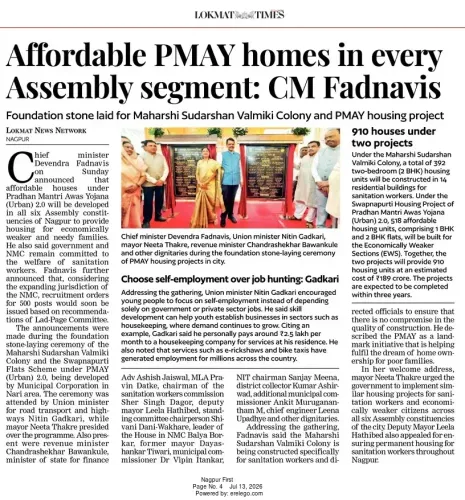
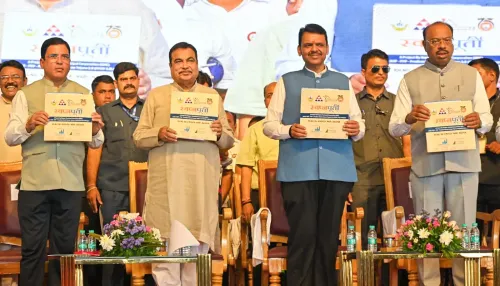
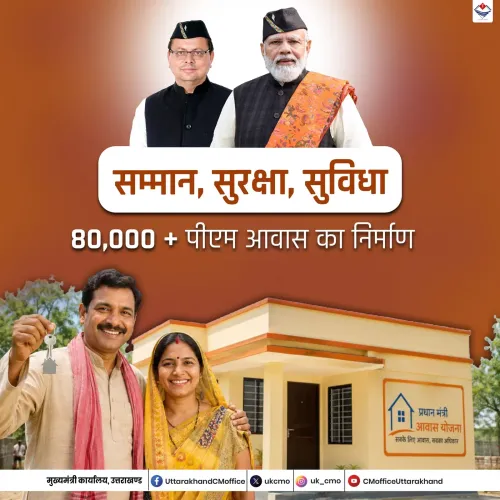
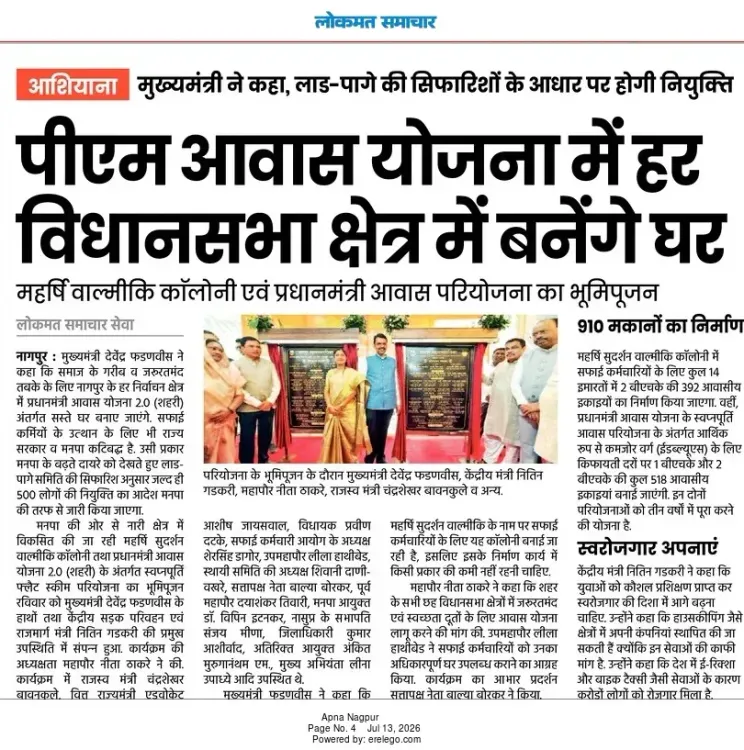
The Chief Minister's Office of Maharashtra announced on Monday, 13 July 2026 that houses under the Pradhan Mantri Awas Yojana (PMAY) will be constructed in every Vidhan Sabha constituency of Nagpur, tagging Chief Minister Devendra Fadnavis in the post.
Context
The CMO's post, written in Hindi, states: 'PM Awas Yojana mein Nagpur ke har Vidhan Sabha kshetra mein banenge ghar' ('Under PM Awas Yojana, houses will be built in every Vidhan Sabha constituency of Nagpur'). The announcement signals a constituency-level rollout of the centrally sponsored housing scheme across Nagpur, the winter capital of Maharashtra.
Nagpur comprises multiple Vidhan Sabha segments, and a constituency-wise approach is intended to ensure no pocket of the city is left out of the housing push. Chief Minister Devendra Fadnavis, who himself represents a Nagpur constituency, has long positioned the city as a development priority for his administration.
Policy Backdrop
The Pradhan Mantri Awas Yojana was launched by the Central government in 2015 with the overarching goal of 'Housing for All', targeting pucca house construction for urban and rural poor households across India. The scheme's deadline, originally set for 2022, was subsequently extended to accommodate pending targets across states.
Maharashtra has periodically aligned its urban development priorities with PMAY's central funding framework, announcing constituency-wise or district-wise targets to ensure geographic spread and political accountability. Such granular rollout announcements are a recurring feature of how state governments operationalise centrally sponsored schemes on the ground.
Stakeholders and Impact
The primary beneficiaries of this announcement are urban poor and lower-income households across Nagpur's Vidhan Sabha constituencies who remain without pucca housing. A constituency-wise implementation framework, if followed through, would distribute PMAY benefits more evenly rather than concentrating construction in select pockets of the city.
Local elected representatives — MLAs from each Nagpur constituency — are likely to play a coordinating role in identifying beneficiaries and monitoring construction timelines. For CM Fadnavis, whose political home base is Nagpur, the announcement also carries significance as a demonstration of direct delivery in his own city.
What's Next
Observers will watch for district-level PMAY implementation reports that specify the number of housing units sanctioned per constituency, along with any supplementary state budget provisions earmarked for Nagpur housing projects. The pace of beneficiary registration, land allocation, and fund disbursement under the scheme will determine whether the announcement translates into completed homes on the ground.
The Maharashtra government's ability to coordinate between Central PMAY guidelines and local urban bodies in Nagpur will be a key test of this initiative's reach and effectiveness.
Point of View
Constituency-level accountability for centrally sponsored schemes — a pattern that has become more pronounced in Maharashtra's urban development communications. Framing the rollout around individual constituencies rather than aggregate city-level targets serves both administrative and political purposes, tying delivery directly to elected representatives. For CM Fadnavis, whose core political identity is rooted in Nagpur, such announcements reinforce his personal stake in the city's development trajectory. The real test, however, lies in implementation: past PMAY cycles have seen significant gaps between sanction and completion, making ground-level follow-through the critical variable.
NationPress
13 Jul 2026
Frequently Asked Questions
What is the PMAY announcement for Nagpur?
The Chief Minister's Office of Maharashtra announced on 13 July 2026 that houses under the Pradhan Mantri Awas Yojana will be constructed in every Vidhan Sabha constituency of Nagpur.
What is Pradhan Mantri Awas Yojana?
The Pradhan Mantri Awas Yojana is a Central government scheme launched in 2015 to provide pucca houses to urban and rural poor households across India, with a 'Housing for All' objective.
How many Vidhan Sabha constituencies does Nagpur have?
Nagpur comprises multiple Vidhan Sabha constituencies; the CMO announcement specifies that PMAY housing will be built across all of them, though specific constituency-wise unit targets have not been detailed in the post.
What is Devendra Fadnavis's connection to Nagpur?
Devendra Fadnavis is the Chief Minister of Maharashtra and represents a Nagpur constituency, making the city a consistent priority in his administration's development agenda.
What happens next after this PMAY announcement for Nagpur?
The next steps to watch include district-level PMAY implementation reports, beneficiary registration drives, land allocation decisions, and any supplementary state budget provisions earmarked specifically for Nagpur housing projects.