CM Fadnavis Presides Over 9 MoUs for Bharat Taxi Urban Mobility
Synopsis
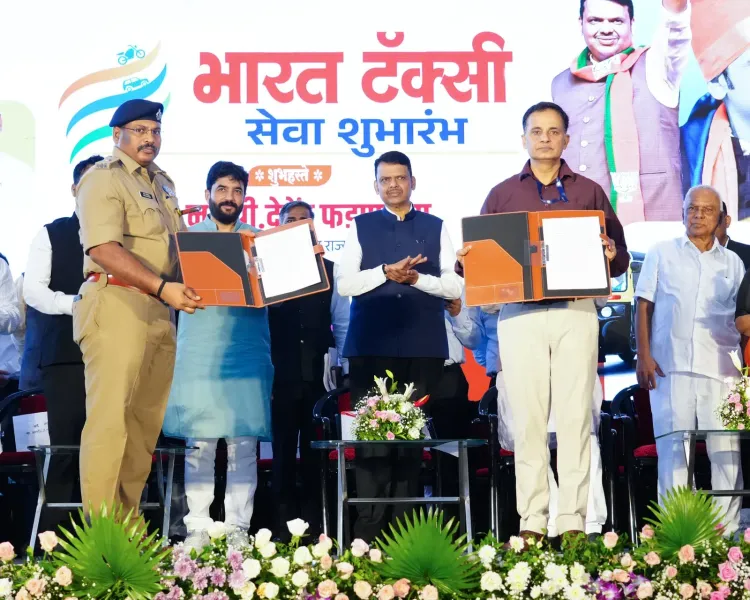
Chief Minister Devendra Fadnavis presided over the signing of MoUs between Sahakar Taxi Co-Operative Limited and nine organisations — including MSRTC, three municipal corporations, three traffic police units, and Cosmos Bank — to deploy the Bharat Taxi platform for cashless, app-based, first- and last-mile urban mobility across Maharashtra.
Key Takeaways
Nine MoUs were signed between Sahakar Taxi Co-Operative Limited (STCL) and civic, transport, and financial bodies on 23 July 2026 .
The Bharat Taxi platform will provide cashless, GPS-tracked, app-based taxi services at MSRTC bus stands and major transit hubs.
Physical prepaid booths will be established at principal transit junctions to serve walk-in passengers.
The framework covers Navi Mumbai International Airport (NMIA) , targeting structured taxi facilitation zones at the upcoming hub.
Women, senior citizens, and persons with disabilities are explicitly identified as priority beneficiaries of safe and affordable services.
Co-branding on city electric buses and long-distance MSRTC fleets is planned to advance Maharashtra's green mobility targets.
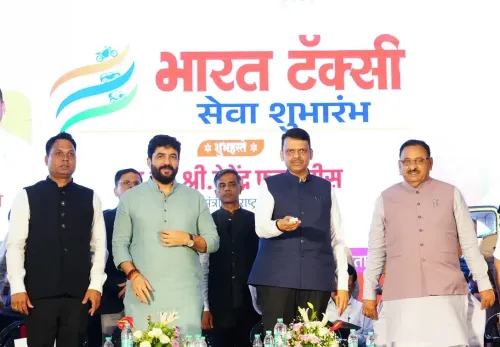
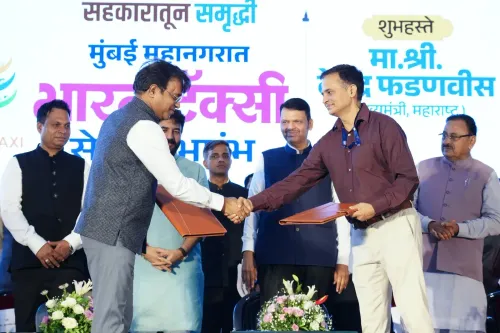
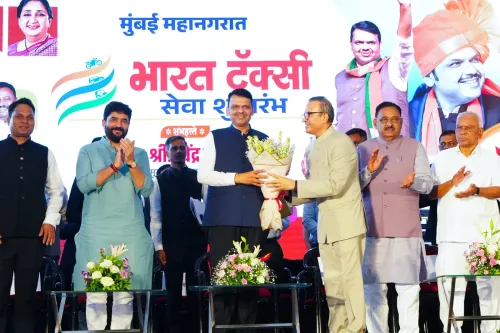
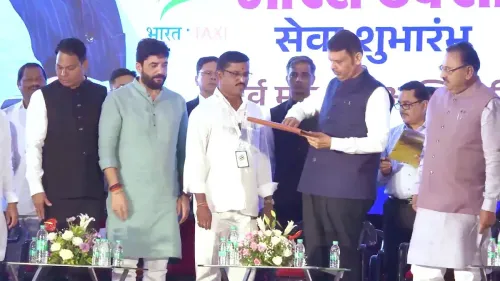
Maharashtra Chief Minister Devendra Fadnavis presided over the signing and exchange of Memoranda of Understanding between Sahakar Taxi Co-Operative Limited (STCL) and nine organisations on Thursday, 23 July 2026, in a move aimed at integrating cooperative taxi services with public transport networks across the state's major urban centres.
Context
The MoUs were signed between STCL — the cooperative entity driving the Bharat Taxi platform — and a broad set of civic, transport, and financial bodies. Partners include the Maharashtra State Road Transport Corporation (MSRTC), Mumbai Traffic Police, Navi Mumbai Traffic Police, Thane Traffic Police, Thane Municipal Corporation (TMC), Navi Mumbai Municipal Corporation (NMMC), Municipal Corporation of Greater Mumbai (MCGM), M/s. Loknete D B Patil Native Project Affected Transport Co-Operative Limited, and Cosmos Co-operative Bank Ltd.
The Chief Minister's Office described the purpose of the agreements as enhancing first-mile and last-mile connectivity for MSRTC passengers, establishing prepaid taxi booths at principal transit junctions, and advancing integrated, sustainable green urban mobility across Maharashtra. The post stated the agreements also aim 'to outline the strategic partnership for the commercial rollout and day-to-day management of the Bharat Taxi platform within the precinct of NMIA' — referring to the upcoming Navi Mumbai International Airport (NMIA).
Policy Backdrop
The agreements align with Maharashtra's Electric Vehicle Policy 2021, which set adoption targets for EV fleets in public and shared mobility, and with the Smart Cities Mission that has funded last-mile connectivity and digital governance projects in Mumbai, Thane, and Navi Mumbai since 2015. State transport reforms from 2018 onward have pushed app-based and prepaid taxi systems as tools to improve commuter safety and bring the informal taxi sector under structured regulation.
The Bharat Taxi platform is designed to deliver cashless, app-based, and GPS-tracked taxi operations, integrating digital emergency response networks and creating dedicated taxi facilitation zones at high-footfall locations. Co-branding arrangements on city electric buses and long-distance MSRTC fleets are also envisaged under the framework, directly supporting EV fleet visibility and uptake.
Stakeholders and Impact
The agreements explicitly cover the needs of women, senior citizens, and persons with disabilities, committing to safe, affordable, and accessible transport for all commuter categories. By anchoring prepaid booths at MSRTC bus stands and major civic hubs, the framework targets the large daily ridership that currently depends on unorganised taxi and autorickshaw services for the final stretch of their journeys.
The inclusion of Cosmos Co-operative Bank Ltd signals an intent to embed formal financial infrastructure into the platform's cashless payment architecture. The MoU with the Loknete D B Patil Co-Operative Limited extends the network's reach to project-affected communities in the Navi Mumbai region, particularly relevant given the ongoing development of NMIA. TMC, NMMC, and MCGM's participation ties the initiative directly into their respective Smart City and digital governance roadmaps.
Union Minister of State Murlidhar Mohol, Minister Babasaheb Patil, MLA Manda Mhatre, MLA Mahesh Baldi, MLA Prashant Thakur, and other dignitaries were present at the signing ceremony.
What's Next
The immediate focus will be on the phased rollout of physical prepaid booths at principal MSRTC bus stands and the operationalisation of Bharat Taxi zones at NMIA, which is expected to become a major new transit hub for the Mumbai Metropolitan Region. The integration of electric buses under co-branding arrangements will be a key indicator of how quickly the green mobility component gains traction on the ground.
Maharashtra's ability to convert these nine MoUs into functional, interoperable services — particularly the digital emergency response and cashless payment layers — will determine whether the cooperative taxi model can scale into a credible alternative to app-aggregator platforms in India's largest metropolitan cluster.
Point of View
Weaving together state transport, municipal governance, traffic policing, and cooperative banking into a single platform. By anchoring Bharat Taxi at NMIA — a greenfield airport that will reshape mobility demand in the Mumbai Metropolitan Region — the Fadnavis government is positioning the cooperative sector as a first-mover in a high-value transit corridor before private aggregators can dominate it. The inclusion of traffic police as signatories is a notable regulatory signal: it suggests the state intends to enforce taxi facilitation zones rather than leave them as aspirational designations. If the prepaid booth infrastructure and digital emergency response layers are delivered on schedule, this could become a replicable template for other state transport corporations seeking to formalise last-mile services without ceding ground to unregulated platforms.
NationPress
23 Jul 2026
Frequently Asked Questions
What is Bharat Taxi and who runs it?
Bharat Taxi is an app-based, cashless taxi platform operated by Sahakar Taxi Co-Operative Limited (STCL) , a cooperative entity in Maharashtra. It offers GPS-tracked rides at designated transit hubs and integrates with public transport networks like MSRTC.
Which organisations signed MoUs with STCL at the event?
Nine organisations signed: MSRTC , Mumbai Traffic Police , Navi Mumbai Traffic Police , Thane Traffic Police , Thane Municipal Corporation , Navi Mumbai Municipal Corporation , MCGM , Loknete D B Patil Native Project Affected Transport Co-Operative Limited , and Cosmos Co-operative Bank Ltd .
What is the purpose of the Bharat Taxi MoUs signed in Maharashtra?
The MoUs aim to provide first-mile and last-mile connectivity for MSRTC passengers, set up prepaid taxi booths at major bus stands, deploy app-based cashless taxi services, advance green and electric mobility, and structure taxi operations at Navi Mumbai International Airport (NMIA) .
How does the Bharat Taxi initiative benefit women and senior citizens?
The MoUs specifically commit to safe, affordable, and accessible transport for women, senior citizens, and persons with disabilities , backed by GPS tracking, cashless payments, and integration with digital emergency response networks.
What is the connection between Bharat Taxi and Navi Mumbai International Airport?
One of the MoUs outlines a strategic partnership for the commercial rollout and daily management of the Bharat Taxi platform within the precinct of Navi Mumbai International Airport (NMIA) , establishing structured taxi facilitation zones at the upcoming hub.