CM Fadnavis Pushes Maharashtra to Top Govt Service State
Synopsis
The Chief Minister's Office of Maharashtra on 17 July 2026 directed CM Devendra Fadnavis to position the state as India's most accessible government-services provider, invoking a process reengineering drive that builds on a decade of e-governance and public service guarantee reforms.
Key Takeaways
The CMO Maharashtra on 17 July 2026 publicly called on CM Devendra Fadnavis to make Maharashtra the state with the most accessible government services in India.
The directive is anchored to a #ProcessReengineering campaign aimed at simplifying and digitising government workflows.
Maharashtra enacted the Maharashtra Right to Public Services Act, 2015 , setting time-bound delivery standards — a legislative base the current drive seeks to build upon.
The Fadnavis government's earlier term ( 2014–2019 ) saw the launch of MahaGov and other e-governance portals as precursors to this reform push.
Key stakeholders include Maharashtra's citizens — particularly in rural and semi-urban areas — and the state bureaucracy responsible for implementing inter-departmental changes.
Rollout of department-specific reengineering projects and any revision to public service guarantee legislation are the immediate watchpoints.
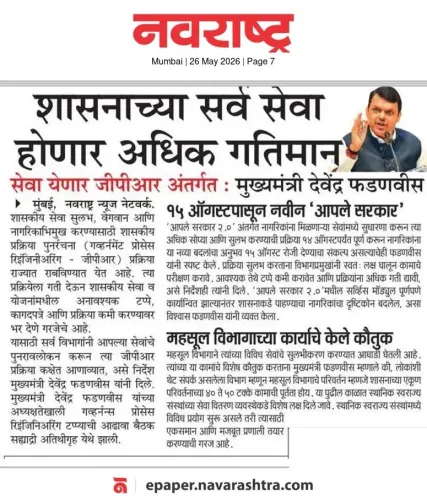
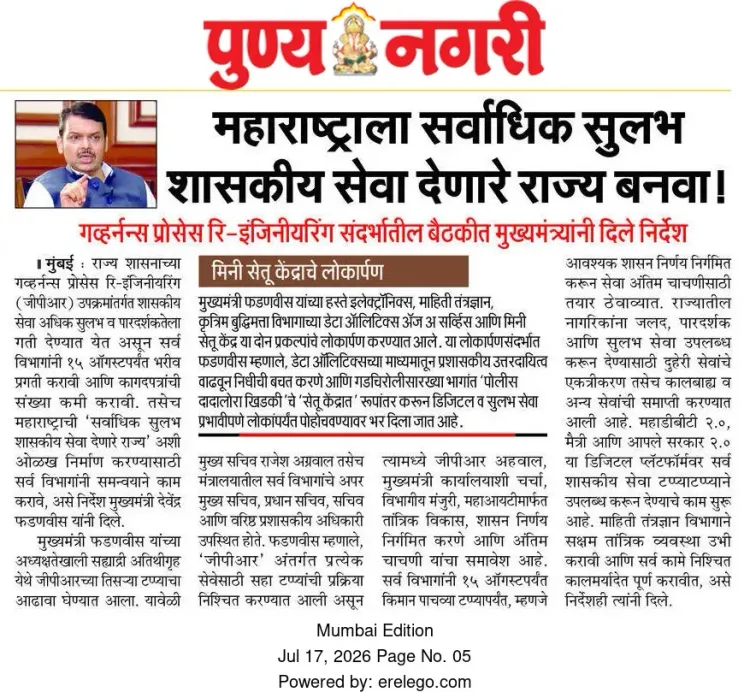
The Chief Minister's Office of Maharashtra on Friday, 17 July 2026, called on Chief Minister Devendra Fadnavis to make Maharashtra the state offering the most accessible government services in the country, tagging the initiative under the hashtag #ProcessReengineering.
Context
The post, directed at @Dev_Fadnavis, carries the Marathi directive: 'महाराष्ट्राला सर्वाधिक सुलभ शासकीय सेवा देणारे राज्य बनवा!' — translated as 'Make Maharashtra the state that provides the most accessible government services!' The message signals a fresh push from the Chief Minister's own office to benchmark the state's service delivery against national peers and emerge at the top.Policy Backdrop
This call is not without precedent. During his earlier term from 2014 to 2019, Fadnavis oversaw the launch of MahaGov and allied e-governance portals aimed at digitising citizen-facing services. Maharashtra also enacted the Maharashtra Right to Public Services Act, 2015, which set legally binding, time-bound delivery standards for a range of government services. The current push under #ProcessReengineering appears to build on that legislative and digital foundation, seeking to simplify and streamline government workflows further so that citizens face fewer procedural bottlenecks. The broader national context matters here. Since the Digital India initiative gained momentum from 2015 onward, Indian states have increasingly competed on ease-of-governance metrics. Maharashtra, as one of the country's largest and most economically significant states, has consistently pursued administrative reforms to reduce red tape — and the latest directive suggests that competition is intensifying.Stakeholders and Impact
The primary beneficiaries of any successful process reengineering effort would be Maharashtra's millions of citizens who regularly interact with state departments for services ranging from land records and caste certificates to business licences and welfare disbursements. A leaner, faster service architecture would reduce the time and cost burden on ordinary residents, particularly in rural and semi-urban areas where physical access to government offices remains a challenge. The state bureaucracy is equally central to this effort. Reengineering government processes typically requires inter-departmental coordination, revision of legacy workflows, and investment in digital infrastructure — all of which demand sustained administrative will. The explicit tagging of CM Fadnavis by his own office underscores that political ownership is being placed at the highest level of the state executive.What's Next
Watchpoints include the rollout of department-specific reengineering projects, any revision to the Maharashtra Right to Public Services Act, and updates to the state's digital service portals. If the government formalises targets — such as a ranked position in national ease-of-governance assessments or a reduction in average service-delivery timelines — those benchmarks will become the measure of whether this directive translates into tangible change for citizens. The hashtag #ProcessReengineering suggests a structured campaign may already be in motion within the state administration.Point of View
A strategy he deployed during his first term with measurable results in e-governance uptake. Whether the hashtag campaign translates into structural change will depend on whether department-level implementation matches the ambition of the top-down mandate.
NationPress
17 Jul 2026
Frequently Asked Questions
What is the Maharashtra process reengineering initiative?
Process reengineering in Maharashtra refers to the state government's effort to simplify, digitise, and speed up government workflows so that citizens can access public services more easily and quickly, reducing paperwork and procedural delays.
What is the Maharashtra Right to Public Services Act?
The Maharashtra Right to Public Services Act, enacted in 2015, legally mandates time-bound delivery of specified government services to citizens, holding officials accountable for delays and setting clear timelines for each service category.
What has Devendra Fadnavis done for e-governance in Maharashtra?
During his first term as Chief Minister from 2014 to 2019, Devendra Fadnavis oversaw the launch of MahaGov and other e-governance portals that digitised a range of citizen-facing services, laying the groundwork for subsequent administrative reform drives.
How does Maharashtra rank on government service delivery among Indian states?
Maharashtra has consistently pursued administrative reforms to reduce red tape and improve service delivery, competing with other large states on national ease-of-governance metrics, though specific current rankings are subject to ongoing government assessments.
What should citizens expect from Maharashtra's service reengineering push?
Citizens — especially in rural and semi-urban areas — can expect efforts to reduce the time and procedural burden for services such as land records, caste certificates, and welfare disbursements, though the pace of change will depend on department-level implementation.