CM Fadnavis Spotlights Trimbakeshwar's Tri-Faced Shivling This Shravan

Synopsis
Maharashtra CM Devendra Fadnavis spotlighted the Trimbakeshwar Jyotirlinga in Nashik — famed for its rare tri-faced Shivling — as part of the state's 'MaharashtrachiShivDhara' social media campaign during the sacred month of Shravan 2026, boosting religious tourism across the state's Jyotirlinga belt.
Key Takeaways
CM Devendra Fadnavis posted about Trimbakeshwar Jyotirlinga on 14 August 2026 as part of the #MaharashtrachiShivDhara campaign.
Trimbakeshwar, located in Nashik district , is one of the twelve Jyotirlingas and is uniquely distinguished by its tri-faced (tri-mukhi) Shivling .
The temple sits at the source of the Godavari river and is a key site in one of India's busiest pilgrimage corridors.
Maharashtra is home to five of the twelve Jyotirlingas , which the state is actively marketing as a religious tourism circuit.
The campaign is timed to Shravan 2026 , the peak season for Shiva pilgrimages, amplifying both cultural pride and domestic tourism.
One of India's most architecturally singular sacred sites is getting a moment in the national spotlight. Maharashtra Chief Minister Devendra Fadnavis on Friday, 14 August 2026, turned the state's gaze toward the ancient Trimbakeshwar Jyotirlinga temple in Nashik, celebrating its rare three-faced Shivling as part of his ongoing महाराष्ट्राची शिवधारा ('Maharashtra's Shiva Stream') series — timed precisely to the sacred month of Shravan.
The Temple That Stands Apart Among the Twelve Jyotirlingas
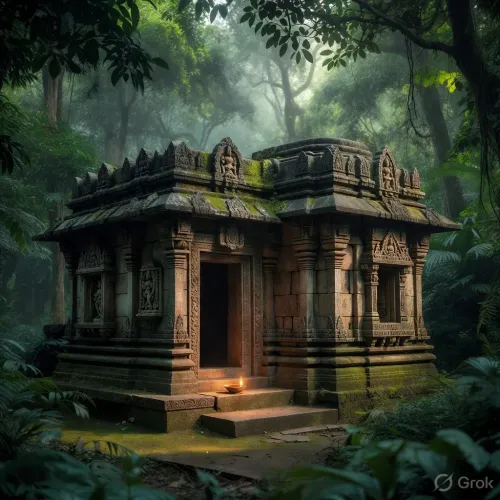
Trimbakeshwar is one of the twelve Jyotirlingas of Lord Shiva — the holiest tier of Shiva temples in the Hindu tradition — but it holds a distinction even within that elite circle. Its presiding deity is a tri-faced Shivling, representing Brahma, Vishnu, and Shiva simultaneously, an iconographic rarity that draws scholars and pilgrims alike. The temple's traditional Hemadpanthi stone architecture, characteristic of medieval Maharashtra, adds to its standing as a monument of both faith and craftsmanship.
Nashik district, where the temple sits at the source of the Godavari river, is already one of Maharashtra's most visited pilgrimage corridors — anchored further by its role as a Kumbh Mela host city. During Shravan, footfall at Trimbakeshwar surges as devotees observe month-long rituals tied to the Shiva calendar.
Shravan, Social Media, and the Shivdhara Campaign
The post is part of a deliberate pattern: Indian state governments routinely use the Shravan season to amplify their Shiva temple circuits on social media, blending religious sentiment with destination promotion. The hashtags #MaharashtrachiShivDhara and #MaharashtraTourism signal a coordinated campaign by Maharashtra Tourism, the state department that has been positioning its Jyotirlinga belt — Maharashtra is home to five of the twelve Jyotirlingas — as a flagship religious tourism offering. The Chief Minister's personal amplification of the series lends it executive visibility and signals state-level priority.
For the tourism sector, Shravan is peak season. Pilgrims travelling to Trimbakeshwar during this window generate significant economic activity for Nashik's hospitality, transport, and local trade ecosystem — making the campaign as much an economic nudge as a cultural one.
As Shravan 2026 unfolds, the Shivdhara series is one to watch — each post in the campaign a quiet argument that Maharashtra's sacred geography is itself a destination worth the journey.
Point of View
Not just heritage. With Shravan drawing millions to temple towns, executive amplification on social media functions as low-cost, high-reach destination marketing. The series also quietly reinforces Fadnavis's personal brand as a custodian of Maharashtra's cultural identity ahead of any future electoral cycle.
NationPress
14 Aug 2026
Frequently Asked Questions
Why is Trimbakeshwar Jyotirlinga special among the twelve Jyotirlingas?
Trimbakeshwar is uniquely distinguished by its tri-faced (tri-mukhi) Shivling, which represents Brahma, Vishnu, and Shiva simultaneously — a rare iconographic feature not found in the other eleven Jyotirlingas. The temple is also situated at the source of the sacred Godavari river in Nashik district, Maharashtra.
Where is Trimbakeshwar temple located?
The Trimbakeshwar Jyotirlinga temple is located in Nashik district , Maharashtra, approximately 28 kilometres from Nashik city, at the origin point of the Godavari river.
What is the MaharashtrachiShivDhara campaign?
MaharashtrachiShivDhara ('Maharashtra's Shiva Stream') is a social media series promoted by the Maharashtra government and Maharashtra Tourism to highlight the state's Shiva temples and Jyotirlinga sites, particularly during the sacred month of Shravan.
How many Jyotirlingas are in Maharashtra?
Maharashtra is home to five of the twelve Jyotirlingas — Trimbakeshwar (Nashik), Bhimashankar, Grishneshwar (Aurangabad), Aundha Nagnath, and Parli Vaijnath — making it the state with the highest concentration of Jyotirlingas in India.
Why is Shravan significant for Shiva pilgrimage in India?
Shravan (July-August) is considered the holiest month for devotees of Lord Shiva in the Hindu calendar. Pilgrims undertake special rituals, fasts, and temple visits throughout the month, making it the peak season for Shiva temples including all twelve Jyotirlingas.