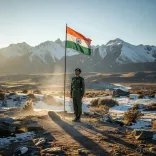
Shekhawat honours Partition victims on Remembrance Day
Synopsis
On Partition Horrors Remembrance Day, 14 August 2026, Union Culture and Tourism Minister Gajendra Singh Shekhawat declared survivors of the 1947 Partition equal to freedom fighters and called gratitude toward them a human duty, reinforcing the government's annual observance of the tragedy.
Key Takeaways
Gajendra Singh Shekhawat posted a tribute on 14 August 2026 , honouring victims and survivors of the 1947 Partition on Partition Horrors Remembrance Day.
He stated that those who endured the tragedy of Partition are equal to freedom fighters ( senaani ).
The minister called expressing gratitude to both known and unknown victims a 'human duty.' The Government of India instituted Partition Horrors Remembrance Day in 2021 , observed every 14 August .
The 1947 Partition displaced an estimated 10 to 20 million people and caused widespread communal violence across Punjab, Bengal, and Sindh .
The Ministry of Culture anchors annual observances with exhibitions and oral-history programmes to preserve survivor testimonies.
They were not soldiers, yet they bore a war's worst wounds. On Partition Horrors Remembrance Day, 14 August 2026, Union Culture and Tourism Minister Gajendra Singh Shekhawat paid tribute to the millions of ordinary Indians — named and nameless — who endured the catastrophe of the 1947 Partition, calling their suffering equal in weight to that of freedom fighters.
Posting in Hindi on X, Shekhawat wrote: 'विभाजन की त्रासदी जिनके हिस्से में आई, वे भी सेनानियों के समतुल्य हैं।' — 'Those who received the tragedy of Partition as their share are equal to freedom fighters. Expressing gratitude to those known and unknown people is also our human duty.'
A day carved out of grief: how 14 August became a day of remembrance
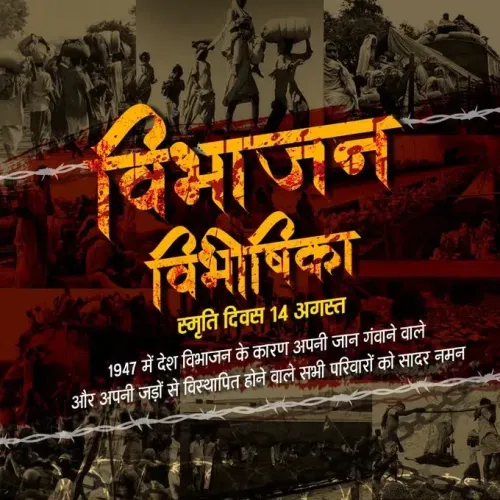
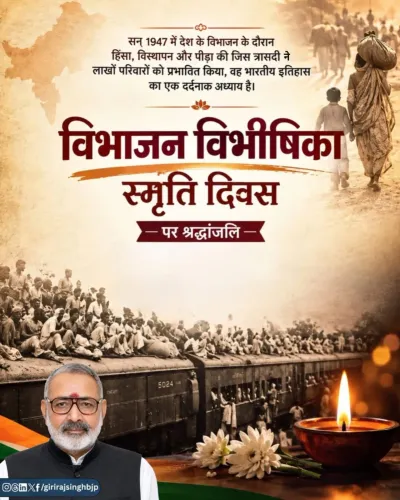
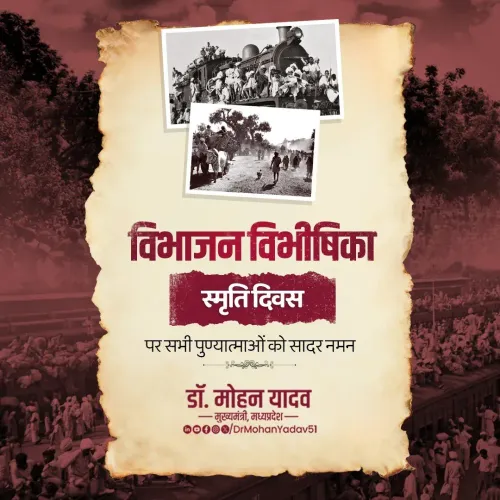
The Government of India formally instituted Partition Horrors Remembrance Day in 2021, designating 14 August — the eve of Independence Day — as an annual occasion to acknowledge the human cost of the subcontinent's division. The choice of date is deliberate and pointed: the same calendar square that marks Pakistan's Independence Day is reclaimed as a space for collective mourning on the Indian side.
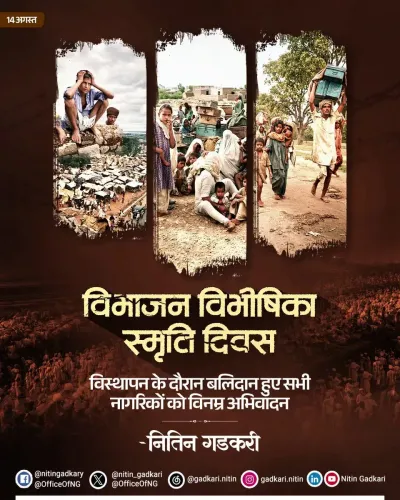
The 1947 Partition triggered one of the largest forced migrations in recorded history, displacing an estimated 10 to 20 million people and leaving hundreds of thousands dead in communal violence across Punjab, Bengal, and Sindh. Entire families were uprooted overnight; many never found each other again. For decades, their ordeal occupied an awkward silence in public memory — overshadowed by the triumphant narrative of independence.
Shekhawat's framing: survivors as unsung combatants
The minister's framing is morally significant. By placing Partition survivors on par with senaaniyon — freedom fighters — Shekhawat extends the language of national honour to civilians who lost homes, kin, and livelihoods through no choice of their own. The tribute explicitly includes the 'jane-anjane', the known and the unknown: the grandmother whose name was never recorded, the child who crossed the border alone, the village that simply ceased to exist on the new map.
The Ministry of Culture, which Shekhawat heads, has in recent years anchored observances around 14 August with exhibitions, oral-history drives, and memorial programmes designed to bring survivor testimonies into the public record before that generation is gone entirely.
A broader shift in how India remembers 1947
Since 2014, the BJP-led government has made the remembrance of Partition a more visible strand of national memory — treating it as a human tragedy in its own right rather than a footnote to independence. Critics and supporters read this emphasis differently, but the institutional outcome is concrete: a dedicated annual observance, museum initiatives, and ministerial-level statements that keep the wound — and the witness — in public view.
As India marks another Independence Day, Shekhawat's words are a reminder that the freedom celebrated on 15 August was paid for not only by those who marched and fought, but by millions who simply survived — and that survival, too, deserves its own moment of national gratitude.
Point of View
Institution-backed effort by the BJP-led government to embed Partition memory into India's national calendar — a project that began with the formal declaration of Remembrance Day in 2021. By equating civilian survivors with freedom fighters, the framing expands the moral vocabulary of national sacrifice beyond the battlefield, giving political and cultural legitimacy to a chapter of history that was long under-commemorated in official discourse. The Ministry of Culture's role as custodian of this memory — through exhibitions, oral histories, and ministerial statements — signals that this is policy, not just sentiment. Whether one reads it as genuine historical reckoning or strategic identity politics, the institutional infrastructure being built around Partition remembrance is now durable enough to outlast any single election cycle.
NationPress
14 Aug 2026
Frequently Asked Questions
What is Partition Horrors Remembrance Day?
Partition Horrors Remembrance Day is an annual observance on 14 August , formally instituted by the Government of India in 2021 , to commemorate the victims of the violence and mass displacement that accompanied the 1947 Partition of British India into India and Pakistan.
Why is Partition Horrors Remembrance Day observed on 14 August?
14 August was chosen because it is the eve of India's Independence Day and coincides with Pakistan's Independence Day, making it a date that carries the dual weight of freedom and the catastrophe that accompanied it.
What did Gajendra Singh Shekhawat say about Partition victims?
Union Culture and Tourism Minister Gajendra Singh Shekhawat said that those who endured the tragedy of Partition are equal to freedom fighters, and that expressing gratitude to both known and unknown victims is a human duty.
How many people were displaced by the 1947 Partition of India?
The 1947 Partition is estimated to have displaced between 10 and 20 million people across Punjab, Bengal, and Sindh , making it one of the largest forced migrations in recorded history.
What does the Ministry of Culture do for Partition Remembrance Day?
The Ministry of Culture , led by Gajendra Singh Shekhawat , organises exhibitions, oral-history drives, and memorial programmes around 14 August each year to preserve survivor testimonies and keep the memory of the Partition in public consciousness.