CM Fadnavis Vows to Fix Coal Procurement Hurdles in Assembly
Synopsis
Chief Minister Devendra Fadnavis pledged on 23 June 2026 at the Maharashtra Vidhan Sabha to resolve all coal procurement difficulties. The announcement during Monsoon Session 2026 signals executive intervention in the state's thermal power supply chain, which serves millions of households and industrial consumers.
Key Takeaways
Chief Minister Devendra Fadnavis made the coal procurement assurance on the floor of the Maharashtra Vidhan Sabha on 23 June 2026 .
The statement was made during the Monsoon Session 2026 in Mumbai .
Maharashtra's thermal power plants depend on coal from Coal India Limited and imports, making procurement continuity critical to power stability.
The central government's SHAKTI scheme (2017) governs transparent coal linkage allocation to state utilities.
Stakeholders include state power utilities, industrial consumers, and residential electricity users across Maharashtra.
Follow-up policy or administrative measures are expected before the close of the Monsoon Session.
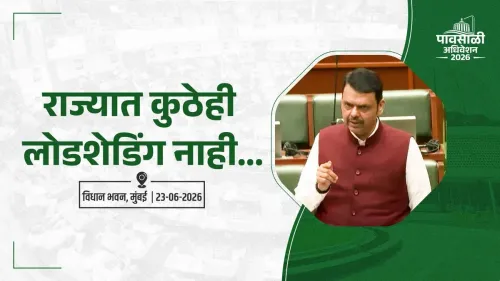
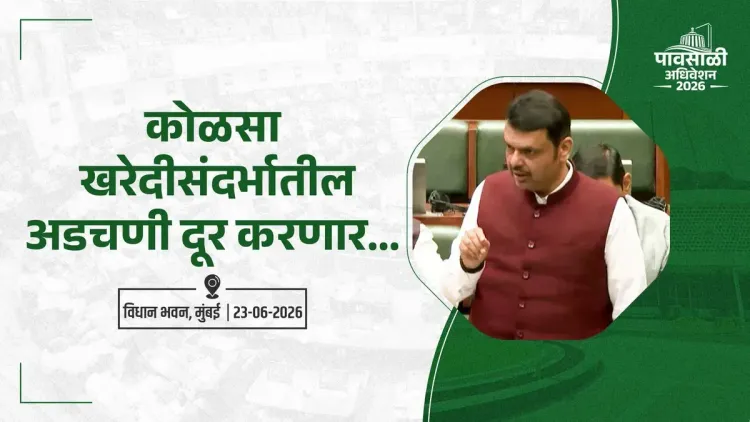
Maharashtra Chief Minister Devendra Fadnavis on Tuesday, 23 June 2026, assured the state legislature that all difficulties related to coal procurement would be resolved, making the announcement from the floor of the Vidhan Sabha in Mumbai during the ongoing Monsoon Session 2026.
Context
Speaking at the Maharashtra Legislative Assembly, Fadnavis declared in both English and Marathi: 'कोळसा खरेदीसंदर्भातील सर्व अडचणी दूर करणार' ('All difficulties regarding coal procurement will be resolved'). The statement came amid the Monsoon Session 2026, a key legislative window when the government faces scrutiny on power supply and industrial concerns ahead of peak demand months.
Maharashtra relies heavily on coal-fired thermal power plants for a significant share of its electricity generation. Disruptions in coal supply chains have periodically strained generation capacity, affecting both industrial consumers and households across the state.
Policy Backdrop
Coal procurement for state power utilities operates through a combination of domestic linkages from Coal India Limited and supplementary imports. The central government's SHAKTI (Scheme for Harnessing and Allocating Koyala Transparently in India) scheme, launched in 2017, was designed to provide transparent coal linkages to thermal power plants and reduce ad-hoc procurement inefficiencies.
State governments have repeatedly had to intervene at the procurement and logistics level to stabilise power availability, particularly when monsoon-season transport bottlenecks or allocation gaps emerge. Maharashtra's thermal capacity makes it especially sensitive to fluctuations in coal availability and pricing.
Stakeholders and Impact
The Chief Minister's assurance is directed at a wide set of stakeholders: state-owned power utilities, private industrial consumers, and millions of residential electricity users across Maharashtra. Coal supply disruptions translate directly into load-shedding risks and upward pressure on electricity tariffs.
Industrial clusters in regions such as Vidarbha, Marathwada, and the Mumbai Metropolitan Region are particularly sensitive to power availability, with any shortfall capable of disrupting manufacturing output and employment. The assembly intervention signals that procurement challenges have reached a level requiring executive-level commitment.
What's Next
Fadnavis's floor statement is expected to be followed by specific policy or administrative measures during the remainder of the Monsoon Session 2026. Observers will watch for announcements on revised coal linkage agreements, enhanced coordination with central coal allocation bodies, or changes to import procurement protocols.
The resolution of procurement difficulties, if operationalised swiftly, could ease pressure on Maharashtra's power sector heading into the second half of 2026, when industrial demand typically picks up after the monsoon.
Point of View
The Chief Minister raises the political cost of inaction and sets a visible accountability benchmark. The move also reflects a broader pattern in Maharashtra governance where coal and power supply remain perennial flashpoints, especially ahead of high-demand industrial periods. Whether the assurance translates into structural procurement reform or remains a session-floor commitment will define its actual policy weight.
NationPress
23 Jun 2026
Frequently Asked Questions
What did CM Devendra Fadnavis say about coal procurement in the Maharashtra assembly?
CM Devendra Fadnavis stated on 23 June 2026 at the Maharashtra Vidhan Sabha that all difficulties related to coal procurement would be resolved, addressing concerns raised during the Monsoon Session 2026.
Why is coal procurement a problem for Maharashtra?
Maharashtra relies heavily on coal-fired thermal power plants. Periodic shortages in coal supply — due to logistics bottlenecks or allocation gaps — can lead to power cuts and higher electricity tariffs for households and industries.
What is the SHAKTI scheme and how does it relate to Maharashtra?
The SHAKTI scheme, launched by the central government in 2017, provides transparent coal linkages to thermal power plants. Maharashtra's state utilities use these linkages alongside imports to meet their coal requirements.
When is the Maharashtra Monsoon Session 2026?
The Maharashtra Monsoon Session 2026 is ongoing as of 23 June 2026, with the Vidhan Sabha sitting in Mumbai to take up legislative and governance business.
What will happen next after Fadnavis's coal procurement assurance?
Specific administrative or policy measures — such as revised coal linkage agreements or updated import procurement protocols — are expected to be announced before the Monsoon Session 2026 concludes.