CM Rekha Gupta Hails ₹359.63 Cr Road Project for West Delhi
Synopsis
Delhi Chief Minister Rekha Gupta has welcomed a ₹359.63 crore central government approval for a 12.4 km road upgrade from Udyog Nagar Metro Station to Tikri Border, promising better connectivity for traders, industrial workers, and Delhi-Haryana commuters through Nangloi, Mundka, and Ghevra Mor.
Key Takeaways
₹359.63 crore sanctioned by Union Minister Nitin Gadkari for a West Delhi road project.
The corridor spans 12.4 kilometres from Udyog Nagar Metro Station to Tikri Border .
Key localities covered include Peeragarhi, Nangloi Chowk, Mundka , and Ghevra Mor .
Upgrade includes reinforced concrete roads , improved service lanes, and junction redesigns to reduce congestion.
Project aims to ease movement for Nangloi traders, Mundka workers , and daily commuters to Bahadurgarh, Haryana .
Fits a broader central government pattern of arterial road upgrades across Delhi NCR since 2014 .
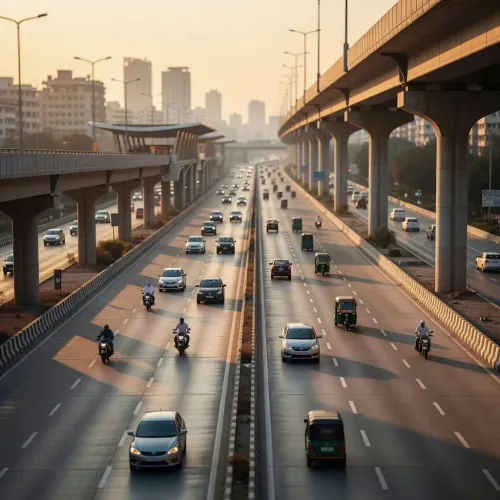
A ₹359.63 crore road project is set to transform one of West Delhi's most congested arterial corridors — and Delhi Chief Minister Rekha Gupta wasted no time crediting the approval as a 'big relief for millions of Delhi residents.' The 12.4-kilometre stretch from Udyog Nagar Metro Station to Tikri Border now has central funding behind it, following a green light from Union Minister Nitin Gadkari.
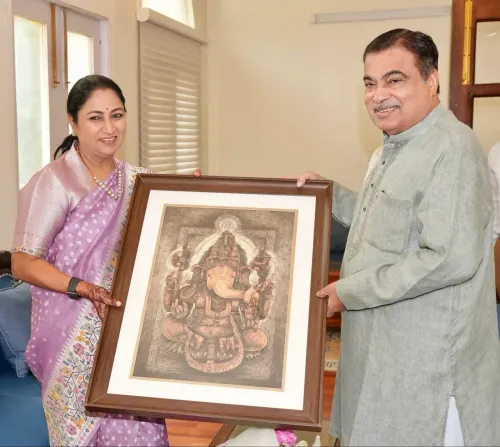
Posting on Tuesday, 17 November 2026, CM Gupta thanked Gadkari and acknowledged Prime Minister Narendra Modi's guidance, writing in Hindi: 'lakhon Delhiwasiyon ke liye badi rahat hai' — 'a big relief for millions of Delhi residents.' The corridor threads through some of West Delhi's densest and most economically active pockets: Peeragarhi, Nangloi Chowk, Mundka, and Ghevra Mor, before hitting the Delhi-Haryana border at Tikri.
Who gains: traders, workers and cross-border commuters
The project's beneficiary list reads like a cross-section of West Delhi's working economy. Nangloi's traders, Mundka's industrial labour force, and the daily stream of commuters between Delhi and Bahadurgarh in Haryana all stand to gain directly. The corridor serves colonies, villages, weekly markets and industrial estates that have long absorbed traffic with ageing, poorly-designed road infrastructure.
The upgrade promises reinforced concrete roads, improved service lanes, and junction redesigns specifically targeted at reducing bottlenecks. Each of those interventions addresses a distinct pain point — the concrete surface for durability in heavy-vehicle zones, service roads to pull local traffic off the main carriageway, and junction improvements to dismantle the intersection chokepoints that cascade into kilometre-long queues.
Delhi-Haryana trade corridor gets a fresh artery
Tikri Border is more than a city limit marker — it is a live economic hinge between the Delhi NCR's manufacturing and logistics belt and Haryana's industrial heartland around Bahadurgarh. Smoother movement through this corridor directly shortens freight cycles and lowers costs for small and medium enterprises on both sides of the state line.
The Ministry of Road Transport and Highways has been systematically upgrading Delhi NCR's arterial network since 2014, prioritising concrete roads and junction upgrades on high-traffic corridors. This approval fits that established pattern — central funding channelled into a stretch that is simultaneously a commuter route, a trade artery, and a last-mile link for industrial estates.
What comes next on the 12.4 km stretch
The funding approval is the starting gun, not the finish line. The key milestones to watch now are the tendering process, construction start date, and an eventual commissioning timeline. Once operational, the corridor's real-world test will be whether travel times on the Nangloi-Tikri run meaningfully drop and whether Delhi-Haryana freight volumes show a measurable uptick.
For a capital that ranks among the world's most congested cities, every kilometre of upgraded arterial road carries outsized weight. This one carries ₹359.63 crore and the political weight of three names: Modi, Gadkari, and a Chief Minister clearly intent on owning every infrastructure win in her term.
Point of View
CM Gupta is signalling a unified BJP governance narrative for the capital, linking central budgets to local relief. The Tikri-Nangloi-Mundka corridor is also symbolically loaded: it was the site of prolonged farmer protests in 2020-21, and improved infrastructure here carries a quiet subtext of normalisation. Watch whether the tendering speed and construction pace become a yardstick for how Delhi's new dispensation translates approvals into ground-level delivery.
NationPress
17 Nov 2026
Frequently Asked Questions
What is the ₹359.63 crore West Delhi road project approved in November 2026?
It is a central government-approved project to develop a 12.4 km road corridor from Udyog Nagar Metro Station to Tikri Border, covering key localities such as Peeragarhi, Nangloi Chowk, Mundka, and Ghevra Mor in West Delhi. The project includes concrete roads, service lanes, and junction upgrades.
Who approved the Udyog Nagar to Tikri Border road project?
Union Minister of Road Transport and Highways Nitin Gadkari approved the project. Delhi CM Rekha Gupta credited the approval to Gadkari's initiative and Prime Minister Narendra Modi's broader guidance on infrastructure development.
How will the Tikri Border road project help West Delhi commuters?
The upgraded corridor will reduce congestion at major junctions, improve travel safety, and speed up movement for Nangloi traders, Mundka industrial workers, and daily commuters travelling between Delhi and Bahadurgarh in Haryana.
What localities are covered under the West Delhi road corridor project?
The project covers Peeragarhi, Nangloi Chowk, Mundka, and Ghevra Mor, along with colonies, villages, markets, and industrial areas along the 12.4 km route from Udyog Nagar Metro Station to Tikri Border.
When will the Udyog Nagar–Tikri Border road project be completed?
A completion date has not been officially announced yet. The next milestones to watch are the tendering process and the construction start date, following the ₹359.63 crore funding approval.