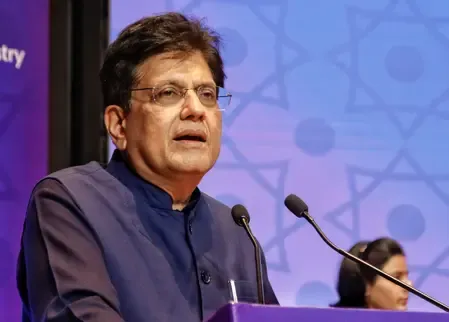
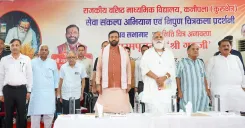
CM Rekha Gupta Hails GeM's 10-Year Procurement Revolution
Synopsis
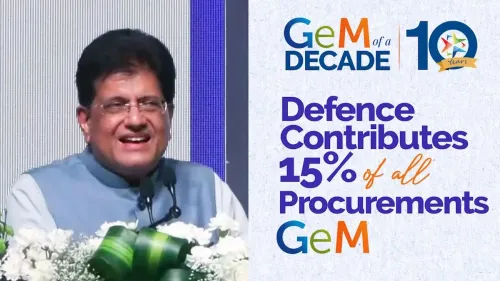
Delhi Chief Minister Rekha Gupta marked GeM's tenth anniversary by highlighting its growth from ₹422 crore in purchases a decade ago to over ₹1.55 lakh crore today, crediting the platform with opening government contracts to small businesses, women entrepreneurs, and startups under PM Modi's self-reliance agenda.
Key Takeaways
GeM was launched on 9 August 2016 to replace the older DGS&D rate-contract system with an end-to-end digital procurement platform.
Government purchases through GeM have grown from ₹422 crore a decade ago to over ₹1.55 lakh crore , according to official figures cited by CM Rekha Gupta.
Lakhs of small businesses, women entrepreneurs, and startups now sell directly to the government through the portal without intermediaries.
The Public Procurement (Preference to Make in India) Order, 2017 gave GeM a domestic-first mandate aligned with the broader Aatmanirbhar Bharat framework.
State-level adoption and expansion into services and works procurement remain key areas to watch in GeM's next phase.
What began as a tentative digital experiment in government buying has grown into one of the world's largest public procurement platforms — and Delhi Chief Minister Rekha Gupta marked GeM's tenth anniversary on 10 August 2026 by putting that transformation in stark numerical relief.
Citing a leap from government purchases worth ₹422 crore a decade ago to over ₹1.55 lakh crore today, the Chief Minister framed the Government e-Marketplace (GeM) not merely as a procurement tool but as proof that technology can strip discretion and opacity out of public spending. The numbers, drawn from official figures, tell a story of scale that is difficult to ignore.
From DGS&D ledgers to a live digital marketplace
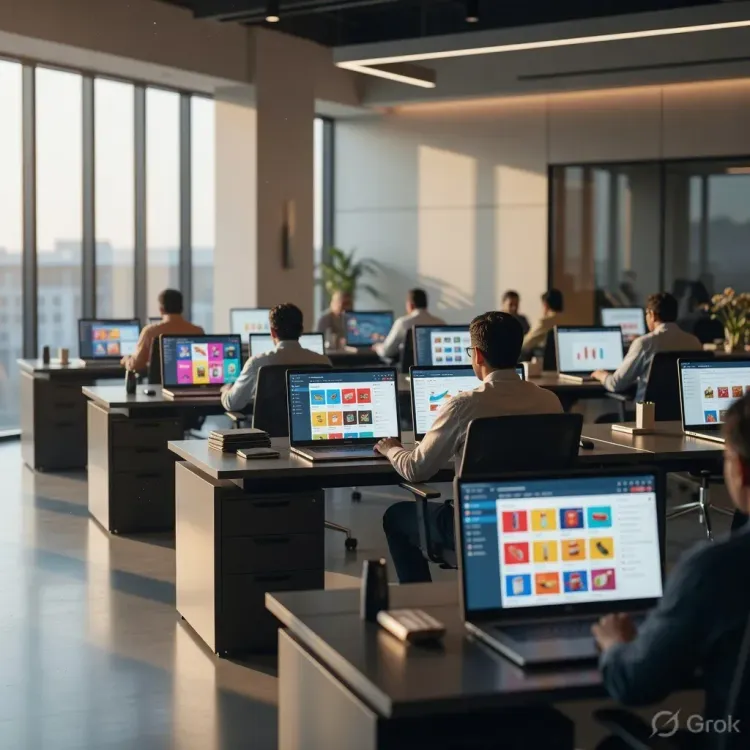
GeM was launched on 9 August 2016 to replace the older Directorate General of Supplies and Disposals (DGS&D) rate-contract system — a paper-heavy process long criticised for delays and limited competition. The new portal, operated under the Ministry of Commerce and Industry, moved the entire cycle of vendor registration, product listing, price comparison, and order placement online, creating an auditable trail for every rupee spent.
A year later, the Public Procurement (Preference to Make in India) Order, 2017 reinforced the platform's domestic-first orientation, mandating preference for Indian-made goods in government purchases. That policy scaffold gave GeM a strategic role beyond efficiency — it became a channel for the broader Aatmanirbhar Bharat (self-reliant India) agenda announced in May 2020.
Small sellers, women entrepreneurs, and startups at the counter
The most politically resonant part of Gupta's post is not the headline figure but what lies beneath it: lakhs of small businesses, women entrepreneurs, and startups now selling directly to government without a middleman. GeM's architecture — low entry barriers, standardised catalogues, and direct payment — was designed precisely to give micro-sellers access to the government's enormous buying power, a market historically dominated by established contractors.
This connects GeM to the wider post-2014 drive to digitise welfare and procurement — from Direct Benefit Transfers to GST compliance systems — each designed to reduce leakage and human discretion. Prime Minister Narendra Modi's Vocal for Local and Make in India campaigns, launched in September 2014, gave that drive a nationalist-economic framing that GeM operationalises at the transaction level.
What the next decade of GeM procurement could look like
The platform's trajectory now points toward services and works procurement — categories far more complex and higher-value than the goods and products that dominate current volumes. State-level adoption also remains uneven, and how quickly India's 28 states and 8 Union Territories deepen their GeM usage will determine whether the ₹1.55 lakh crore figure is a ceiling or a staging post.
A procurement portal that once processed ₹422 crore in a year has become infrastructure. The question GeM's second decade must answer is whether that infrastructure can hold as the ambition scales.
Point of View
One that has bipartisan policy roots but has been most aggressively scaled under the current dispensation. Whether that scale translates into measurable gains for the MSME sector — the platform's most politically salient constituency — will be the real test of the anniversary claims.
NationPress
24 Sept 2026
Frequently Asked Questions
What is GeM and when was it launched?
GeM, or Government e-Marketplace, is India's official online portal for public procurement. It was launched on 9 August 2016 by the Ministry of Commerce and Industry to replace the older, paper-based DGS&D rate-contract system.
How much business has been done through GeM?
According to official figures cited by Delhi CM Rekha Gupta, GeM has facilitated government purchases worth over ₹1.55 lakh crore , up from just ₹422 crore a decade ago.
Can small businesses and startups sell on GeM?
Yes. GeM is designed with low entry barriers so that small businesses, women entrepreneurs, and startups can register and sell directly to government buyers without going through traditional intermediaries.
How does GeM connect to Make in India and Aatmanirbhar Bharat?
The Public Procurement (Preference to Make in India) Order, 2017 mandates preference for domestically produced goods on GeM, directly supporting PM Modi's Make in India and Aatmanirbhar Bharat campaigns by channelling government spending toward Indian manufacturers.
What is next for GeM in India?
Analysts and policy observers are watching for GeM's expansion into services and works procurement — more complex categories beyond goods — and for deeper adoption by state governments, which would significantly increase overall transaction volumes.