CM Haryana Marks 12 Years of Modi Govt's Defence and Space Gains
Synopsis
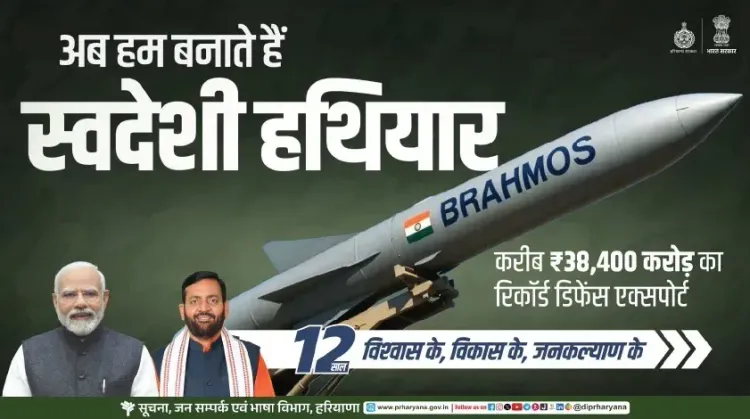
The Chief Minister's Office of Haryana marked 12 years of the Modi government on 22 June 2026, highlighting achievements in indigenous defence production, record exports, private space sector participation, overseas humanitarian operations, and counter-terrorism measures as defining pillars of a 'new India.'
Key Takeaways
The CMO Haryana posted on 22 June 2026 marking 12 years of the Modi government at the Centre.
The post credits PM Modi with 'unprecedented achievements' in defence, space, humanitarian operations, and national security.
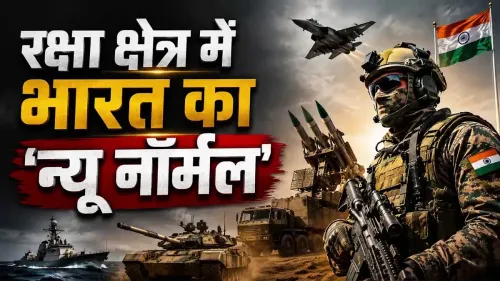
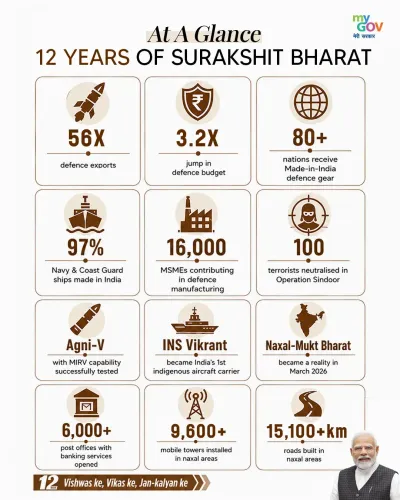
India's shift from arms importer to exporter, anchored by platforms like BrahMos and Akash , was highlighted as a key milestone.
Space sector reforms, including the creation of IN-SPACe in 2020 , were cited as enabling private innovation alongside ISRO .
Operation Sadbhav , Operation Brahma , and Operation Sagar were named as evidence of India's role as a credible global humanitarian partner.
The post signals Haryana's intent to align its identity with national defence and strategic self-reliance narratives.
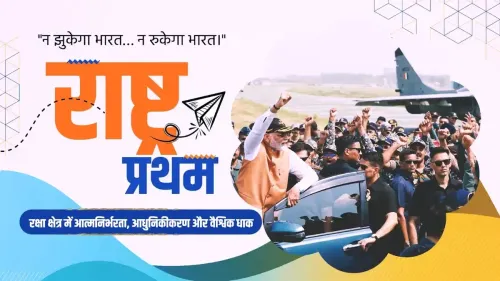
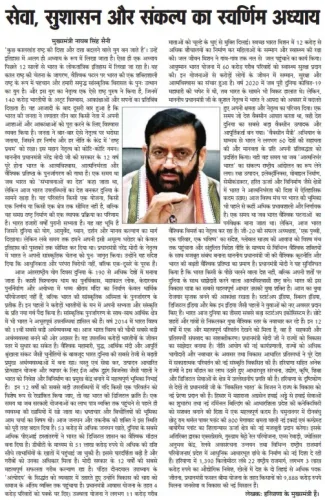
The Chief Minister's Office of Haryana on Monday, 22 June 2026 lauded 12 years of the Narendra Modi-led central government, highlighting landmark achievements in defence indigenisation, space sector reform, humanitarian operations, and counter-terrorism under what it called a 'new identity for a new India and new Haryana.'
The post, shared from the official CMO Haryana account on X, stated in Hindi: '12 varshon mein naye Bharat, naye Haryana ki nayi pehchaan' ('A new identity for new India and new Haryana in 12 years'). It credited Prime Minister Narendra Modi with steering India toward 'unprecedented achievements' in defence, space, global humanitarian cooperation, and national security.
Context
The post marks the completion of 12 years of the Modi government at the Centre, which took office in May 2014. The CMO Haryana framed the milestone as a moment of shared pride, linking Haryana's own identity to the national trajectory under the current dispensation. The message specifically cited self-reliance in defence production and record defence exports as defining achievements of this period.
The reference to 'record defence exports' aligns with the government's stated policy goal under the Defence Production and Export Promotion Policy (2020), which set ambitious multi-billion dollar targets for domestic production and overseas sales of indigenous platforms.
Policy Backdrop
Since 2014, India has pursued a deliberate shift from being a major arms importer to an exporter of indigenous defence platforms. The Make in India initiative, launched that same year, placed defence manufacturing among its priority sectors to reduce import dependence. Platforms such as the BrahMos cruise missile and the Akash surface-to-air missile system have become flagship export products.
On the space front, reforms announced in 2020 established IN-SPACe (Indian National Space Promotion and Authorisation Centre) to regulate and encourage private sector participation alongside ISRO. The CMO post specifically cited 'promotion of private participation in the space sector' as a driver of innovation and technological development.
The post also referenced Operation Sadbhav, Operation Brahma, and Operation Sagar as examples of India's humanitarian outreach, describing the country as a 'credible global partner' delivering a message of service to humanity. These operations are cited as instances of India deploying naval and air assets for overseas disaster relief and humanitarian assistance.
Stakeholders and Impact
The primary beneficiaries of the policies cited include domestic defence manufacturers, private space startups, and the Indian Armed Forces, which have received upgraded indigenous equipment and expanded operational mandates. The shift toward self-reliance has also created industrial employment and supply-chain ecosystems across states, including Haryana, which hosts several defence and aerospace ancillary units.
The CMO's framing ties Haryana's economic and strategic interests directly to national defence and space policy, signalling the state government's intent to position itself as a stakeholder in India's emerging defence-industrial corridor. The post's reference to a 'decisive action against terrorism and a strong security apparatus' also resonates with Haryana's border-state sensitivities and its significant contribution to the armed forces.
What's Next
Attention will now turn to the forthcoming Union Defence Budget for 2026-27, where fresh allocations for indigenisation and export incentives are expected to be announced. Any new private-sector space launch or satellite contract announcements in the coming months will be closely watched as a measure of how far the IN-SPACe framework has delivered on its promise. For Haryana, the broader question is whether the state can deepen its footprint in the defence-manufacturing value chain as national procurement shifts further toward domestic suppliers.
Point of View
Weaving local identity ('new Haryana') into a national achievement arc to consolidate voter sentiment ahead of any future electoral cycle. By foregrounding defence exports, space reforms, and humanitarian operations, the messaging deliberately pivots away from domestic welfare metrics toward a muscular, aspirational national-security frame. The invocation of named humanitarian operations positions India as a net security provider in the region, a theme that has gained traction in foreign-policy circles since 2014. Taken together, the post reflects a coordinated political communication strategy in which sub-national governments function as amplifiers of the ruling party's federal brand.
NationPress
23 Jun 2026
Frequently Asked Questions
What did the Haryana CMO post about Modi government's 12 years?
The Chief Minister's Office of Haryana posted on 22 June 2026 praising 12 years of the Modi government, citing achievements in indigenous defence production, record defence exports, private space sector participation, humanitarian operations, and counter-terrorism as defining milestones.
What are Operation Sadbhav, Operation Brahma, and Operation Sagar?
The CMO Haryana post references these three operations as examples of India's overseas humanitarian assistance efforts, describing them as evidence of India's role as a 'credible global partner' in delivering aid and relief.
How has India's defence export performance changed under Modi?
Since 2014, India has pursued a shift from being a major arms importer to an exporter of indigenous platforms. The Defence Production and Export Promotion Policy (2020) set multi-billion dollar targets, with systems like BrahMos and Akash becoming flagship export products.
What is IN-SPACe and why was it created?
IN-SPACe, the Indian National Space Promotion and Authorisation Centre, was established in 2020 to regulate and encourage private sector participation in India's space sector alongside ISRO, enabling startups and commercial players to access launch and satellite infrastructure.
Why did Haryana's CMO office post about central government achievements?
The CMO Haryana linked the state's identity to national achievements under the Modi government, a common communication strategy among BJP-governed states to align local governance narratives with the ruling party's federal record on the 12th anniversary of the government.