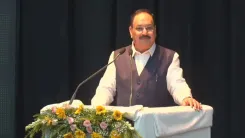
CM Hemant Soren: 25% women in training shows Jharkhand's strength

Synopsis
The Jharkhand Chief Minister's Office, citing CM Hemant Soren, announced on 25 June 2026 that 25 per cent women's participation in training programmes signals an empowered Jharkhand, with the government committed to equal gender participation across all sectors.
Key Takeaways
The Jharkhand CMO quoted CM Hemant Soren on 25 June 2026 highlighting 25 per cent women's participation in training as a key milestone.
The statement frames the 25 per cent figure as a symbol of a 'changing and strengthening' empowered Jharkhand.
The Jharkhand government has reaffirmed its commitment to equal and proportionate participation of women and men across every sector of the state.
The announcement aligns with a decade-long national trend of state governments using participation metrics to signal gender-equity policy commitments.
The next concrete indicator to watch is the release of gender-disaggregated training data or revised enrolment quota guidelines from the state.
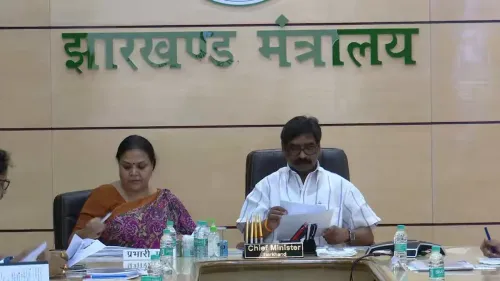
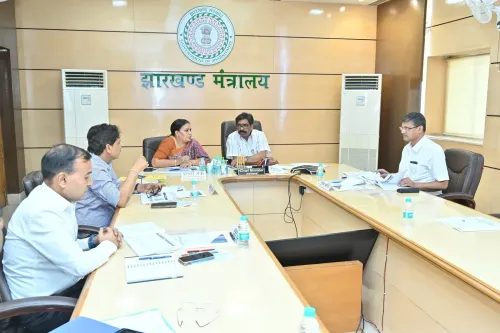
The Chief Minister's Office of Jharkhand, citing Chief Minister Hemant Soren, on Thursday, 25 June 2026, declared that 25 per cent women's participation in training programmes is a symbol of an empowered and strengthening Jharkhand, reaffirming the state government's commitment to equal participation of women and men across every sector.
Context
The post, shared from the official Jharkhand Chief Minister's Office account, quotes CM Hemant Soren directly: 'प्रशिक्षण में 25% महिलाओं की भागीदारी सशक्त झारखण्ड की बदलती और मजबूत होती तस्वीर का प्रतीक है' ('25 per cent women's participation in training is a symbol of the changing and strengthening picture of an empowered Jharkhand'). The statement positions the figure as a milestone in the state's gender-equity journey, signalling that the government views measurable participation data as a benchmark of progress.
Policy Backdrop
Since 2019, the Jharkhand government has run a series of women-focused skill development and education programmes aimed at raising female workforce participation across the state. The broader national trend over the past decade has seen Indian state governments incrementally raise targets for female enrolment in training and public programmes, using participation metrics to signal policy commitment to gender balance. Jharkhand's announcement aligns squarely with this pattern, framing the 25 per cent threshold not as a ceiling but as an indicator of momentum.
CM Soren's administration has consistently emphasised equal and proportionate participation of women and men — 'समान और बराबर की भागीदारी' ('equal and equivalent participation') — as a governing principle, extending this commitment beyond any single programme to 'every sector' of the state.
Stakeholders and Impact
The primary beneficiaries of this policy direction are women in Jharkhand, a state where tribal and rural female populations have historically faced structural barriers to formal skill training and employment. A 25 per cent female participation rate in training cohorts, if sustained and expanded, could translate into measurable gains in women's economic agency and workforce representation over the medium term. Civil society organisations and self-help groups working on women's livelihood in the state are likely to track these figures closely as a gauge of ground-level implementation.
What's Next
Analysts and gender-policy observers will watch for the release of gender-disaggregated training data that can independently verify and contextualise the 25 per cent figure cited by the Chief Minister. New scheme guidelines or revised enrolment quotas expanding women's share beyond the current benchmark would be the next concrete policy step consistent with the government's stated commitment. Any such announcement would test whether the Jharkhand government's pledge of equal participation translates into binding programmatic targets across departments.
Point of View
Which draws significant electoral support from tribal and rural women, anchoring the message in a measurable metric serves both a policy and a political purpose. The statement's sweep — committing to equal participation 'across every sector' — is aspirational in scope, and will invite scrutiny once disaggregated data becomes publicly available. Whether the 25 per cent figure is a floor to be raised or a one-off milestone will define the credibility of this commitment over the next budget and scheme cycle.
NationPress
25 Jun 2026
Frequently Asked Questions
What did Jharkhand CM Hemant Soren say about women's participation in training?
CM Hemant Soren stated that 25 per cent women's participation in training programmes is a symbol of an empowered and strengthening Jharkhand, and that the government is committed to equal participation of women and men across every sector.
What is the significance of 25% women's participation in Jharkhand training programmes?
The Jharkhand government has cited the 25 per cent figure as a measurable indicator of progress in its gender-equity agenda, reflecting a broader national trend of using participation metrics to signal policy commitment to women's empowerment.
What schemes has the Jharkhand government run for women's skill development?
Since 2019, the Jharkhand government has implemented multiple women-focused skill development and education programmes aimed at raising female workforce participation, though specific programme details for 2026 are pending official disclosure.
Is Jharkhand committed to equal gender participation across all government sectors?
Yes, the Chief Minister's Office has reaffirmed that the Jharkhand government is committed to equal and proportionate participation of women and men — described as 'samaan aur barabar ki bhaagidaari' — across every sector of the state.
What should we watch for next on Jharkhand women's empowerment policy?
The key development to track is the release of gender-disaggregated training enrolment data and any new scheme guidelines or quota revisions that would operationalise the government's stated commitment to equal participation beyond the current 25 per cent benchmark.