CM Hemant Soren Orders Drought Plans, Procurement Overhaul
Synopsis
Chief Minister Hemant Soren has ordered Jharkhand's agriculture, animal husbandry and cooperatives departments to develop a procurement system and draft drought contingency plans in response to the state's ongoing rainfall deficit, tagging Agriculture Minister Shilpi Neha Tirki and AgriJharkhand.
Key Takeaways
CM Hemant Soren issued directives on 17 July 2026 in response to below-normal rainfall across Jharkhand .
The orders cover three sectors: agriculture, animal husbandry, and cooperatives .
The government has been directed to develop a dedicated procurement system to protect farmer incomes.
Contingency schemes specifically addressing the threat of drought (sukhad) are to be prepared.
Agriculture Minister Shilpi Neha Tirki and state department AgriJharkhand are the named executing authorities.
The move extends Jharkhand's established policy of drought-proofing that includes crop insurance under Pradhan Mantri Fasal Bima Yojana and expanded micro-irrigation since 2022-23 .
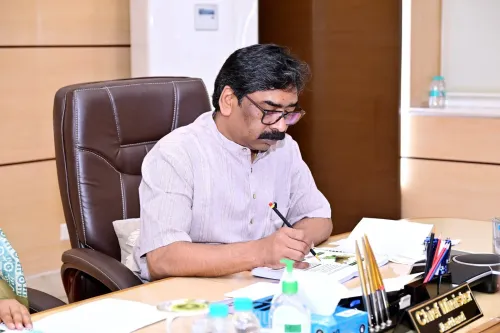
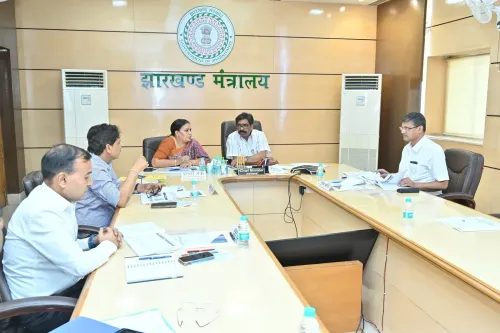
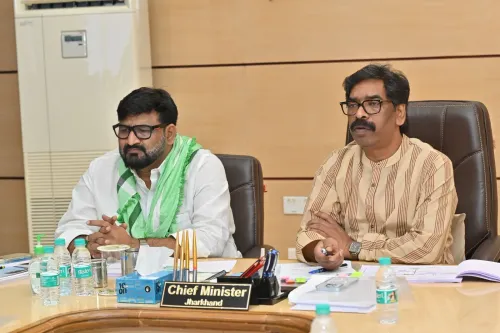
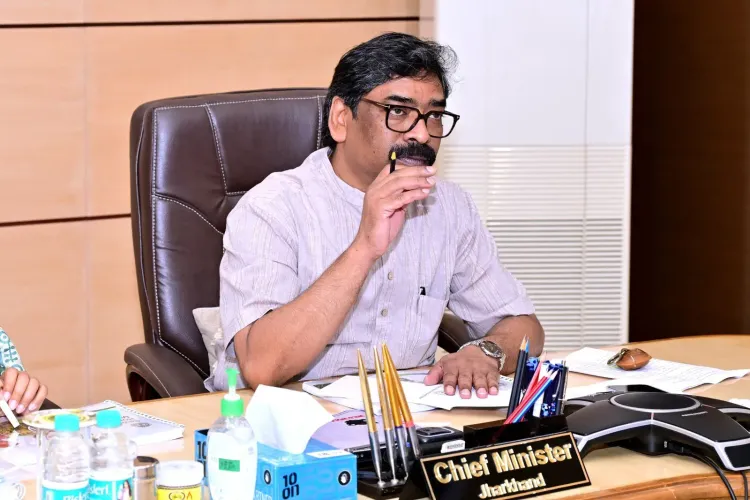
The Chief Minister's Office of Jharkhand announced on Friday, 17 July 2026 that Chief Minister Hemant Soren has issued clear directives to develop a procurement system in agriculture, animal husbandry, and cooperatives, and to prepare contingency plans in view of the state's ongoing rainfall deficit.
The CMO post, tagging Agriculture Minister Shilpi Neha Tirki and the state agriculture department AgriJharkhand, stated that Soren has taken the current low-rainfall situation seriously — 'वर्तमान समय में राज्य हो रहे कम वर्षापात को गंभीरता से लेते हुए' ('taking the currently low rainfall in the state with seriousness') — and has ordered schemes to be readied against the threat of drought (sukhad).
Context
Jharkhand is an eastern Indian state where agriculture remains overwhelmingly rain-fed, leaving its predominantly rural and tribal farming communities acutely exposed to monsoon variability. The kharif sowing season, which depends on the June-to-September monsoon, is the backbone of the state's agricultural economy. Any significant shortfall in rainfall during this window can devastate crop output and destabilise the incomes of livestock owners who depend on pasture and fodder availability.
The Chief Minister's intervention on 17 July comes at a critical juncture in the sowing calendar, when delayed or deficient rains have the greatest impact on crop establishment. His directives specifically span three inter-linked sectors — agriculture, animal husbandry, and cooperatives — signalling a whole-of-rural-economy approach to drought preparedness.
Policy Backdrop
Jharkhand has a documented history of drought response. In 2019, the state government declared drought across multiple districts and released contingency funds for crop and livestock support. Since 2016, the state has participated in the Pradhan Mantri Fasal Bima Yojana, the central crop insurance scheme designed to cushion farmers against monsoon failure. In 2022-23, the state expanded micro-irrigation and watershed programmes under its agricultural development mission to reduce long-term drought vulnerability.
Successive Hemant Soren governments have consistently prioritised procurement mechanisms and relief frameworks, recognising that market access and price support are as important as crop insurance when rainfall fails. The current directive to build a dedicated procurement system across agriculture and cooperatives extends this established policy lineage into a more structural, institutional form.
Stakeholders and Impact
The groups most directly affected are Jharkhand's small and marginal farmers, livestock owners, and cooperative societies — all of whom face income collapse when the monsoon underperforms. A robust procurement framework would allow the state to purchase agricultural produce at assured prices even when private market demand weakens due to poor yields, providing a floor for rural incomes.
Agriculture Minister Shilpi Neha Tirki and the AgriJharkhand department have been explicitly tasked with executing the Chief Minister's directives. Cooperative societies, which serve as the institutional bridge between farmers and markets across the state, are also named as a key pillar of the planned intervention. Livestock owners stand to benefit from any contingency plans that address fodder supply and animal health under drought conditions.
What's Next
Analysts and farm-sector observers will watch for district-level drought declarations, the formal release of contingency funds, and any formal request to the central government for additional disaster-relief assistance once updated India Meteorological Department monsoon data is available. The framing of the Chief Minister's directive — focused on building systems rather than announcing one-time relief — suggests the administration is preparing for a prolonged period of rainfall stress rather than a single adverse weather event.
Whether the state follows through with a formal drought notification and a structured procurement calendar will determine how effectively these directives translate into on-the-ground support for Jharkhand's farming communities in the weeks ahead.
Point of View
The CM is ordering the construction of a procurement architecture — a signal that the administration anticipates sustained monsoon stress rather than a short-term weather blip. Tagging both the minister and the department publicly on X adds political accountability to what is often an opaque bureaucratic process. The move fits a broader pattern in eastern Indian states of using administrative directives on social media to signal urgency and pre-empt criticism of slow government response. Whether the directive translates into a formal drought declaration and budgetary release will be the real test of its seriousness.
NationPress
17 Jul 2026
Frequently Asked Questions
Why has Jharkhand CM Hemant Soren ordered drought contingency plans?
CM Hemant Soren has ordered drought contingency plans because Jharkhand is experiencing below-normal rainfall during the critical kharif sowing season, threatening crop output and rural livelihoods across the predominantly rain-fed state.
What is the procurement system Hemant Soren has directed for Jharkhand agriculture?
The Chief Minister has directed the agriculture, animal husbandry and cooperatives departments to develop a procurement system that can purchase farm produce at assured prices, shielding farmers from market collapse if yields fall due to drought.
Which minister is responsible for implementing Jharkhand's drought plans?
Agriculture Minister Shilpi Neha Tirki has been tasked by CM Hemant Soren to implement the drought contingency plans, along with the state's AgriJharkhand department.
Has Jharkhand declared a drought in 2026?
As of the CM's directive on 17 July 2026, no formal drought declaration has been announced; the government is in the preparatory phase of developing contingency schemes in response to low rainfall.
What is Jharkhand's history of drought response?
Jharkhand declared drought in multiple districts in 2019 and has participated in the Pradhan Mantri Fasal Bima Yojana crop insurance scheme since 2016; the state also expanded micro-irrigation and watershed programmes in 2022-23 to reduce long-term drought vulnerability.