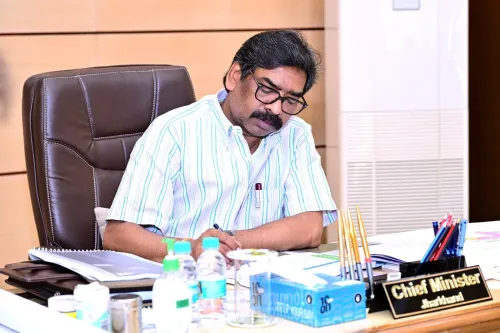
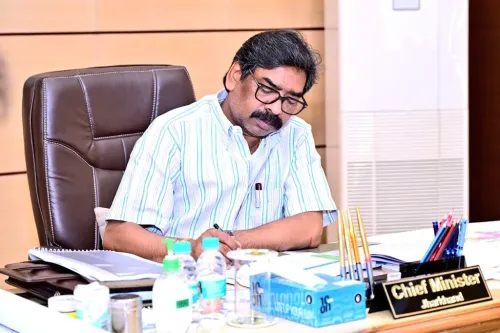
CM Hemant Soren Urges PM Modi to Rethink Mining Bill
Synopsis
Jharkhand Chief Minister Hemant Soren has written to Prime Minister Narendra Modi urging reconsideration of the Mines and Minerals (Development and Regulation) Amendment Bill 2026, warning it threatens the constitutional rights, revenue, and federal standing of mineral-rich states like Jharkhand.
Key Takeaways
Hemant Soren wrote formally to PM Narendra Modi on 13 August 2026 seeking reconsideration of the MMDR Amendment Bill, 2026 .
Soren warned the bill could have 'serious implications' on Jharkhand's constitutional rights, revenue, development, and federal structure .
Jharkhand holds major deposits of coal, iron ore, and bauxite , making mining revenue central to its state finances.
The MMDR Act was originally enacted in 1957 and last substantially amended in 2015 , when auction mandates shifted regulatory leverage toward the Centre.
Similar concerns over mining revenue and regulatory authority have previously been raised by Odisha and Chhattisgarh .
Soren's letter formalises a broader centre-state friction over natural resource governance into an on-the-record demand for federal consultation.
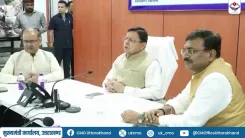
A formal letter landed at 7, Lok Kalyan Marg this week carrying a pointed message from Jharkhand Chief Minister Hemant Soren: the proposed Mines and Minerals (Development and Regulation) Amendment Bill, 2026 could strip mineral-rich states of their constitutional rights, revenue streams, and a share of their own development — and the Centre must reconsider.
What Soren's letter actually says
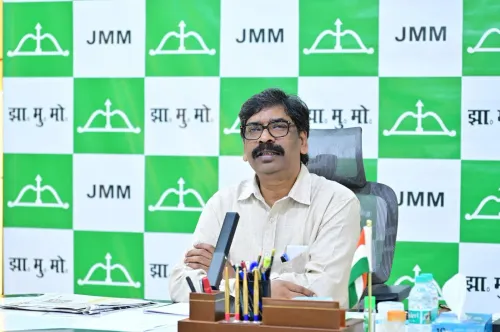
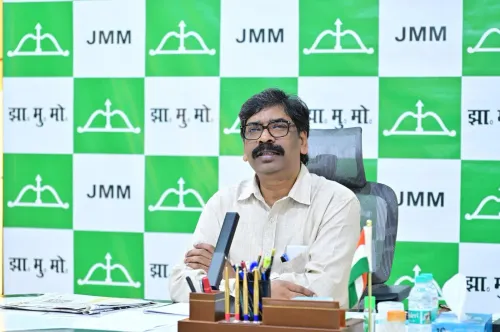
Writing to Prime Minister Narendra Modi on 13 August 2026, Soren argued that the bill's proposed provisions carry 'serious implications' (गंभीर प्रभाव) for states like Jharkhand — on their constitutional rights, revenue, development, and the federal structure itself. His request was direct: the central government should 'kindly reconsider these provisions' keeping in view Jharkhand's constitutional and financial rights and the interests of its people.
The letter is not a rejection of mining reform outright. It is a demand for a seat at the table — a plea that federalism be honoured before Parliament acts.
Why Jharkhand has skin in this game
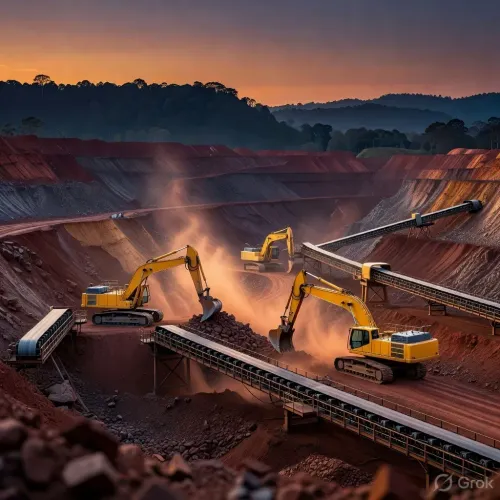
Jharkhand sits atop some of India's most significant mineral deposits — coal, iron ore, and bauxite among them. Mining royalties and related revenues form a critical pillar of the state's finances. Any central legislation that restructures auction mechanisms, regulatory authority, or revenue-sharing formulas hits Jharkhand harder than most.
The Mines and Minerals (Development and Regulation) Act, first enacted in 1957, was substantially overhauled in 2015 to mandate competitive auctions for mineral concessions and reset royalty flows between the Centre and states. That 2015 amendment itself drew resistance from state governments who felt the balance had tilted toward New Delhi. The 2026 bill appears to be reigniting that same fault line.
A pattern bigger than one state
Soren's intervention is not an isolated voice. Odisha and Chhattisgarh — both mineral-bearing states — have at various points raised similar concerns over revenue shares and environmental clearance processes. What Soren has done on 13 August is formalise that anxiety into a letter of record, forcing the Centre to respond on paper.
The Jharkhand Mukti Morcha, the regional party Soren leads as executive president, was founded precisely on the principle of protecting Jharkhand's autonomy and its tribal communities from decisions made far away in the capital. This letter is, in that sense, JMM's founding argument restated in the language of 2026 legislation.
Whether other opposition-governed mineral states formally align with Jharkhand's position — and whether Parliament schedules a select committee review of the bill — will determine how much political weight this letter ultimately carries.
Point of View
Not just a policy objection — by putting his concerns in writing to the Prime Minister, he creates a paper trail that can be cited in Parliament, courts, or coalition negotiations. The move reflects a wider pattern in which opposition-led mineral states are pushing back against incremental centralisation of resource governance, a trend accelerated by successive MMDR amendments since 2015. For the JMM, whose political identity is inseparable from Jharkhand's resource sovereignty and tribal welfare, silence on the 2026 bill would have been ideologically incoherent. The real test is whether this letter catalyses a coordinated multi-state response or remains a solo protest absorbed quietly by New Delhi.
NationPress
14 Aug 2026
Frequently Asked Questions
What is the MMDR Amendment Bill 2026?
The Mines and Minerals (Development and Regulation) Amendment Bill, 2026 is a proposed central legislation that, according to Jharkhand CM Hemant Soren, could alter regulatory and revenue powers currently held by mineral-bearing states. The exact provisions have not been publicly detailed in verified records.
Why is Jharkhand concerned about the mining amendment bill?
Jharkhand is one of India's most mineral-rich states, with large reserves of coal, iron ore, and bauxite. Mining royalties are a significant source of state revenue, so any central legislation restructuring auction rules or revenue-sharing formulas directly impacts Jharkhand's finances and development capacity.
What did Hemant Soren write to PM Modi?
Soren wrote to PM Narendra Modi on 13 August 2026 urging the central government to reconsider the provisions of the MMDR Amendment Bill 2026, arguing they could seriously affect Jharkhand's constitutional rights, revenue, and the federal structure of governance.
Have other states raised similar concerns about mining laws?
Yes. Odisha and Chhattisgarh have previously raised concerns over revenue shares and regulatory authority under the MMDR framework, reflecting a broader pattern of centre-state friction over natural resource governance in India.
What is the history of the MMDR Act?
The Mines and Minerals (Development and Regulation) Act was first enacted in 1957. It was substantially amended in 2015 to mandate competitive auctions for mineral concessions and restructure royalty mechanisms, a change that drew criticism from several state governments for shifting power toward the Centre.