CM Himanta: Assam's Medical Colleges tripled from 6 to 17 since 2014
Synopsis
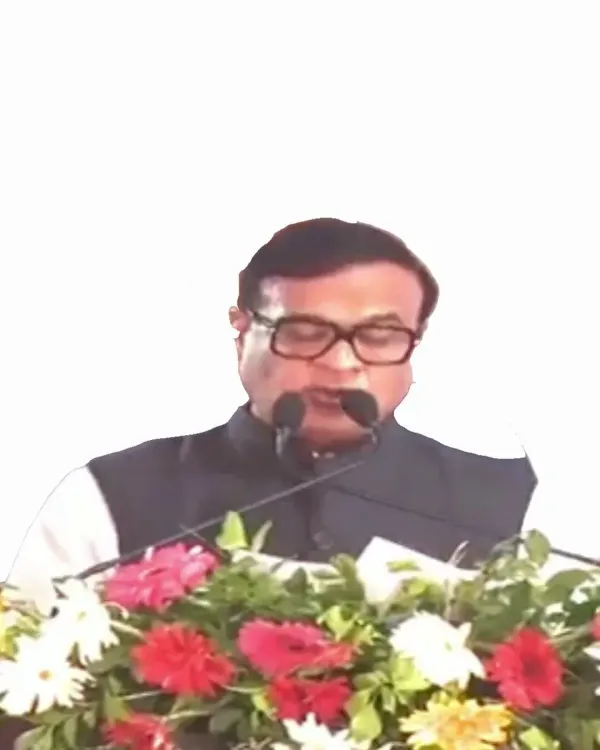
Assam CM Himanta Biswa Sarma highlights that the state's medical colleges have grown from 6 in 2014 to 17 today — including AIIMS and ESIC — and pledges one college in every remaining district, crediting the BJP's 'Double Engine Govt' model.
Key Takeaways
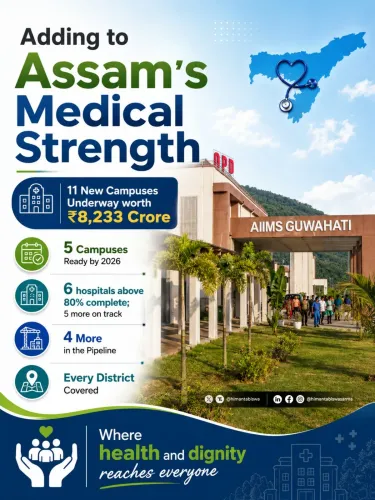
Assam had only 6 medical colleges before 2014 ; the count now stands at 17 .
The expanded roster includes AIIMS and an ESIC medical college , both requiring central government funding.
CM Sarma has committed to establishing one medical college in each remaining district of Assam.
Sarma attributes the growth to the 'Double Engine Govt' — BJP in power at both the state and Union level.
As NEDA convenor, Sarma regularly benchmarks Northeast development to frame the BJP's regional governance record.
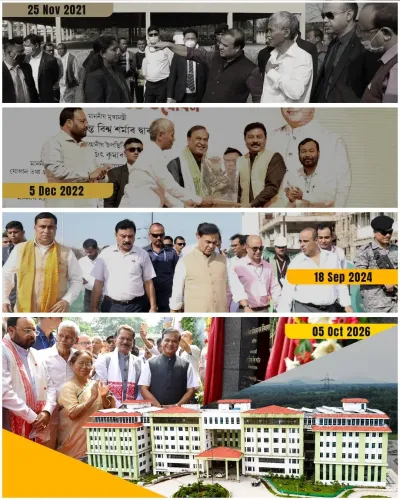
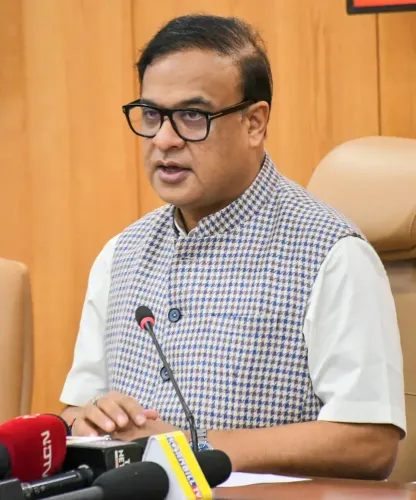
From 6 medical colleges to 17 — and more on the way in every remaining district. Assam Chief Minister Himanta Biswa Sarma laid out that arithmetic on Monday, October 5, 2026, framing the state's healthcare infrastructure leap as the defining dividend of a decade of BJP rule at both the state and national level.
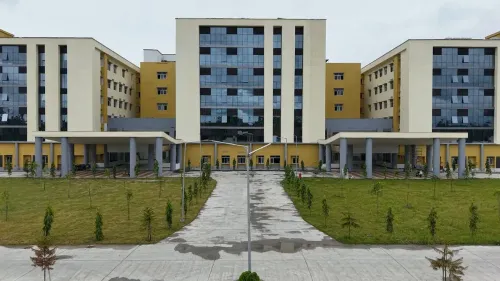
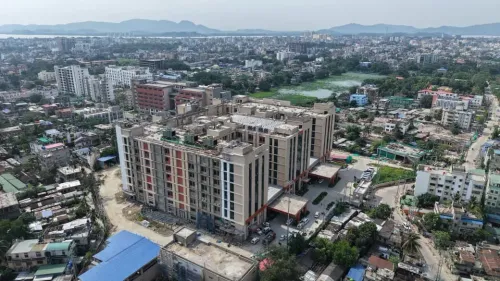
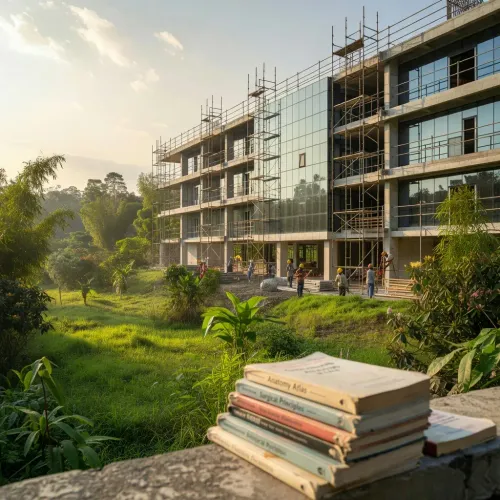
The Chief Minister's post put the numbers in stark contrast: before 2014, Assam counted just six medical colleges across the entire state. Today that figure stands at 17, a roster that now includes the premier All India Institute of Medical Sciences (AIIMS) and an ESIC (Employees' State Insurance Corporation) medical college — institutions that require sustained central government patronage and budget allocation to materialise.
District-by-district expansion: the ambition behind the numbers
Sarma went a step further than citing the current tally. He confirmed that one medical college each is in the pipeline for every remaining district of Assam that does not yet have one — a commitment that, if delivered, would make Assam one of the few states in India where medical education infrastructure reaches every district headquarters. For a state long seen as medically underserved, with patients routinely travelling to Guwahati or even out of the Northeast for specialist care, the downstream impact on local health outcomes could be substantial.
'Double Engine' — the political claim doing the heavy lifting
The phrase 'Double Engine Govt' is the BJP's established shorthand for states where the party governs both the state assembly and controls the Union government in New Delhi — the argument being that aligned governments unlock faster central funding, smoother project approvals, and coordinated policy execution. Sarma deployed it here as direct evidence: AIIMS campuses, for instance, are fully centrally funded and require Ministry of Health clearance, making them a natural exhibit for that thesis.
The post arrives as the BJP continues to stress governance delivery records ahead of political cycles across the Northeast, with Sarma — who also convenes the North-East Democratic Alliance (NEDA) — often serving as the region's loudest narrator of development benchmarks. Whether the district-level colleges materialise on schedule will be the real test this claim is ultimately judged against.
Point of View
Lending credibility to the alignment thesis. The pledge to cover every remaining district raises the stakes considerably — it converts a past achievement into a forward commitment that will be publicly measurable. For the BJP in the Northeast, where healthcare access has historically been a sharp vulnerability, turning medical college expansion into a replicable talking point serves a dual purpose: development optics and a ready rebuttal to opposition welfare critiques.
NationPress
5 Oct 2026
Frequently Asked Questions
How many medical colleges does Assam have in 2026?
Assam currently has 17 medical colleges , up from just 6 before 2014, according to CM Himanta Biswa Sarma. The list includes AIIMS and an ESIC medical college.
Does Assam have an AIIMS?
Yes. AIIMS Guwahati is among the 17 medical colleges now operational in Assam, made possible through central government funding under the BJP-led Union government.
What is the 'Double Engine Government' claim by BJP?
The 'Double Engine Govt' is the BJP's argument that states governed by the party at both the state and central level receive faster infrastructure approvals and funding, enabling quicker development delivery.
What is Assam's plan for medical colleges in remaining districts?
CM Sarma has stated that one medical college each is planned for every district of Assam that does not yet have one, aiming to make medical education accessible across the state.
Who is Himanta Biswa Sarma?
Himanta Biswa Sarma is the Chief Minister of Assam and a senior BJP leader. He also serves as the convenor of the North-East Democratic Alliance (NEDA) , the BJP-led political coalition in the Northeast.