CM Himanta Calls for Waste Segregation at Home for Swachh Assam
Synopsis
Assam Chief Minister Himanta Biswa Sarma on June 29, 2026, called on citizens to segregate household garbage at source, framing the everyday habit as foundational to the state's Swachh Assam goal and aligning with the national Swachh Bharat Mission's waste-management priorities.
Key Takeaways
CM Himanta Biswa Sarma posted on June 29, 2026 urging Assam residents to adopt household-level waste segregation.
He described source segregation as a 'small habit' with a large impact on the goal of a Swachh Assam .
The message aligns with the Swachh Bharat Mission (Urban) 2.0 , which mandates 100 per cent source segregation for cities seeking central funds.
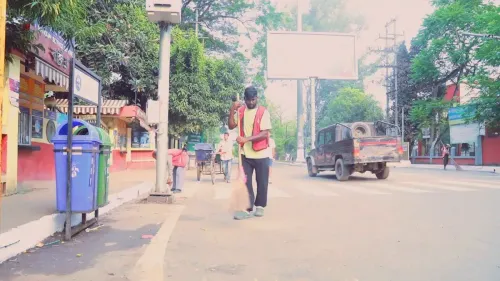
Guwahati Municipal Corporation already runs door-to-door waste collection drives that encourage pre-segregated handover.
The appeal comes as the monsoon season raises the risk of disease linked to improper waste disposal across Assam .
Assam Chief Minister Himanta Biswa Sarma on Monday, June 29, 2026, urged citizens to begin cleanliness practices at the household level, emphasising that simple habits like segregating waste at source are essential to achieving a clean Assam.
Posting on X, CM Sarma wrote: 'Swachhata begins right at our doorstep and even small habits like segregating garbage by source goes a long way in ensuring that the goal of a Swachh Assam is fulfilled.' The message places individual civic responsibility at the centre of the state's sanitation agenda.
Context
The call to action comes within the broader national framework of the Swachh Bharat Mission, launched in 2014, which has progressively shifted focus from open-defecation-free targets toward solid-waste management and source segregation. Assam, like many Indian states, continues to grapple with urban and semi-urban waste management challenges, particularly in cities such as Guwahati where rapid population growth has strained municipal infrastructure.
Source segregation — separating wet, dry, and hazardous waste at the household level before collection — is widely recognised by sanitation experts as the single most effective intervention for improving downstream waste processing and reducing landfill burden.
Policy Backdrop
The Swachh Bharat Mission (Urban) 2.0, launched in 2021, specifically mandates 100 per cent source segregation of municipal solid waste as a key performance indicator for cities seeking central funding and cleanliness rankings. Assam has been working to align its urban local bodies with these norms, with Guwahati Municipal Corporation (GMC) running door-to-door collection drives that encourage residents to hand over pre-segregated waste.
State governments play a critical role in translating national sanitation policy into ground-level behaviour change, and public communication by senior leadership is considered a key driver of citizen compliance in awareness campaigns.
Stakeholders and Impact
The primary audience for CM Sarma's message is the everyday household across Assam's urban and rural settlements. Municipal bodies, sanitation workers, and waste-processing facilities stand to benefit directly when residents segregate waste, as it reduces contamination and lowers processing costs.
Civil society organisations working on solid-waste management in the state have long advocated for political leadership to reinforce segregation habits through consistent public messaging. The Chief Minister's post amplifies that demand at the highest level of state government.
What's Next
The statement is likely to be followed by on-ground cleanliness drives, particularly as the monsoon season — when improper waste disposal accelerates disease outbreaks — intensifies across Assam. Urban local bodies may use the Chief Minister's public nudge to reinvigorate ward-level awareness campaigns and door-to-door segregation compliance checks.
How effectively this top-down messaging translates into sustained household behaviour change will determine whether Assam can meaningfully advance its standing in national cleanliness indices in the coming assessment cycle.
Point of View
At the onset of monsoon, is politically astute: visible cleanliness failures during the rains carry immediate public-health and reputational costs for the state government. The message also signals that Assam is aligning its communication strategy with Swachh Bharat Mission 2.0 benchmarks ahead of national cleanliness surveys. Whether it moves beyond symbolic appeal into measurable compliance will be the real test of the administration's sanitation governance.
NationPress
28 Sept 2026
Frequently Asked Questions
What did Assam CM Himanta Biswa Sarma say about Swachh Assam?
CM Himanta Biswa Sarma said that cleanliness begins at the doorstep and that simple habits like segregating garbage by source are essential to fulfilling the goal of a Swachh Assam.
What is source segregation of garbage?
Source segregation means separating waste into categories — typically wet, dry, and hazardous — at the household level before it is collected, which makes downstream processing and recycling far more efficient.
What is the Swachh Bharat Mission Urban 2.0?
Swachh Bharat Mission (Urban) 2.0, launched in 2021, is a central government programme that mandates 100 per cent source segregation of municipal solid waste and targets sustainable solid-waste management across Indian cities.
Why is waste segregation important in Assam during monsoon?
During monsoon, improperly disposed waste clogs drains and accelerates the spread of waterborne diseases; segregated waste is collected and processed more efficiently, reducing these risks.
How is Guwahati handling solid waste management?
The Guwahati Municipal Corporation runs door-to-door waste collection drives that encourage residents to hand over pre-segregated waste, in line with national Swachh Bharat Mission norms.