CM Himanta bets on bamboo to power Assam's entrepreneur push

Synopsis
Assam CM Himanta Biswa Sarma has spotlighted bamboo and bamboo crafts under the Atmanirbhar Asom Abhijan, positioning the state's natural abundance as a launchpad for local entrepreneurs and sustainable rural livelihoods.
Key Takeaways
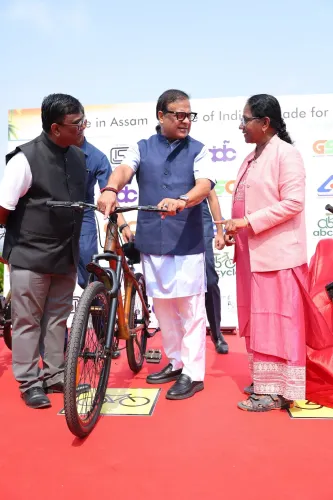
Assam Chief Minister Himanta Biswa Sarma invoked the Atmanirbhar Asom Abhijan on 1 November 2026 to promote bamboo-based entrepreneurship.
Assam is among India's top bamboo-producing states, with the sector already sustaining significant rural employment.
The state scheme draws its framework from the national Atmanirbhar Bharat Abhiyan launched in May 2020 .
The initiative targets aspiring entrepreneurs and aims to convert raw bamboo resources into value-added products and sustainable livelihoods.
Potential integration with the National Bamboo Mission and specific rollout details — budgets, training modules, implementing agencies — are yet to be publicly detailed.
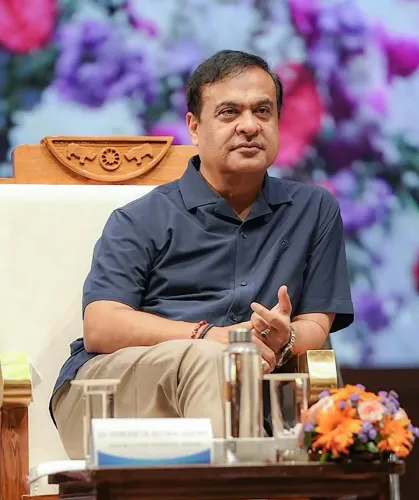
Assam sits atop one of India's richest bamboo belts — and Assam Chief Minister Himanta Biswa Sarma wants that green gold to anchor a new generation of entrepreneurs. On Sunday, 1 November 2026, the Chief Minister invoked his state's Atmanirbhar Asom Abhijan to position bamboo and bamboo crafts as the centrepiece of a self-reliance push that turns forest abundance into economic opportunity.
Bamboo as an economic frontier
Assam consistently ranks among India's top bamboo-producing states, with vast tracts of the northeast's forests yielding a raw material that feeds everything from construction to handicrafts and furniture. Yet for decades, much of that resource has left the state as raw material, with the value-added manufacturing — and the jobs that come with it — captured elsewhere. Sarma's framing is direct: local resources should generate local livelihoods, not subsidise other regions' industries.
The push taps a deep tradition. Assamese artisans have woven bamboo into everyday life for generations — from household goods to intricate craft items — and the sector already sustains a significant portion of rural employment across the state's districts.
Atmanirbhar Asom Abhijan: the state's self-reliance vehicle
The Atmanirbhar Asom Abhijan draws its ideological lineage from the Atmanirbhar Bharat Abhiyan launched by the Government of India in May 2020, which called on states to leverage domestic resources for resilient economic growth. Assam's state-level variant channels that framework into a specific regional context — one where natural endowments in bamboo, agriculture, and traditional crafts remain commercially underleveraged.
The scheme targets aspiring entrepreneurs and seeks to bridge the gap between raw-material abundance and market-ready products, offering a pathway for artisans and small-business owners to formalise and scale. Whether that bridge is built through training modules, credit linkages, or integration with central schemes such as the National Bamboo Mission is what policymakers and stakeholders will be watching closely as rollout details emerge.
Why this moment matters for the Northeast
Sarma serves simultaneously as Chief Minister and as convenor of the North-East Democratic Alliance (NEDA), giving him a platform that stretches well beyond Assam's borders. A successful bamboo-enterprise model in Assam could become a template for neighbouring northeastern states that share similar ecological profiles and craft traditions — a multiplier effect the Centre's own bamboo policy has long aspired to trigger.
The bamboo sector's appeal is also environmental: it is a fast-growing, carbon-sequestering crop whose commercial expansion aligns with both livelihood and sustainability goals. That dual dividend makes it a politically easy sell and, if the programme delivers, a durable one.
The announcement frames ambition clearly. The real test will be in the specifics — the budgets, the training pipelines, the market linkages — that convert a Chief Minister's vision into a craftsperson's income.
Point of View
Exportable commodity, he reinforces Assam's claim to being the Northeast's economic engine rather than a welfare-dependent periphery. The scheme's credibility, however, will hinge entirely on implementation depth: similar bamboo-sector pledges across northeastern states have historically faltered on the market-linkage and credit-access gaps that rhetoric alone cannot close. If Atmanirbhar Asom Abhijan delivers verifiable entrepreneurship outcomes, it could become a replicable model for the broader NEDA bloc — a political dividend as valuable as the economic one.
NationPress
1 Nov 2026
Frequently Asked Questions
What is Atmanirbhar Asom Abhijan?
Atmanirbhar Asom Abhijan is an Assam state government initiative that promotes self-reliance by encouraging entrepreneurs to leverage the state's local natural and traditional resources — including bamboo — to build sustainable livelihoods and new businesses.
Why is bamboo important for Assam's economy?
Assam is one of India's largest bamboo-producing states. The material supports traditional crafts, construction, furniture, and rural employment, but much of the raw resource has historically left the state without value addition, limiting local economic gain.
How does Atmanirbhar Asom Abhijan relate to Atmanirbhar Bharat?
Atmanirbhar Asom Abhijan is a state-level adaptation of the national Atmanirbhar Bharat Abhiyan launched in May 2020. It applies the Centre's self-reliance philosophy to Assam's specific resource base and entrepreneurship ecosystem.
What is the National Bamboo Mission and could it connect to Assam's scheme?
The National Bamboo Mission is a central government programme aimed at developing the bamboo value chain across India. Integration with Assam's state-level initiative is a possibility being watched by policy observers, though no formal linkage has been officially confirmed.
Who is Himanta Biswa Sarma?
Himanta Biswa Sarma has been the Chief Minister of Assam since 2021 and is a senior BJP leader. He also serves as the convenor of the North-East Democratic Alliance (NEDA), giving him a significant role in shaping political and policy cooperation across India's northeastern states.