CM Himanta Urges All Eid Committees for Cow-Slaughter-Free Eid
Synopsis
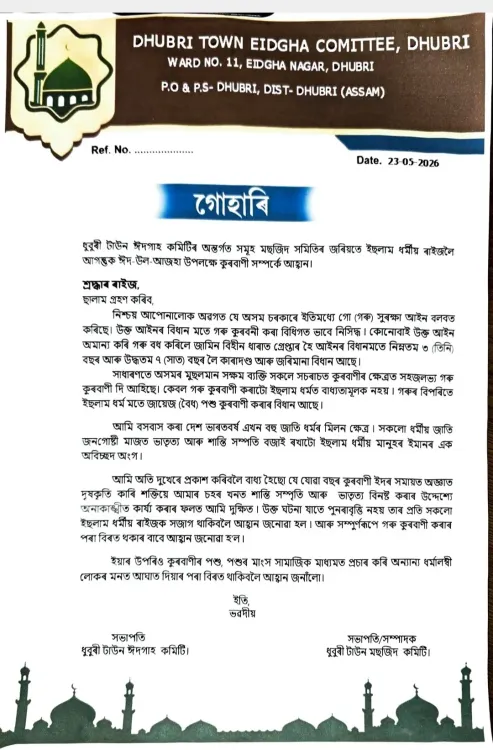
Assam Chief Minister Himanta Biswa Sarma on 23 May 2026 urged all Eid committees in the state to voluntarily avoid cow slaughter during Eid-ul-Adha, after the Dhubri Town Eidgah Committee publicly appealed to its community to honour Hindu sentiments and follow the Assam Cattle Preservation Act.
Key Takeaways
Assam CM Himanta Biswa Sarma called on all Eid committees across the state to make Eid-ul-Adha cow-slaughter-free on 23 May 2026 .
The Dhubri Town Eidgah Committee became the latest body to urge its community to refrain from cow slaughter, joining several other committees.
The appeal is grounded in the Assam Cattle Preservation Act, 1950 , which restricts cattle slaughter in the state.
The Sarma government has pursued similar voluntary-compliance appeals annually since 2021 .
The government has framed the initiative as a voluntary community measure rather than new legislation or direct enforcement.
Responses from remaining Eid committees across Assam 's districts will be closely monitored ahead of the festival.
Assam Chief Minister Himanta Biswa Sarma on Saturday, 23 May 2026, called on all Eid committees across the state to voluntarily refrain from cow slaughter during Eid-ul-Adha, citing both the sentiments of Hindus and the existing law of the land. The appeal came after the Dhubri Town Eidgah Committee became the latest body to urge its community members to comply with cattle preservation norms ahead of the festival.
Context
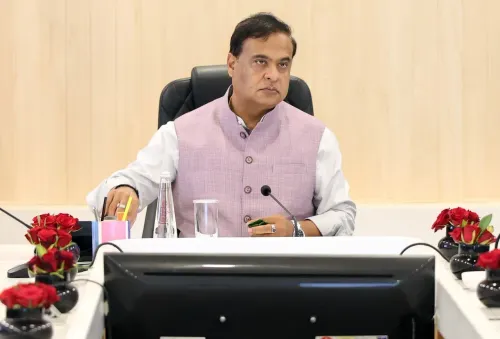
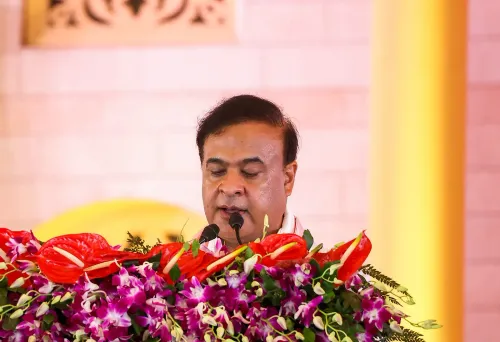
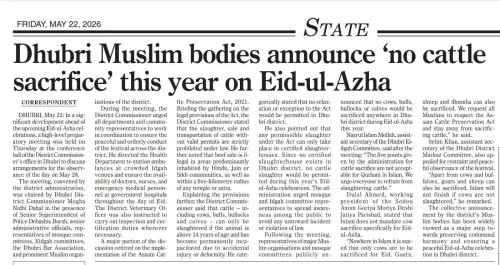
In his post, Sarma noted that the Dhubri Town Eidgah Committee had joined several other committees in appealing to Muslims to avoid cow slaughter, framing the gesture as one of respect for Hindu sentiments and adherence to the law. He then extended a direct call: 'I call upon all Eid committees to come forward and make this Eid cow slaughter free.' The post was accompanied by four images, indicating visual documentation of the committee's appeal or related outreach.
Dhubri district in western Assam has a significant Muslim population and its Eidgah Committee carries considerable community influence. The committee's public appeal is being seen as a notable instance of local religious leadership voluntarily aligning with the state government's position ahead of a major religious occasion.
Policy Backdrop
The appeal is consistent with a pattern of outreach that the Sarma-led Assam government has pursued since 2021, urging Muslim groups each year to voluntarily comply with cattle preservation norms during Eid-ul-Adha. The legal basis for these appeals is the Assam Cattle Preservation Act, 1950, which places restrictions on the slaughter of cattle, including cows, in the state.
State authorities have consistently framed these interventions as voluntary compliance measures rather than fresh legislative action. Similar appeal-based approaches have been adopted in other BJP-governed states, where governments have sought to uphold cow protection norms by working with community bodies rather than relying solely on enforcement machinery.
Stakeholders and Impact
The primary stakeholders are Assam's Eid committees — local bodies that organise Eid prayers and coordinate community observances across the state's districts. Their voluntary cooperation is central to the government's appeal-based strategy. Hindu groups and cow protection organisations in the state have generally welcomed such appeals, while the response from the broader Muslim community has historically been mixed, with some committees complying and others asserting their religious rights.
The Dhubri Town Eidgah Committee's decision to publicly endorse the appeal adds weight to the campaign this year, potentially encouraging committees in other districts to follow suit. The move also has implications for communal harmony in a state where managing inter-community relations around religious festivals is a recurring governance challenge.
What's Next
Attention will now turn to the responses of remaining Eid committees across Assam's districts in the days leading up to Eid-ul-Adha. Any administrative or police directives on enforcement of the Assam Cattle Preservation Act during the festival period will be closely watched. The degree of voluntary compliance across committees will serve as a measure of the government's community outreach and its ability to manage sensitive communal dynamics without direct coercion.
Point of View
The Chief Minister amplifies the optics of community buy-in, making the appeal harder for other committees to publicly resist. This strategy — working through religious bodies rather than police orders — reflects a broader BJP-ruled-state playbook of embedding cultural-nationalist priorities within a framework of legal compliance and social persuasion. The real test, as in previous years, will be the extent of on-ground compliance and whether the voluntary framing holds if committees in other districts decline.
NationPress
7 Oct 2026
Frequently Asked Questions
Why is Assam CM Himanta Biswa Sarma asking Eid committees to stop cow slaughter?
CM Sarma is urging Eid committees to voluntarily refrain from cow slaughter during Eid-ul-Adha to honour Hindu sentiments and comply with the Assam Cattle Preservation Act, 1950, which restricts cattle slaughter in the state.
What did the Dhubri Town Eidgah Committee say about cow slaughter?
The Dhubri Town Eidgah Committee publicly urged its community members to refrain from cow slaughter during Eid-ul-Adha, citing respect for Hindu sentiments and the law of the land.
Is cow slaughter banned in Assam?
The Assam Cattle Preservation Act, 1950, places significant restrictions on cattle slaughter, including cows, in the state. The Assam government has repeatedly cited this law in its annual appeals to Muslim communities ahead of Eid-ul-Adha.
Has Assam made this appeal about Eid and cow slaughter before?
Yes. The Sarma-led Assam government has issued similar appeals to Muslim and Eid committees every year since 2021, framing compliance as a voluntary community gesture rather than a new legal directive.
What happens if Eid committees in Assam do not comply with the cow slaughter appeal?
The government has so far framed these as voluntary measures. Enforcement of the Assam Cattle Preservation Act by administrative or police authorities during the festival period remains a possibility, though specific 2026 directives have not yet been announced.