CM Himanta Welcomes Assam Eidgah Panels' No Cow Slaughter Appeal
Synopsis
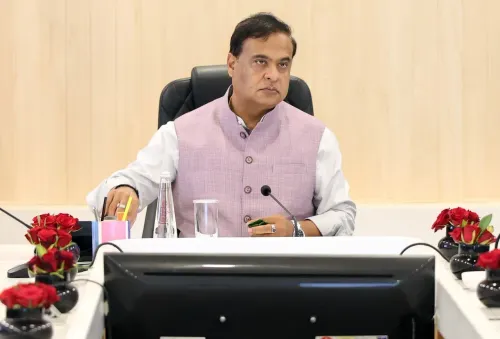
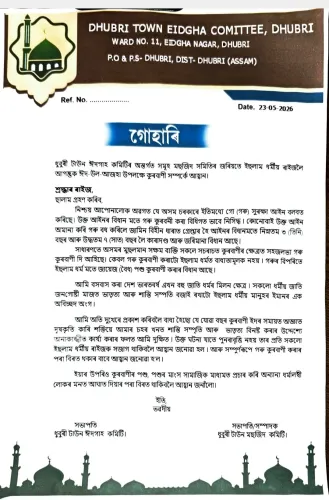
Assam CM Himanta Biswa Sarma has welcomed voluntary appeals by Eidgah committees in Hojai, Dhubri, Bongaigaon and Udharbond urging Muslims to refrain from cow slaughter during Bakrid, calling the move a boost to communal harmony and hoping other committees follow suit.
Key Takeaways
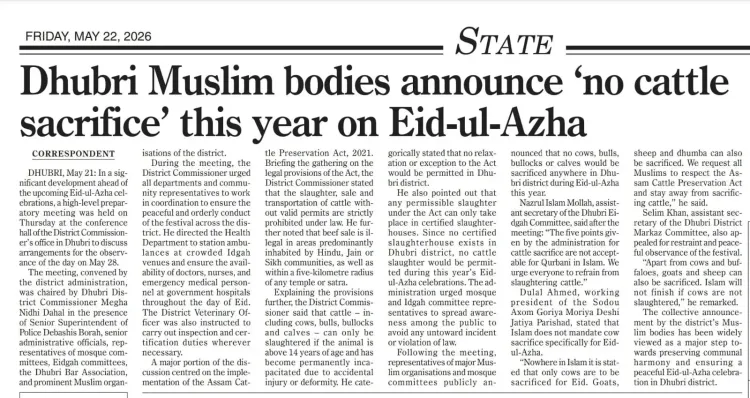
Eidgah and graveyard committees in Hojai, Dhubri, Bongaigaon and Udharbond issued appeals against cow slaughter during Bakrid 2026 .
The committees cited both legal and religious reasons for the restraint in their appeals.
Chief Minister Himanta Biswa Sarma publicly welcomed the move on 23 May 2026 .
Assam's Cattle Preservation Act was tightened in 2021 to restrict cow slaughter outside designated circumstances.
Sarma expressed hope that other Eidgah committees across Assam would issue similar appeals before the festival.
The development reflects the BJP-led Assam government's broader strategy of combining legal frameworks with voluntary community self-regulation.
Assam Chief Minister Himanta Biswa Sarma on Saturday, 23 May 2026 publicly welcomed appeals by Eidgah and graveyard committees in Hojai, Dhubri, Bongaigaon, Udharbond and several other districts urging Muslims to refrain from cow slaughter during Bakrid (Eid al-Adha), calling the voluntary gesture a step toward strengthening communal harmony in the state.
Context
In a bilingual post in Hindi and English, the Chief Minister stated: 'The Eidgah and graveyard committees in Hojai, Dhubri, Bongaigaon, Udharbond and other places have appealed against cow slaughter during Bakrid and have also explained the legal and religious reasons behind this appeal.' He added that he welcomed 'the initiatives of the Eidgah Committees' for having 'respected the sentiments of the majority community.'
Sarma expressed hope that other Eidgah committees across Assam would issue similar appeals, saying such voluntary actions ('स्वैच्छिक कदम') 'will go a long way in strengthening communal harmony in Assam.'
Policy Backdrop
The appeal comes against the backdrop of a tightened legal framework. In 2021, the Assam Legislative Assembly passed amendments to the Cattle Preservation Act, placing stricter restrictions on cow slaughter outside designated circumstances. Since 2016, the BJP-led Assam government has made enforcement against illegal cow slaughter and beef transport a stated policy priority.
The Assam government's approach has combined legal restrictions with public encouragement of voluntary self-regulation by minority institutions — particularly around Eid al-Adha, when animal sacrifice is customary. Similar appeals have been encouraged in other BJP-governed states during the festival to reduce potential friction between communities.
Stakeholders and Impact
The committees cited by Sarma represent local Muslim congregational bodies in districts spread across central and western Assam — regions that include Dhubri, one of the state's districts with a substantial Muslim population. Their appeals, according to the post, outlined both legal obligations under Assam's cattle preservation law and religious reasoning for the restraint.
For the Sanaatan (Hindu) majority community in Assam, the gesture carries symbolic weight, as cow slaughter during Bakrid has historically been a source of communal tension in parts of the state. Civil society observers note that voluntary commitments from religious bodies can carry greater community trust than state-directed enforcement alone.
What's Next
Chief Minister Sarma's public endorsement is likely to increase pressure — both social and political — on other Eidgah committees in Assam to issue parallel appeals ahead of Bakrid 2026. Whether the pattern spreads to additional districts and whether state authorities issue any formal follow-up guidance will be closely watched by both communities and political observers in the region. The development also feeds into the broader question of how North-East India's multi-religious states navigate festival-season communal sensitivities under BJP governance.
Point of View
Signalling that the BJP government views voluntary minority restraint as a governance tool alongside legislation. The move is consistent with a pattern across BJP-ruled states of seeking visible communal accommodation ahead of Eid al-Adha to pre-empt festival-season tensions without relying solely on enforcement. By publicly calling on 'other committees' to follow suit, Sarma also applies soft political pressure that blurs the line between voluntary and state-encouraged compliance. The episode illustrates the delicate balance Assam's government walks between its Hindu-majority political base and the administrative imperative of maintaining peace in a state with significant Muslim districts.
NationPress
6 Oct 2026
Frequently Asked Questions
Which Eidgah committees in Assam appealed against cow slaughter during Bakrid 2026?
Eidgah and graveyard committees in Hojai, Dhubri, Bongaigaon, Udharbond and several other locations in Assam issued appeals urging Muslims to refrain from cow slaughter during Bakrid, according to Chief Minister Himanta Biswa Sarma's post on 23 May 2026.
Why did Assam Eidgah committees appeal against cow slaughter on Bakrid?
The committees cited both legal reasons — Assam's Cattle Preservation Act restricts cow slaughter — and religious reasoning for the voluntary appeal, aiming to respect the sentiments of the Hindu majority community and maintain communal harmony.
What is Assam's law on cow slaughter?
Assam's Cattle Preservation Act was amended in 2021 to tighten restrictions on cow slaughter, limiting it to designated circumstances. The BJP-led state government has enforced the law strictly since 2016.
How did CM Himanta Biswa Sarma react to the Eidgah committees' appeal?
Chief Minister Himanta Biswa Sarma welcomed the initiative, saying such voluntary actions would strengthen communal harmony in Assam, and expressed hope that other Eidgah committees across the state would issue similar appeals before Bakrid.
Is refraining from cow slaughter on Bakrid mandatory in Assam?
The appeal by the Eidgah committees is voluntary in nature, not a government directive. However, Assam's Cattle Preservation Act does impose legal restrictions on cow slaughter outside permitted conditions, making compliance partly a legal requirement as well.