CM Himanta Welcomes Eid-Ul-Zuha Cow Slaughter Ban by 800+ Assam Eidgah Panels

Synopsis
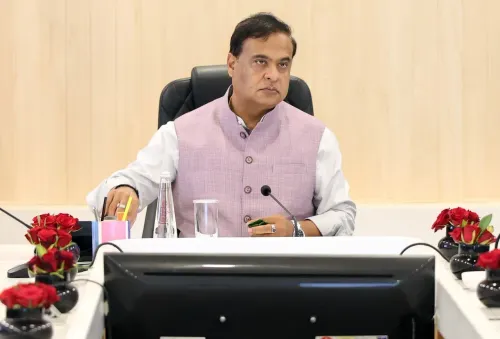
Assam CM Himanta Biswa Sarma has welcomed a voluntary call by over 800 Eidgah Committees to prohibit cow slaughter ahead of Eid-Ul-Zuha, framing it as an act of inter-community respect essential to the state's peaceful growth.
Key Takeaways
Assam CM Himanta Biswa Sarma publicly welcomed the move on 27 May 2026 , a day before Eid-Ul-Zuha.
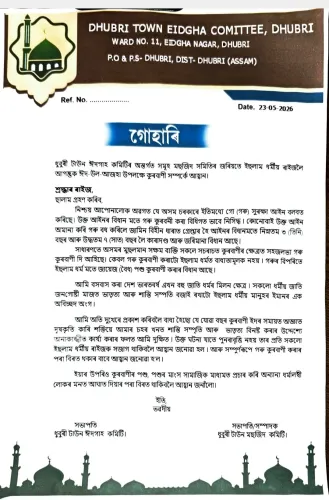
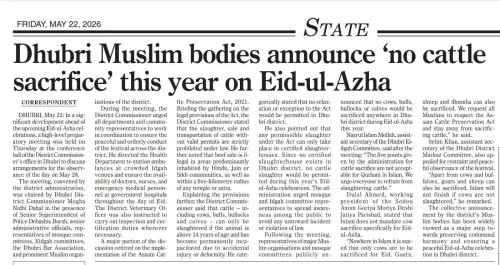
Over 800 Eidgah Committees across Assam reportedly called for a voluntary prohibition on cow slaughter for the festival.
The decision is voluntary and community-driven, not a fresh state-imposed legal restriction.
Sarma linked the gesture to 'respecting the faith of the majority community' and the 'peaceful growth' of Assam.
Article 48 of the Constitution provides the broader constitutional basis for cow protection directives in India.
The development is being watched for opposition reactions and any subsequent government enforcement actions.
Assam Chief Minister Himanta Biswa Sarma on Wednesday, 28 May 2026, welcomed a collective decision by over 800 Eidgah Committees across Assam to prohibit cow slaughter ahead of Eid-Ul-Zuha, calling it a meaningful gesture of inter-community respect.
Context
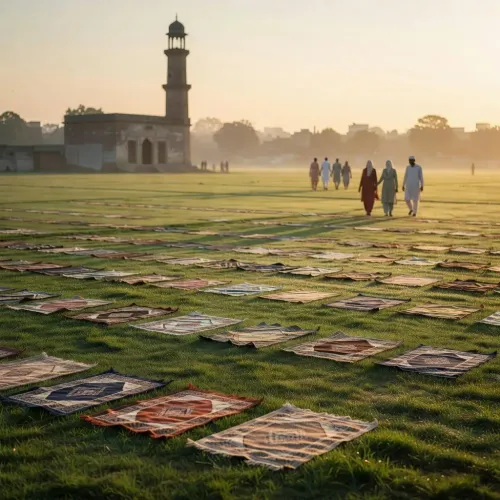
Eid-Ul-Zuha — also known as Bakrid — is an Islamic festival of sacrifice observed across India, traditionally involving the slaughter of livestock, including cattle in some regions. The festival was scheduled for Thursday, 29 May 2026 in Assam. Chief Minister Sarma noted on social media that the voluntary call by Eidgah Committees to refrain from cow slaughter on the occasion was a positive signal for communal harmony in the state.
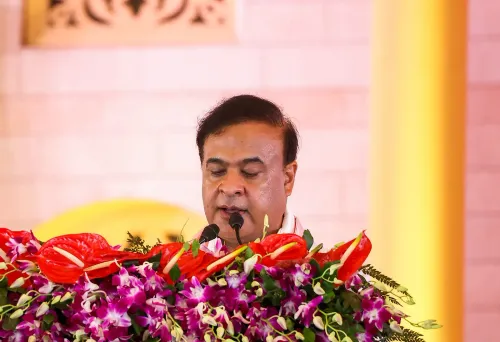
Sarma wrote: 'Respecting the faith of the majority community will go a long way in ensuring the peaceful growth of the State.' The statement frames the voluntary restraint as a contribution to social cohesion rather than a legal obligation.
Policy Backdrop
Article 48 of the Indian Constitution directs states to work toward prohibiting the slaughter of cows and calves, a directive principle that has underpinned cattle preservation laws enacted by multiple states since the 1950s. BJP-ruled states, including Assam, have periodically tightened such provisions, citing both constitutional guidance and the cultural sentiments of the Hindu majority.
Under Sarma's tenure since 2021, Assam has pursued a governance approach that balances outreach to minority communities with policies sensitive to majority community concerns. Encouraging voluntary compliance — rather than enforcement alone — has been a recurring feature of this approach during religious festivals.
Stakeholders and Impact
Eidgah Committees are local Muslim community bodies that organise Eid prayers and, in some cases, issue collective guidance on religious observances. Their reported decision to call for a voluntary ban on cow slaughter carries symbolic weight as a community-driven initiative, distinct from a state-imposed restriction.
Muslim communities and livestock traders are directly affected by any such restrictions, voluntary or legal. Assam has a significant Muslim population — among the highest proportions in any Indian state — and a history of periodic ethnic and religious tensions, making inter-community gestures particularly consequential.
The Chief Minister's public acknowledgment of the committees' call serves to amplify the message and lend it political visibility ahead of the festival, potentially influencing compliance beyond the committees' own constituencies.
What's Next
Observers will watch whether the voluntary commitment holds across the state on 29 May 2026 and whether any formal government notifications or enforcement actions follow. Opposition parties, including the Indian National Congress and the All India United Democratic Front (AIUDF), may respond to Sarma's framing of the issue as one of 'majority community faith.'
The episode is likely to inform the broader debate on how BJP-led state governments manage communal relations through a combination of legal frameworks and appeals to voluntary community restraint — a pattern visible across several north and northeastern Indian states in recent years.
Point of View
Insulating it from charges of coercion. This fits a broader pattern in BJP-governed states of using soft cultural signalling alongside hard law to manage communal relations. The framing around 'majority community faith' is notable for its directness, signalling that Sarma sees such gestures as a durable mechanism for social order rather than a one-off accommodation. How Assam's opposition and minority community leaders respond will test whether this approach consolidates or polarises opinion ahead of future electoral cycles.
NationPress
16 Oct 2026
Frequently Asked Questions
Why did Eidgah Committees in Assam call for a cow slaughter ban on Eid-Ul-Zuha 2026?
Over 800 Eidgah Committees across Assam voluntarily called for a prohibition on cow slaughter ahead of Eid-Ul-Zuha on 29 May 2026, reportedly as a gesture of respect toward the majority Hindu community. Assam CM Himanta Biswa Sarma welcomed the move as conducive to the state's peaceful growth.
Is cow slaughter banned in Assam?
Assam has state-level cattle preservation laws that restrict cow slaughter, in line with the directive principle in Article 48 of the Indian Constitution. The 2026 Eid-Ul-Zuha call by Eidgah Committees was a voluntary community decision, separate from existing legal provisions.
What did CM Himanta Biswa Sarma say about Eid-Ul-Zuha 2026?
CM Sarma said he was 'glad to note' that over 800 Eidgah Committees had called for prohibition of cow slaughter ahead of Eid-Ul-Zuha, adding that 'respecting the faith of the majority community will go a long way in ensuring the peaceful growth of the State.'
What is an Eidgah Committee?
An Eidgah Committee is a local Muslim community body responsible for organising Eid prayers at an Eidgah — an open-air ground used for congregational prayers. In Assam, these committees sometimes also issue collective guidance on community observances during festivals.
What is Eid-Ul-Zuha and why is cow slaughter an issue in India?
Eid-Ul-Zuha, also called Bakrid, is an Islamic festival of sacrifice during which livestock are traditionally slaughtered. In India, cow slaughter is a sensitive issue because the cow holds religious significance for Hindus, and most states have laws restricting or banning it, making the practice contentious during Bakrid.