CM Himanta Flags New Moth Species Near Assam Gibbon Sanctuary
Synopsis
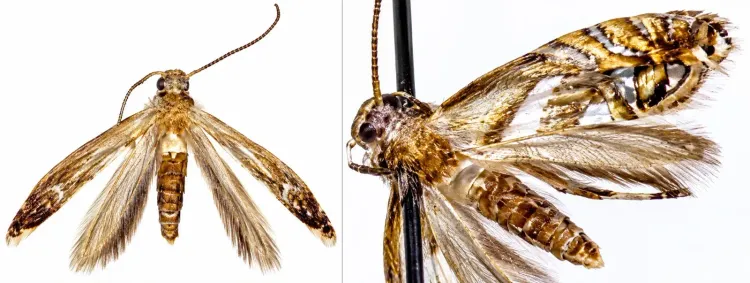
A new micro moth species, Glyphipterix brevimucronata, has been discovered near Hollongapar Gibbon Sanctuary in Assam — India's first addition to the sedge moth family in nearly a century, announced by Chief Minister Himanta Biswa Sarma on 20 November 2026.
Key Takeaways
Assam CM Himanta Biswa Sarma announced the discovery of a new micro moth species near Hollongapar Gibbon Sanctuary in Jorhat district.
The species is named Glyphipterix brevimucronata and belongs to the sedge moth family.
This is India's first new addition to the sedge moth family in nearly a century .
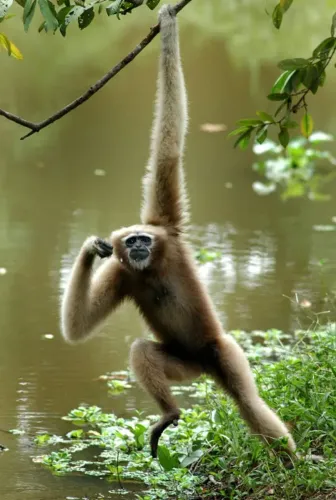
Hollongapar Gibbon Sanctuary is a protected area in Assam's Jorhat district, primarily known for conserving the western hoolock gibbon.
Assam lies within the Eastern Himalayas biodiversity hotspot , one of the world's richest ecological zones, and periodically yields significant new species records.
Peer-reviewed publication of the species description and follow-up biodiversity monitoring are the next expected steps.
A tiny moth with a name as intricate as its wings has just rewritten a century of Indian entomology. Assam Chief Minister Himanta Biswa Sarma announced on Friday, 20 November 2026, that a new micro moth species — Glyphipterix brevimucronata — has been discovered near the Hollongapar Gibbon Sanctuary in Assam, marking India's first addition to the sedge moth family in nearly a hundred years.
A Century-Long Gap in India's Sedge Moth Record
The significance here is hard to overstate. The sedge moth family — small, often overlooked insects intimately tied to wetland and grass ecosystems — had not yielded a new Indian species in close to a century. That a specimen has now emerged from the forest fringes of Hollongapar is the kind of discovery that quietly reshapes scientific understanding of what still lives, unseen, in India's northeastern forests.
Hollongapar Gibbon Sanctuary, located in Jorhat district, is best known as the last stronghold of the western hoolock gibbon in Assam — but its dense, semi-evergreen canopy and adjoining wetland patches have long made it a magnet for biodiversity researchers probing smaller, lesser-documented life forms.
Northeast India as a Living Laboratory
Assam sits inside the Eastern Himalayas biodiversity hotspot, one of the planet's richest and most threatened ecological zones. New species discoveries from this belt are not random events — they reflect the region's extraordinary species density and, critically, the growing capacity of researchers to document it. Northeast India periodically produces such records: a new orchid from Arunachal, a new frog from Meghalaya, now a new moth from Assam's Jorhat forests.
What makes this find distinctive is its taxonomic weight. Adding to a family with no Indian record for nearly a century is not a footnote — it is a headline for systematic entomologists globally.
What Comes Next for Glyphipterix brevimucronata
The immediate scientific priority will be peer-reviewed formal publication of the species description, followed by any broader biodiversity monitoring that the Assam Forest Department may initiate in the sanctuary's buffer zones. Conservation organisations will also watch whether this discovery nudges greater survey attention toward the micro-invertebrate communities of Hollongapar — a tier of biodiversity that is chronically under-resourced relative to flagship mammals like the gibbon.
As CM Sarma put it, Assam's natural world 'still holds so many fascinating secrets waiting to be discovered.' With a moth no one catalogued for a hundred years now on record, that is plainly not a figure of speech.
Point of View
And places Hollongapar Gibbon Sanctuary on the radar of global systematic entomologists. For the BJP-led Assam government, wins in the biodiversity space also offer a rare, apolitical platform that resonates across voter demographics. The broader pattern — northeastern states repeatedly producing landmark species records — strengthens the case for sustained federal investment in protected-area research infrastructure across the region.
NationPress
20 Nov 2026
Frequently Asked Questions
What is Glyphipterix brevimucronata?
Glyphipterix brevimucronata is a newly discovered micro moth species found near Hollongapar Gibbon Sanctuary in Assam. It belongs to the sedge moth family and represents India's first new addition to that family in nearly a century.
Where was the new moth species discovered in Assam?
The species was discovered near Hollongapar Gibbon Sanctuary , a protected area located in Jorhat district of Assam, in northeast India.
Why is this moth discovery historically significant for India?
It is India's first recorded addition to the sedge moth family in nearly a hundred years , making it a landmark event for systematic entomology in the country.
What is Hollongapar Gibbon Sanctuary known for?
Hollongapar Gibbon Sanctuary in Jorhat district is primarily known for protecting the western hoolock gibbon , India's only ape species. It is also a significant biodiversity site in the Eastern Himalayas hotspot region.
What will happen next after the discovery of the new moth species?
The immediate next steps involve peer-reviewed publication of the formal species description and potentially expanded biodiversity monitoring programmes by the Assam Forest Department in and around Hollongapar Sanctuary.