CM Himanta Hails PM Modi's Mann Ki Baat Shoutout for Assam Wildlife
Synopsis
Assam CM Himanta Biswa Sarma praised PM Modi for highlighting the state's conservation milestones on Mann Ki Baat — including habitat restoration at Sonai Rupai Wildlife Sanctuary and the decades-long pygmy hog recovery programme that has brought numbers to nearly 200.
Key Takeaways
PM Narendra Modi highlighted Assam's wildlife conservation efforts on his monthly Mann Ki Baat radio address on 27 September 2026 .
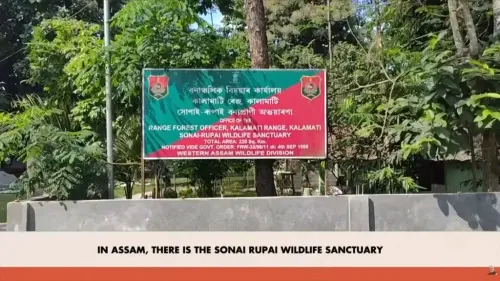
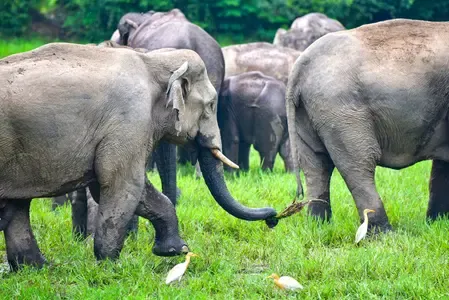
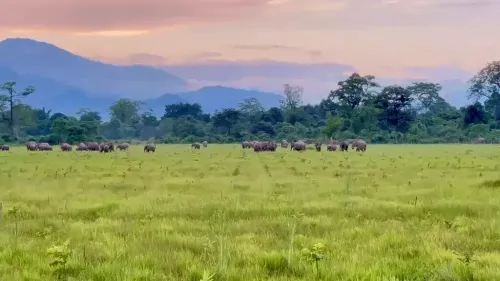
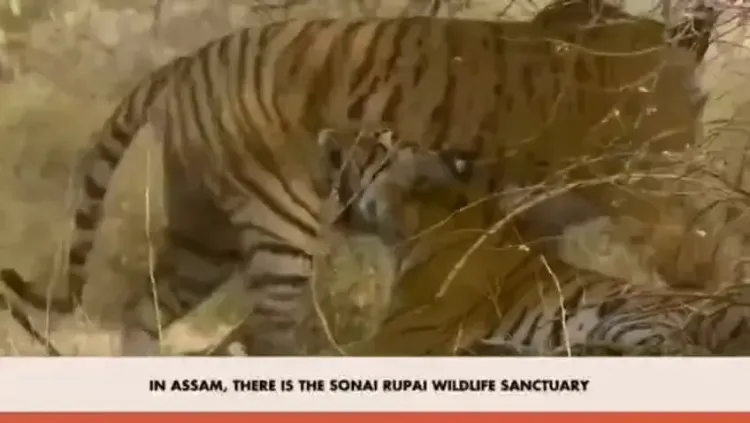
Sonai Rupai Wildlife Sanctuary has seen large-scale anti-encroachment and habitat restoration work, with elephants and other wildlife now moving freely through reclaimed land.
The Pygmy Hog Conservation Programme , launched in the mid-1990s, has helped bring the critically endangered species' numbers to nearly 200 through captive breeding and reintroduction.
CM Himanta Biswa Sarma credited a coalition of government agencies, scientists, forest personnel and local communities for the conservation gains.
The Chief Minister pledged to continue anti-encroachment drives and species-protection efforts across Assam's forests.
When Prime Minister Narendra Modi dedicates airtime on Mann Ki Baat to a state's conservation story, it is more than a mention — it is a national validation. Assam Chief Minister Himanta Biswa Sarma welcomed that recognition on Sunday, 27 September 2026, responding to the Prime Minister's spotlight on two landmark environmental efforts: the restoration of Sonai Rupai Wildlife Sanctuary and the near-miraculous revival of the pygmy hog, one of the planet's rarest mammals.
Sonai Rupai: Decades of Encroachment, Now in Reverse
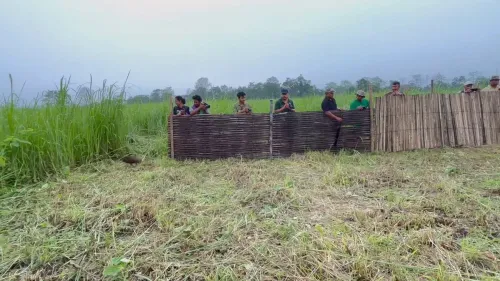
The story of Sonai Rupai Wildlife Sanctuary, located in Assam, is one of long-delayed reckoning. For decades, large swathes of the sanctuary had remained under encroachment — land that belonged to wildlife occupied by human settlements that steadily compressed habitat corridors. The Sarma government has made reclaiming that land a signature policy commitment, and the results, according to the Chief Minister, are now visible in the most literal sense: elephants and other wildlife are moving freely through landscapes that had been denied to them for a generation.
That image — a herd moving through a restored corridor — is not incidental. It is the clearest possible proof-of-concept for a conservation strategy built on enforcement first, restoration second. Assam has pursued similar anti-encroachment drives across multiple sanctuaries as part of a broader environmental agenda that combines legal action with ecological science.
The Pygmy Hog: From the Brink to Nearly 200
The second story PM Modi highlighted is arguably the more remarkable of the two. The pygmy hog — the world's smallest and one of its most endangered wild pigs — had been pushed to the very edge of extinction. The Pygmy Hog Conservation Programme, initiated in the mid-1990s, began with captive breeding of a desperately small founder population. Over three decades, sustained scientific effort, careful habitat restoration, and community-backed reintroduction work have helped push numbers to nearly 200, according to CM Sarma's post.
That figure, if confirmed by conservation authorities, would represent one of independent India's quiet but genuine wildlife-recovery achievements. The programme is a collaboration across government agencies, conservation scientists, forest personnel, and local communities — a coalition the Chief Minister was careful to credit in full.
Why a Radio Address Matters for Northeast Conservation
Mann Ki Baat, the Prime Minister's monthly radio programme, functions as a soft-power amplifier for state-level initiatives that might otherwise remain regional news. A mention in the address signals central government alignment with the state's approach — useful political currency for a Chief Minister who governs a state where forest and land policy regularly intersects with sensitive issues of demography and displacement.
CM Sarma framed the conservation mission in explicitly intergenerational terms: 'protecting Assam's forests and wildlife is not merely an environmental programme — it is a responsibility towards generations yet to come.' He also signalled continuity, pledging that anti-encroachment drives and species-protection efforts would press ahead.
For a region as ecologically rich and politically complex as Northeast India, the convergence of enforcement, science, and community engagement — validated at the national level — sets a template that other states will be watching closely.
Point of View
Spanning three decades and multiple governments, also demonstrates that India's conservation gains are often the product of continuity rather than any single administration's initiative. For the BJP, linking enforcement-heavy land-reclamation drives to biodiversity outcomes reframes what critics call demographic politics as ecological stewardship. The Northeast's extraordinary biodiversity — and the global rarity of species like the pygmy hog — gives these state-level decisions outsized international significance.
NationPress
27 Sept 2026
Frequently Asked Questions
What did PM Modi say about Assam in Mann Ki Baat?
PM Modi highlighted Assam's habitat restoration work at Sonai Rupai Wildlife Sanctuary and the state's long-running efforts to conserve the pygmy hog, one of the world's rarest mammals, during his Mann Ki Baat address on 27 September 2026.
What is the Pygmy Hog Conservation Programme in Assam?
The Pygmy Hog Conservation Programme is a captive breeding and reintroduction initiative for the critically endangered pygmy hog, started in the mid-1990s in Assam. Through sustained scientific effort and community participation, the programme has helped grow the species' numbers to nearly 200.
What is happening at Sonai Rupai Wildlife Sanctuary?
Sonai Rupai Wildlife Sanctuary in Assam has undergone large-scale anti-encroachment drives under the Himanta Biswa Sarma government. Land that was occupied for decades has been reclaimed, habitats are being restored, and wildlife including elephants are now moving freely through the area.
What is the pygmy hog and why is it endangered?
The pygmy hog is the world's smallest wild pig and one of its most critically endangered mammals, native to the tall grasslands of Assam. Habitat loss and encroachment had pushed it to the brink of extinction before conservation efforts began to reverse the decline.
What is CM Himanta Biswa Sarma's stance on forest encroachment?
CM Himanta Biswa Sarma has made anti-encroachment drives in wildlife sanctuaries a signature policy, arguing that freeing occupied forest land is essential for biodiversity. He has pledged to continue these efforts and to protect every species in Assam's forests.