CM Himanta Highlights 218 Tea Garden Model Schools in Assam
Synopsis
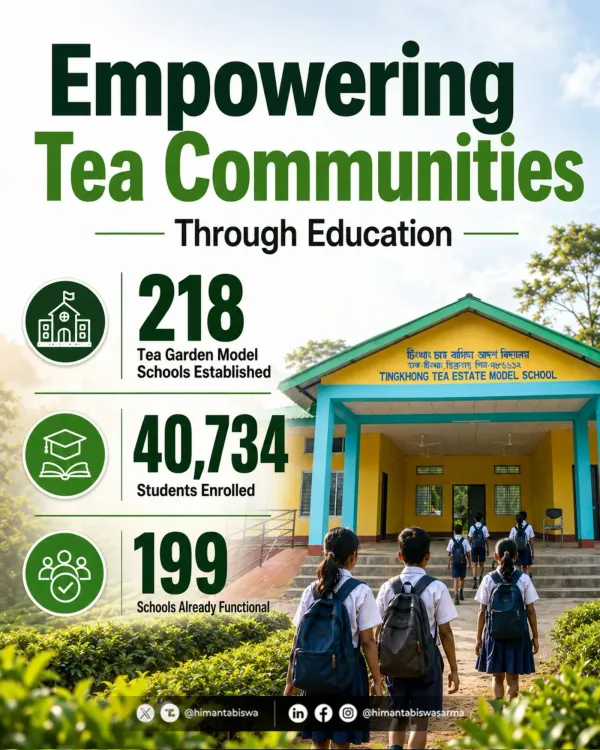
Assam Chief Minister Himanta Biswa Sarma on 23 June 2026 spotlighted 218 Tea Garden Model Schools set up across Assam's plantation belt, marking a shift from decades of limited educational access for tea-tribe children to modern, faculty-equipped learning centres.
Key Takeaways
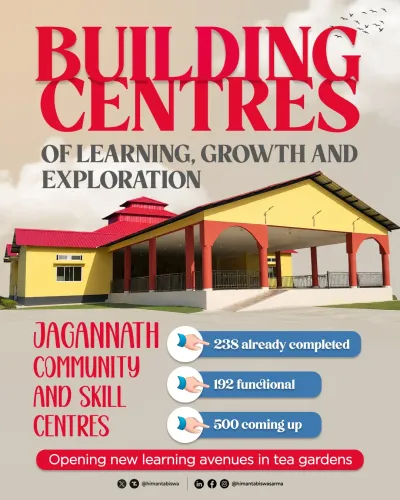
218 Tea Garden Model Schools have been established in Assam's tea estates under the current state administration.
The schools feature modern classrooms, improved facilities, and quality faculty , targeting historically underserved tea-tribe children.
Tea-tribe communities in Assam have long recorded lower educational indicators despite the sector's major economic contribution.
The initiative builds on earlier frameworks including the Sarva Shiksha Abhiyan (2001) and the Assam Tea Tribes Welfare Board .
Enrolment, retention, and board-exam outcomes from the 218 schools will be the key metrics to assess real-world impact.
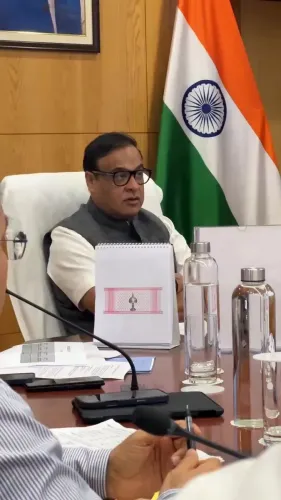
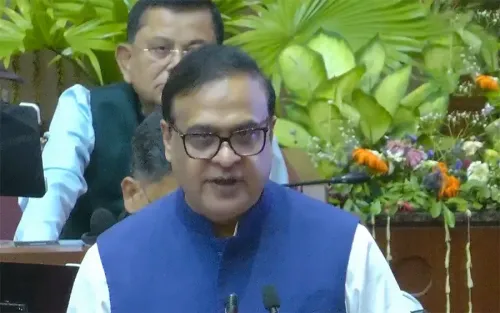
Assam Chief Minister Himanta Biswa Sarma on Tuesday, 23 June 2026, highlighted a significant shift in educational access for children living in the state's tea garden communities, pointing to the establishment of 218 Tea Garden Model Schools equipped with modern classrooms, improved facilities, and quality faculty.
Context
In his post, CM Sarma drew a pointed contrast between the past and the present: 'There was a time when students in Assam's tea gardens lacked access to quality education. Today, that story has changed.' The statement underscores a long-standing challenge faced by Assam's tea-tribe communities, whose children have historically been among the most educationally underserved populations in the country.
Tea estates in Assam are spread across major producing districts and employ several lakh workers from tea-tribe communities. Despite their economic contribution to one of India's most iconic exports, these communities have recorded persistently lower educational indicators compared with the state average.
Policy Backdrop
Efforts to address educational gaps in plantation areas are not new. The Sarva Shiksha Abhiyan, launched in 2001, sought universal elementary education across India, including in remote plantation belts. The Assam Tea Tribes Welfare Board, established decades earlier, was designed to coordinate welfare measures — including basic schooling — for tea-garden families.
The Tea Garden Model Schools scheme represents the current state administration's attempt to move beyond basic access toward quality infrastructure. Since CM Sarma took office in May 2021, the Assam government has stated a broader objective of reducing community-level and regional disparities in human development, with the tea belt identified as a priority zone.
Stakeholders and Impact
The primary beneficiaries of the scheme are students from Assam's tea-tribe communities — a population that has long sat at the intersection of economic vulnerability and limited institutional support. Modern classrooms and trained faculty, as cited by the Chief Minister, are seen as foundational to improving enrolment and retention rates among this group.
Comparable efforts are visible across other North-Eastern states, where plantation or tribal populations face parallel gaps in educational access. The model-school approach, which bundles infrastructure upgrades with faculty improvements, aligns with a broader national pattern of targeted interventions in underserved community pockets.
What's Next
The next markers to watch will be the publication of enrolment figures, student retention data, and board-examination results from the 218 schools. Any supplementary budget announcements for further expansion of the network or large-scale teacher recruitment drives will indicate whether the programme is entering a consolidation or scaling phase.
If outcome data bears out the infrastructure investment, the Tea Garden Model Schools initiative could serve as a replicable template for other plantation-dependent states seeking to close educational gaps within their own tribal and migrant-worker communities.
Point of View
Long associated with labour exploitation and welfare deficits, as a zone of educational transformation under his administration. The choice to anchor the message in contrast ('there was a time') is a classic incumbency communication strategy, reminding voters of a baseline before claiming credit for change. Within the broader arc of BJP governance in the North-East, this fits a pattern of using targeted welfare visibility — particularly for tribal and plantation communities — to consolidate support ahead of electoral cycles. The real test, however, will be outcome data: whether the 218 schools translate into measurable gains in literacy, retention, and higher-secondary passage rates for tea-tribe students.
NationPress
23 Jun 2026
Frequently Asked Questions
What are Tea Garden Model Schools in Assam?
Tea Garden Model Schools are state-run schools set up inside Assam's tea estates to provide modern classrooms, upgraded facilities, and trained faculty specifically for children of tea-tribe communities, who have historically lacked access to quality education.
How many Tea Garden Model Schools has Assam set up?
According to Chief Minister Himanta Biswa Sarma's post on 23 June 2026, Assam has established 218 Tea Garden Model Schools across the state's plantation areas.
Who are the tea-tribe communities in Assam?
Tea-tribe communities are the descendants of labourers brought to Assam's tea estates, primarily from central and eastern India, over the past two centuries. They form a significant portion of the state's population and have historically faced limited access to education and social mobility.
What is Himanta Biswa Sarma's role in Assam's education push?
Himanta Biswa Sarma has served as Assam's Chief Minister since May 2021 and has made reducing educational and developmental disparities — particularly in tea-belt and tribal areas — a stated policy priority of his administration.
What should we watch for regarding these model schools?
Key indicators to follow include official enrolment and student retention figures, board-examination pass rates from the 218 schools, and any new budget allocations for expanding the network or recruiting additional teachers.