CM Himanta meets EU Ambassador on Tea, Trade and Tourism
Synopsis
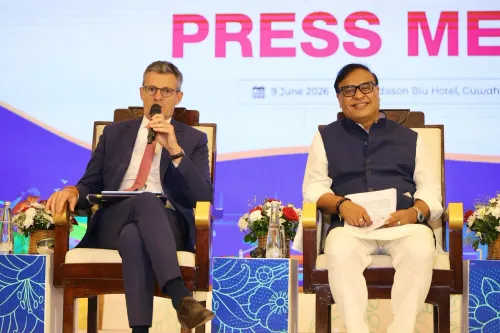
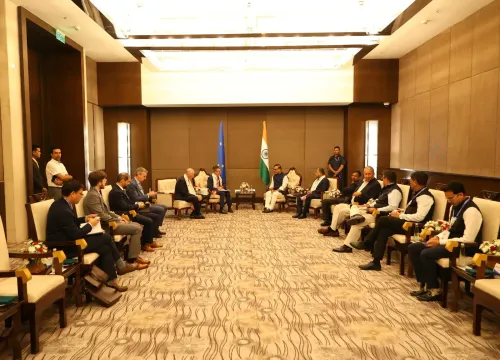
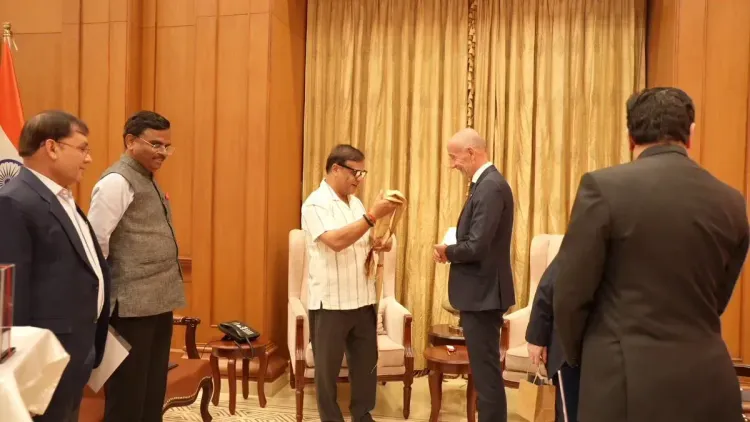
Assam CM Himanta Biswa Sarma met EU Ambassador Jean-Eric Paquet on 16 November 2026, centering talks on tea, trade and tourism. With the India-EU FTA back on track after a decade-long pause, Sarma is positioning Assam — anchored by the Blue Valley Cluster — as a key node in the bilateral relationship.
Key Takeaways
Assam CM Himanta Biswa Sarma met EU Ambassador Jean-Eric Paquet on the evening of 16 November 2026 .
The talks centred on Tea, Trade, and Tourism as the three primary areas of Assam-EU engagement.
Sarma cited the India-EU Free Trade Agreement (BTIA) — relaunched in June 2022 after a near-decade pause — as a historic inflection point for the relationship.
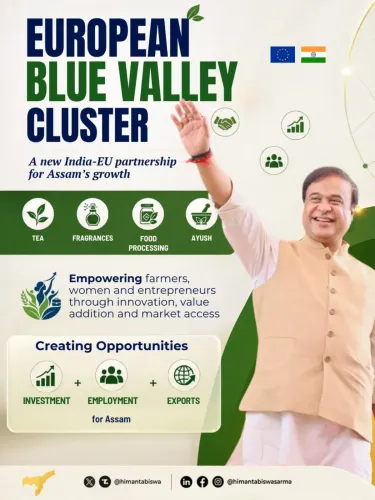
The Blue Valley Cluster was highlighted as a flagship state-level initiative to deepen EU linkages in Assam's tea sector.
The EU is India's largest trading partner in goods and services, making BTIA progress consequential for Assam's agricultural exporters.
The outreach aligns with India's Act East Policy , which frames the northeast as an active bridge to external economic partnerships.
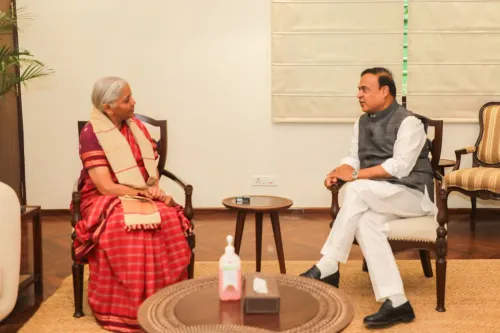
Tea leaves, trade routes, and tourist trails — Assam Chief Minister Himanta Biswa Sarma sat down with European Union Ambassador to India Jean-Eric Paquet on the evening of Monday, 16 November 2026, for what he described as a 'very productive and engaging' meeting that placed Assam squarely at the centre of India's evolving partnership with one of its largest trading blocs.
Three pillars, one agenda
Tea, Trade, and Tourism — the three T's that CM Sarma flagged as the core of the conversation — are not accidental choices. Assam is the world's single-largest tea-growing region by output, its river valleys and wildlife corridors are magnets for global travellers, and its strategic location in the northeast makes it a natural gateway for investment flowing into India's under-tapped interior. Sarma noted that the meeting set the stage for Assam to 'play an important role in strengthening' India-EU ties, signalling that the state is angling for a named seat at the bilateral table, not just a beneficiary footnote.
The FTA backdrop and what it means for Assam
The meeting lands against a charged diplomatic backdrop. The India-EU Broad-based Trade and Investment Agreement (BTIA), originally launched in 2007 and stalled for nearly a decade, was formally relaunched in June 2022. Progress on that pact — covering tariffs, market access, services and investment protections — has animated trade communities on both sides ever since. CM Sarma described it as a 'historic FTA,' and his framing signals that Assam's planners are already calibrating how reduced tariff barriers could accelerate the state's agricultural and hospitality exports into the 27-nation European bloc.
The EU is India's largest trading partner in goods and services, which makes any movement on the BTIA consequential well beyond New Delhi's corridors. For Assam's tea growers, preferential access to European markets could be transformational — the EU is a premium-price destination where Darjeeling and Assam single-estate teas command serious shelf space and pricing power.
Blue Valley Cluster: Assam's specific bet
CM Sarma singled out the Blue Valley Cluster as 'a major step' in concretising the state's contribution to the India-EU relationship. While granular project details remain to be formally announced, the cluster framework appears designed to consolidate and market Assam's tea industry as a destination for European investment, quality-certification partnerships, and export facilitation. The deliberate naming of a state-level project in the context of a bilateral ambassadorial meeting is itself a signal — Assam is not waiting for trickle-down from a central-government deal; it is building its own leverage points.
Northeast India and the Act East logic
Sarma's diplomatic outreach fits a wider pattern under India's Act East Policy, which explicitly frames the northeast as a bridge to external economic engagement rather than a hinterland. Bilateral dialogues with the EU have simultaneously expanded into connectivity, green technology, and regulatory cooperation — all sectors where Assam's geography and natural endowments give it a credible pitch. Ambassador Paquet's engagement with a state chief minister, rather than purely federal interlocutors, reflects the EU's growing interest in sub-national partnerships across large federal economies.
What the next round of India-EU FTA negotiations yields — and whether Assam-specific investment facilitation follows — will be the real measure of last night's conversation. The tea is brewed; now comes the pour.
Point of View
Increasingly common among ambitious state governments that see central FTA negotiations as an opening to carve out direct export and investment pipelines. The timing, as India-EU BTIA talks resume momentum, maximises Assam's visibility at a moment when both sides are defining sectoral priorities. It also reinforces Sarma's broader branding of Assam as an investment-ready, outward-facing economy within the Act East framework — a pitch that serves both domestic political optics and genuine economic strategy. The Blue Valley Cluster reference, however vague at this stage, plants a named deliverable that will be watched at the next round of federal-level trade negotiations.
NationPress
16 Nov 2026
Frequently Asked Questions
What did Himanta Biswa Sarma discuss with the EU Ambassador?
CM Himanta Biswa Sarma discussed Tea, Trade and Tourism with EU Ambassador Jean-Eric Paquet during their meeting on 16 November 2026, with the Blue Valley Cluster cited as a key initiative linking Assam to the India-EU relationship.
What is the India-EU FTA or BTIA?
The India-EU Broad-based Trade and Investment Agreement (BTIA) is a comprehensive trade pact covering tariff reduction and market access. Originally launched in 2007, negotiations stalled and were formally relaunched in June 2022.
What is the Blue Valley Cluster in Assam?
CM Sarma referenced the Blue Valley Cluster as a major state-level initiative aimed at deepening Assam's trade and investment linkages with the European Union, particularly in the tea sector. Specific project details are yet to be formally announced.
Why is the EU important for Assam's tea industry?
The EU is India's largest trading partner in goods and services and a premium market for single-estate teas. Preferential access under the India-EU FTA could significantly boost export volumes and pricing for Assam's tea growers.
Who is Jean-Eric Paquet?
Jean-Eric Paquet is the Ambassador of the European Union to India, responsible for diplomatic engagement on trade, connectivity and regulatory cooperation between the EU and India.