CM Himanta: Kaziranga hits record 4.58 lakh visitors after Modi stay
Synopsis
Assam CM Himanta Biswa Sarma reveals Kaziranga National Park set an all-time visitor record of 4.58 lakh in the last tourist season, linking the surge to PM Narendra Modi's high-profile overnight stay at the UNESCO World Heritage Site.
Key Takeaways
Kaziranga National Park recorded a historic 4.58 lakh visitors in the last tourist season — its highest ever.
Assam CM Himanta Biswa Sarma directly credited the spike to PM Narendra Modi's overnight stay at the park.
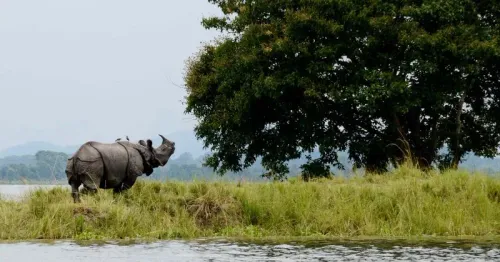
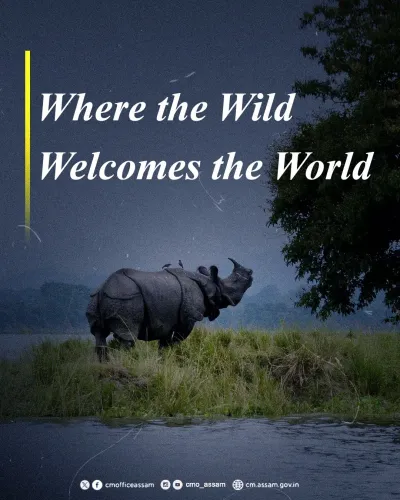
Kaziranga is a UNESCO World Heritage Site and home to the world's largest population of the greater one-horned rhinoceros .
Higher tourist footfall boosts revenue for Assam's forest department and livelihoods in gateway communities near the park.
The milestone reinforces Assam's push to position itself as a premier wildlife-tourism destination in Northeast India .
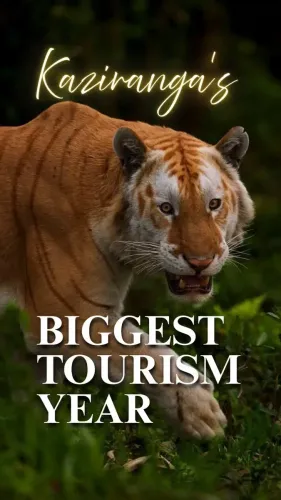
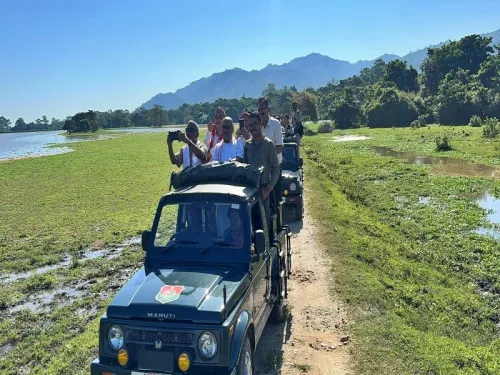
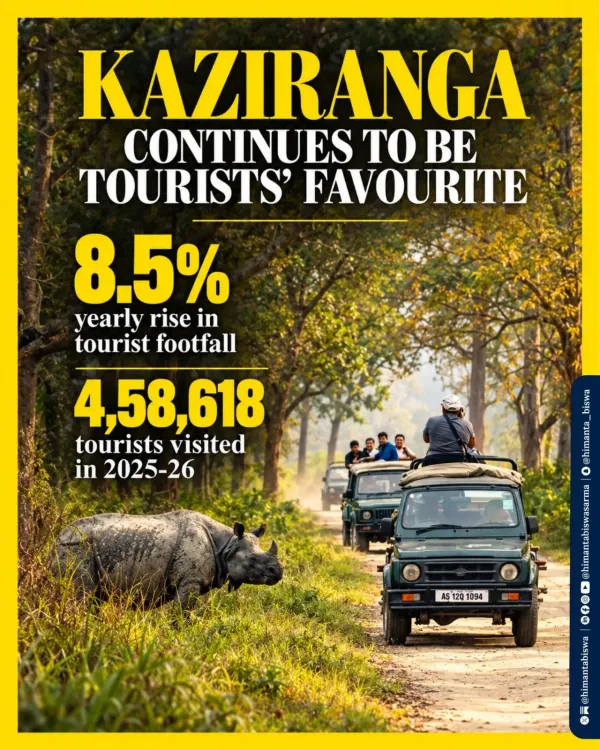
A single overnight stay changed the conversation — and apparently the footfall numbers. Assam Chief Minister Himanta Biswa Sarma announced on Tuesday, October 6, 2026, that Kaziranga National Park, a UNESCO World Heritage Site, recorded a landmark 4.58 lakh visitors in the last tourist season — the highest in its history — a surge he directly attributes to the visibility generated by Prime Minister Narendra Modi's overnight stay at the park.
Modi's Kaziranga night and the tourism ripple effect
When Prime Minister Modi chose to spend a night inside Kaziranga — a park synonymous with the Indian one-horned rhinoceros and one of the most biodiverse stretches of the Brahmaputra floodplains — it was more than a personal visit. It became, in effect, a prime-time endorsement broadcast to the entire country. CM Sarma's post captures the downstream consequence: a record-breaking season that suggests the visit moved the needle on public curiosity and travel intent in a measurable way.
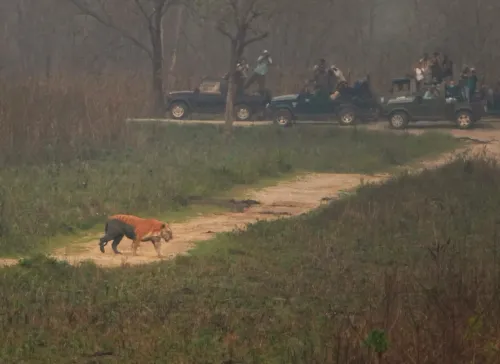
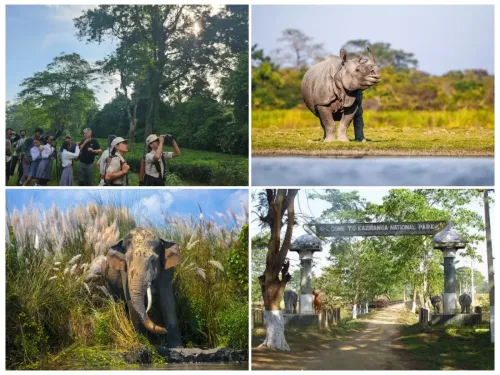
Kaziranga spans roughly 430 square kilometres in Golaghat and Biswanath districts of Assam and is home to the world's largest population of the greater one-horned rhinoceros, alongside tigers, elephants, and water buffalo. Its dual status as a UNESCO World Heritage Site and a Tiger Reserve gives it a conservation prestige that few Indian parks can match — yet translating that prestige into visitor numbers has always required a trigger.
What 4.58 lakh visitors means for Assam's wildlife economy
The figure is not just a bragging right — it signals a structural shift in how Assam is positioning itself on India's wildlife-tourism map. Higher footfall translates directly into revenue for the state's forest department, livelihoods for local guides and hospitality operators in gateway towns like Kohora and Bagori, and a stronger political case for conservation spending. For a state that has invested heavily in anti-poaching infrastructure and flood-resilience measures for Kaziranga, tourism revenue is the economic engine that sustains those efforts.
CM Sarma framed the milestone with characteristic optimism, calling it 'an extraordinary wildlife experience, drawing more people to Assam' — language that doubles as a tourism pitch and a governance proof-point ahead of continued Northeast development narratives under the NEDA framework he convenes.
If a single high-profile overnight stay can push a heritage park past its all-time visitor record, the question Assam's tourism planners are already asking is simple: who comes next?
Point of View
The announcement serves a dual purpose: it validates his government's conservation-plus-tourism narrative and reinforces the political dividend of the Modi-Northeast relationship ahead of ongoing Northeast development diplomacy. The broader pattern — where a PM visit catalyses measurable public interest in a heritage site — raises a legitimate policy question about whether India systematically leverages its leadership's travel choices to drive regional tourism pipelines.
NationPress
6 Oct 2026
Frequently Asked Questions
How many visitors did Kaziranga National Park receive in the last tourist season?
Kaziranga National Park received a record 4.58 lakh visitors in the last tourist season, the highest in the park's history, according to Assam CM Himanta Biswa Sarma.
Why did Kaziranga see a record number of tourists?
CM Himanta Biswa Sarma attributed the record footfall to the national attention generated by Prime Minister Narendra Modi's overnight stay at the UNESCO World Heritage Site, which significantly raised the park's public profile.
Is Kaziranga National Park a UNESCO World Heritage Site?
Yes. Kaziranga National Park in Assam is a designated UNESCO World Heritage Site and also a Tiger Reserve. It is globally renowned for hosting the world's largest population of the greater one-horned rhinoceros.
Where is Kaziranga National Park located?
Kaziranga National Park is located in the Golaghat and Biswanath districts of Assam , spread across approximately 430 square kilometres along the Brahmaputra floodplains.
What wildlife can tourists see at Kaziranga?
Kaziranga is home to the greater one-horned rhinoceros (the world's largest population), Bengal tigers, Asian elephants, and wild water buffalo, making it one of India's richest wildlife destinations.