CM Himanta Monitors Assam Flood Relief Round the Clock
Synopsis
The Chief Minister's Office of Assam confirmed on 20 July 2026 that CM Dr. Himanta Biswa Sarma is closely monitoring flood relief operations, with state ministers, MLAs from affected constituencies, district administrations, and rescue agencies deployed round the clock to support flood-hit residents.
Key Takeaways
Himanta Biswa Sarma is personally and closely monitoring Assam's flood relief, rescue, and rehabilitation operations as of 20 July 2026 .
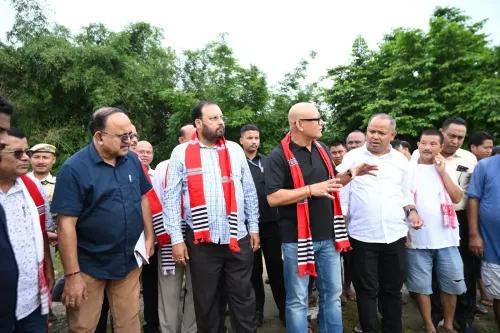
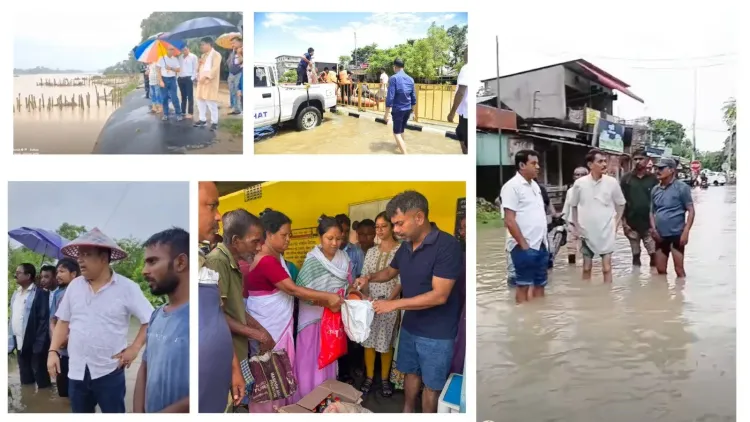
State ministers and MLAs from flood-affected constituencies are physically present on the ground alongside district administrations and rescue agencies.
Operations are running round the clock, with the stated goal of ensuring 'swift and uninterrupted' assistance reaches all those in need.
Assam faces annual monsoon flooding from the Brahmaputra and Barak river systems, triggering recurring state-level disaster responses.
The deployment follows India's federal disaster-management framework, combining state resources with NDRF support.
Damage assessment and rehabilitation distribution in the weeks ahead will determine the scale of further central assistance required.
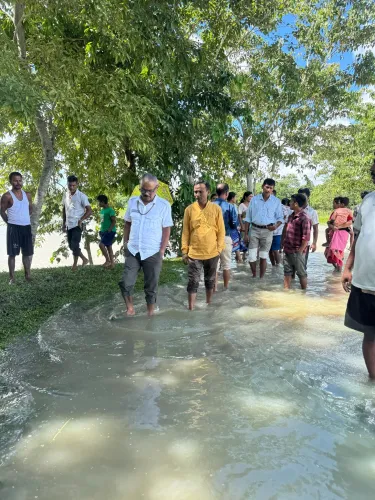
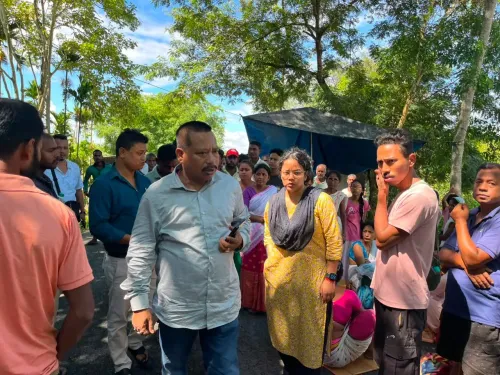
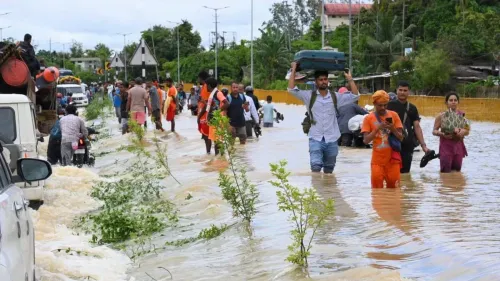
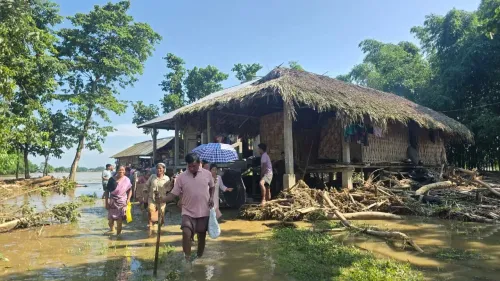
The Chief Minister's Office of Assam announced on Monday, 20 July 2026 that state ministers, legislators from flood-affected constituencies, district administrations, and rescue agencies are deployed on the ground and working around the clock to support people hit by the ongoing floods. Chief Minister Dr. Himanta Biswa Sarma is personally and closely monitoring the situation to ensure swift, uninterrupted relief, rescue, and rehabilitation operations across the affected areas.
Context
The CMO's post confirmed that 'every possible assistance' is being directed to those in need, with the state machinery operating without pause. Ministers and MLAs representing flood-hit constituencies are physically present in affected areas, a deployment that signals the administration's effort to maintain direct accountability at the ground level. The statement underscores the scale of the current flood situation, which has triggered a whole-of-government mobilisation in Assam.
Assam is one of India's most flood-prone states, lying in the floodplains of the Brahmaputra and Barak river systems. Every monsoon season, rising river levels inundate large swathes of the state, displacing farming communities and damaging infrastructure. The 2026 monsoon season has once again brought the state's disaster-response machinery into full activation.
Policy Backdrop
Assam governments have conducted annual flood relief and rehabilitation drives for decades, combining state resources with support from the National Disaster Response Force (NDRF) under India's federal disaster-management framework. District administrations serve as the primary coordination unit, while elected representatives — ministers and MLAs — are expected to remain accessible to their constituents during emergencies.
Since taking office in May 2021, CM Dr. Himanta Biswa Sarma has positioned himself as a hands-on administrator during flood events, regularly reviewing relief operations and engaging directly with district officials. The CMO's communication reinforces this pattern of centralised monitoring paired with decentralised field deployment.
Stakeholders and Impact
The most immediate stakeholders are the flood-affected residents of Assam, particularly agricultural communities whose livelihoods are tied to land now submerged or damaged. Rescue agencies and district administration personnel are on the frontlines, tasked with evacuations, distribution of relief material, and maintenance of communication lines in inundated areas.
Elected MLAs from affected constituencies serve a dual role: as political representatives they are expected to advocate for their constituents, and as ground-level coordinators they help channel state resources to specific pockets of need. Their deployment alongside district machinery is a standard feature of Assam's flood-response architecture.
What's Next
The coming weeks will be critical for damage assessment, as district administrations compile data on crop loss, infrastructure damage, and displaced persons to determine the scale of rehabilitation required. Any formal request to the Centre for additional disaster relief funds, or announcements of new rehabilitation packages, will be closely watched.
Longer-term, the recurrence of severe flooding in Assam each monsoon season keeps the question of structural flood mitigation — river embankment reinforcement, early-warning systems, and upstream water-management coordination — on the legislative and policy agenda. The current crisis is likely to renew calls for durable solutions beyond seasonal emergency response.
Point of View
All-hands response while reassuring the public that elected representatives are not governing remotely. For CM Himanta Biswa Sarma, personal visibility during flood emergencies has become a consistent governance signal since 2021, reinforcing his image as an interventionist administrator. The deployment of MLAs from affected constituencies alongside district machinery also serves a political function: it ties legislators directly to relief outcomes, raising the stakes for their performance. Until verified damage and relief figures emerge, however, the statement remains a declaration of intent rather than a measurable accountability milestone.
NationPress
21 Jul 2026
Frequently Asked Questions
What is the current flood situation in Assam in 2026?
As of 20 July 2026, Assam is experiencing significant monsoon flooding that has prompted the state government to deploy ministers, MLAs, district administrations, and rescue agencies on the ground round the clock. Specific casualty or displacement figures have not been officially confirmed in this announcement.
What is CM Himanta Biswa Sarma doing about the Assam floods?
CM Dr. Himanta Biswa Sarma is closely monitoring the flood relief, rescue, and rehabilitation operations to ensure swift and uninterrupted assistance reaches all affected people, according to the Chief Minister's Office of Assam.
Which agencies are involved in Assam flood rescue operations?
State ministers, MLAs from flood-affected constituencies, district administrations, and rescue agencies are all deployed on the ground. Assam's response typically also involves the National Disaster Response Force under India's federal disaster-management framework.
Why does Assam flood every year?
Assam lies in the floodplains of the Brahmaputra and Barak river systems, which receive heavy upstream rainfall during the monsoon season each year. This riverine geography makes the state one of India's most chronically flood-prone regions.
Will the Centre provide relief funds for the Assam floods 2026?
No formal central relief package has been announced in this statement. Under India's disaster-management framework, states can request central assistance after conducting damage assessments; any such request or announcement from the Centre is expected in the weeks ahead.