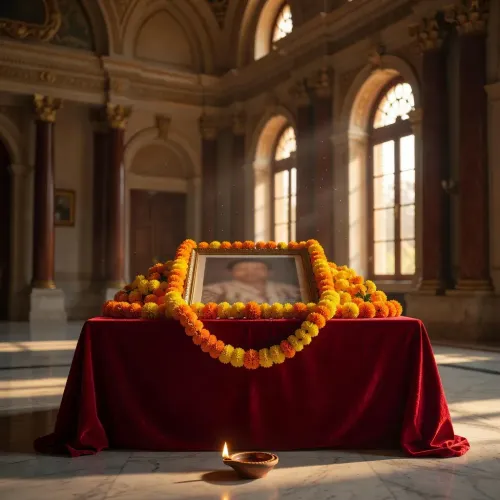
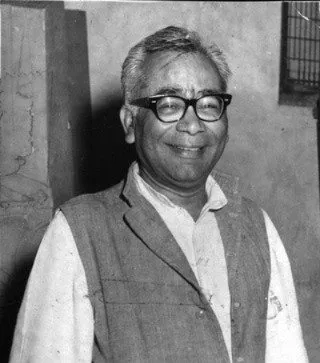
CM Himanta pays tribute to Lala Lajpat Rai on death anniversary
Synopsis
Assam CM Himanta Biswa Sarma honoured Lala Lajpat Rai on his 97th death anniversary, calling the Punjab Kesari's courage and sacrifice an eternal inspiration. Rai died on 17 November 1928 from injuries sustained in a lathi charge during protests against the Simon Commission in Lahore.
Key Takeaways
Assam CM Himanta Biswa Sarma posted a Hindi tribute to Lala Lajpat Rai on 17 November 2026 , his death anniversary.
Lala Lajpat Rai, known as Punjab Kesari (Lion of Punjab), died on 17 November 1928 from injuries sustained in a police lathi charge in Lahore .
The lathi charge was ordered during protests against the Simon Commission , which had no Indian members.
Rai was part of the celebrated Lal-Bal-Pal nationalist trio alongside Bal Gangadhar Tilak and Bipin Chandra Pal.
His death directly inspired revolutionary Bhagat Singh , shaping a defining chapter of India's independence movement.
Indian political leaders across party lines issue tributes to Rai every 17 November as part of an enduring national commemorative tradition.
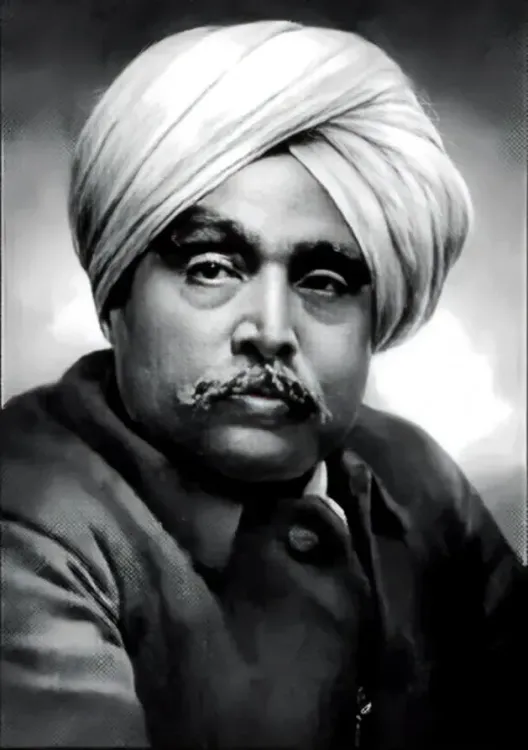
On the 97th death anniversary of Lala Lajpat Rai, Assam Chief Minister Himanta Biswa Sarma paused to honour the man history remembers as 'Punjab Kesari' — a freedom fighter whose final act of defiance cost him his life and lit a fire that burned all the way to independence.
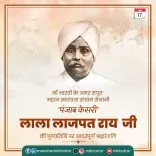
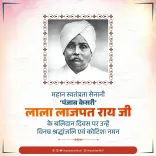
Posting on 17 November 2026, CM Sarma wrote in Hindi: 'महान स्वतंत्रता सेनानी, पंजाब केसरी लाला लाजपत राय जी की पुण्यतिथि पर उन्हें विनम्र श्रद्धांजलि' — 'Humble tribute to the great freedom fighter, Punjab Kesari Lala Lajpat Rai, on his death anniversary.' He added that Rai's 'indomitable courage, sacrifice and struggle for the freedom of the motherland will always inspire the people of this country,' and that 'his dedication to the nation will always be remembered in Indian history.'
Who was 'Punjab Kesari' — and why does the title still resonate?
Lala Lajpat Rai was born on 28 January 1865 in Punjab and went on to become one of the most recognisable faces of India's nationalist movement. A lawyer, writer and social reformer, he formed the celebrated Lal-Bal-Pal trio alongside Bal Gangadhar Tilak and Bipin Chandra Pal — three leaders whose aggressive push for self-rule reshaped the Congress's early agenda. The title Punjab Kesari, meaning 'Lion of Punjab', captured the spirit of his uncompromising stand against colonial rule.The lathi charge that changed history
Rai's death on 17 November 1928 was not from illness — it was from the blows of a police baton. He had led a mass demonstration in Lahore against the all-white Simon Commission, which had arrived in India to review constitutional reforms without a single Indian member. British police superintendent James A. Scott ordered a lathi charge on the protesters. Rai was struck on the chest. He died of his injuries 18 days later. From the hospital, Rai had declared: 'I declare that the blows struck at me today will be the last nails in the coffin of British imperialism in India.' His death galvanised a generation. Revolutionary Bhagat Singh — who had witnessed the lathi charge — vowed to avenge him, an act that itself became a defining episode of the freedom struggle.A tribute across party lines, an anniversary that endures
Every 17 November, Indian political leaders across the spectrum issue commemorative messages for Lajpat Rai — a reflection of how firmly his legacy is woven into the national fabric. For CM Sarma, the tribute also carries a northeastern dimension: as NEDA convenor, he has consistently sought to anchor the BJP's northeastern consolidation in the broader vocabulary of pan-Indian nationalism, of which freedom fighters like Rai remain potent symbols. Lala Lajpat Rai also left a substantial institutional legacy — he founded the Servants of the People Society in 1921, an organisation dedicated to social service that continues to operate, and was a prolific author whose writings on nationalism and social reform remain studied to this day. Nearly a century on, one man's refusal to step aside for a foreign commission continues to define what political courage looks like in India.Point of View
But their frequency does not diminish their strategic weight. For CM Sarma, invoking Rai's pan-Indian nationalist legacy reinforces the BJP's effort to present itself as the custodian of the entire freedom struggle — not just figures from its own ideological lineage. The Lal-Bal-Pal framing is particularly resonant: it positions the party within a broad, assertive nationalist tradition that cuts across regional and caste identities. As NEDA convenor, Sarma's public commemorations also serve to signal a shared national consciousness to northeast India's diverse electorates.
NationPress
17 Nov 2026
Frequently Asked Questions
When did Lala Lajpat Rai die and why?
Lala Lajpat Rai died on 17 November 1928 in Lahore from injuries sustained when British police ordered a lathi charge on protesters demonstrating against the Simon Commission, of which he was a leading organiser.
Why is Lala Lajpat Rai called Punjab Kesari?
Punjab Kesari means 'Lion of Punjab' in Hindi. The title was given to Lala Lajpat Rai in recognition of his fierce, uncompromising stand against British colonial rule and his leadership of the nationalist movement in Punjab.
Who were the Lal-Bal-Pal trio?
The Lal-Bal-Pal trio comprised Lala Lajpat Rai (Lal), Bal Gangadhar Tilak (Bal), and Bipin Chandra Pal (Pal) — three prominent early-20th-century nationalist leaders who championed aggressive, non-compromising resistance to British rule.
What was the Simon Commission and why was it controversial?
The Simon Commission was a British statutory commission sent to India in 1928 to review constitutional reforms. It was widely boycotted because it had no Indian members, making it a symbol of colonial exclusion that sparked nationwide protests.
What did Himanta Biswa Sarma say about Lala Lajpat Rai?
CM Sarma paid tribute in Hindi, stating that Rai's 'indomitable courage, sacrifice and struggle for the freedom of the motherland will always inspire the people of this country' and that 'his dedication to the nation will always be remembered in Indian history.'