CM Himanta renews pledge to Assam's tribal communities on Janjatiya Gaurav Divas
Synopsis
On Janjatiya Gaurav Divas, Assam CM Himanta Biswa Sarma renewed his government's commitment to indigenous communities, citing the Bodo Peace Accord, tribal language education, museums, and infrastructure as pillars of an inclusive Viksit Assam vision.
Key Takeaways
Janjatiya Gaurav Divas is observed on 15 November every year to honour tribal freedom fighters, including Bhagwan Birsa Munda .
CM Himanta Biswa Sarma reaffirmed the Assam government's commitment to indigenous peoples as 'equal partners' in building a Viksit Assam .
The Bodo Peace Accord (2020) granted greater autonomy and a development package to Bodo-dominated areas, addressing a long-running insurgency.
Since 2021 , Assam has promoted tribal mother-tongue medium instruction at the primary schooling level.
Key initiatives cited include tribal museums, higher educational institutes, cultural festivals, wider representation and infrastructure development in tribal regions.
The state's approach is framed as part of the broader national Viksit Bharat 2047 development architecture.
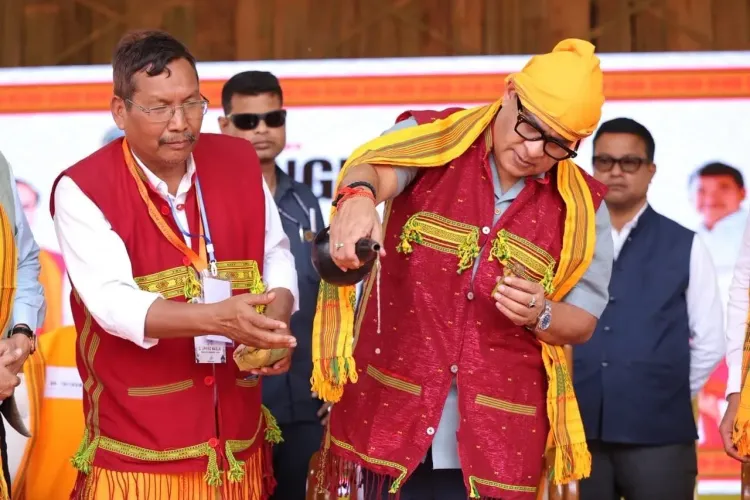
On a morning that belongs to India's indigenous peoples, Assam Chief Minister Himanta Biswa Sarma used Janjatiya Gaurav Divas — 15 November 2026 — to restate his government's commitment to the tribal communities who have shaped the state's identity for centuries, framing them not as beneficiaries of charity but as 'equal partners' in building a Viksit Assam.
One bond across many cultures
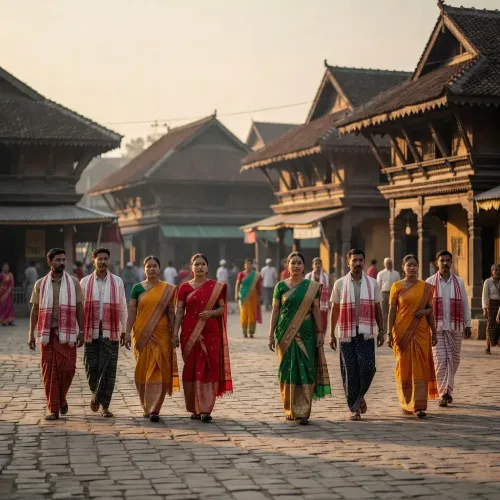
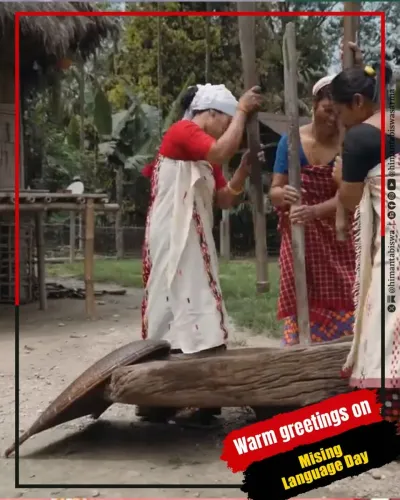
Sarma's post opened with a vivid image: 'Many colours, many flavours, many attires but one distinct bond — the indigenous people of Assam.' That framing is deliberate. Assam is home to dozens of tribal groups — among them the Bodo, Karbi and Dimasa — each carrying distinct languages, rituals and oral traditions that predate the modern state by millennia. The Chief Minister listed a broad range of interventions his government has pursued: tribal languages as the medium of instruction in early schooling, tribal museums, greater community autonomy, peace accords, higher educational institutes, wider political representation, cultural festivals and infrastructure projects.
The Bodo Peace Accord and the autonomy push
The peace-accord reference carries specific historical weight. The Bodo Peace Accord of 2020 — signed before Sarma became Chief Minister but accelerated under his tenure — granted greater administrative autonomy and a development package to Bodo-dominated areas, effectively drawing one of India's longest-running insurgencies toward a political settlement. The Assam government has since 2021 also promoted mother-tongue medium instruction for several tribal languages at the primary level, a measure aimed at reducing school dropout rates in remote tribal belts.
Janjatiya Gaurav Divas and the national frame
Janjatiya Gaurav Divas is observed every year on 15 November, the birth anniversary of tribal freedom fighter Bhagwan Birsa Munda, to honour indigenous contributions to India's independence struggle and cultural heritage. The occasion gives state governments across the Northeast a platform to announce or reaffirm tribal welfare measures. Sarma's post aligns Assam's state-level agenda with the national Viksit Bharat 2047 vision — signalling that tribal inclusion is built into the state's long-term development architecture, not treated as an add-on.
What the government says it is building
Beyond autonomy and language policy, Sarma pointed to tribal museums and 'cultural extravaganzas' as instruments of soft preservation — creating institutional spaces where indigenous art forms, crafts and oral histories are documented and celebrated. Higher educational institutes in tribal areas, he indicated, are another pillar: the bet is that access to university-level education within a community's homeland reduces the cultural erosion that typically follows migration to urban centres. Whether each of these initiatives has reached the scale its advocates intend remains a question the coming years will answer.
Assam's tribal communities have lived at the intersection of development pressures, demographic change and political aspiration for decades. The government's declared direction is integration without erasure — growth that arrives on tribal terms, not instead of them. That is the promise being renewed today.
Point of View
A subtler and potentially more durable pitch. The challenge, as observers have noted, is translating announced institutional measures — museums, universities, language programmes — into demonstrable outcomes before the next electoral cycle. For the broader Northeast, Assam's model is closely watched as a template for integrating tribal identity into mainstream development without provoking fresh grievances.
NationPress
15 Nov 2026
Frequently Asked Questions
What is Janjatiya Gaurav Divas and why is it observed on 15 November?
Janjatiya Gaurav Divas is a national day observed on 15 November every year to honour tribal freedom fighters and celebrate indigenous cultural heritage. The date marks the birth anniversary of Bhagwan Birsa Munda , the revered Adivasi leader who led resistance against colonial rule.
What is the Bodo Peace Accord and what did it achieve?
The Bodo Peace Accord , signed in 2020 , granted greater administrative autonomy and a dedicated development package to Bodo-dominated areas of Assam, bringing one of the region's longest-running insurgencies toward a political resolution.
What is Viksit Assam?
Viksit Assam is Assam's state-level development vision, aligned with the central government's Viksit Bharat 2047 goal of making India a fully developed nation by 2047. It frames economic growth, infrastructure and social inclusion as interconnected targets.
How is the Assam government supporting tribal languages in schools?
Since 2021 , the Assam government has promoted the use of tribal mother tongues as the medium of instruction at the primary schooling level for several indigenous languages, aiming to reduce dropout rates and preserve linguistic heritage.
Which tribal communities live in Assam?
Assam is home to numerous indigenous groups, among the most prominent being the Bodo, Karbi and Dimasa communities, each with distinct languages, cultural practices and historical ties to the region.