CM Himanta Links Navratri's Kushmanda to Assam Nutrition Drive
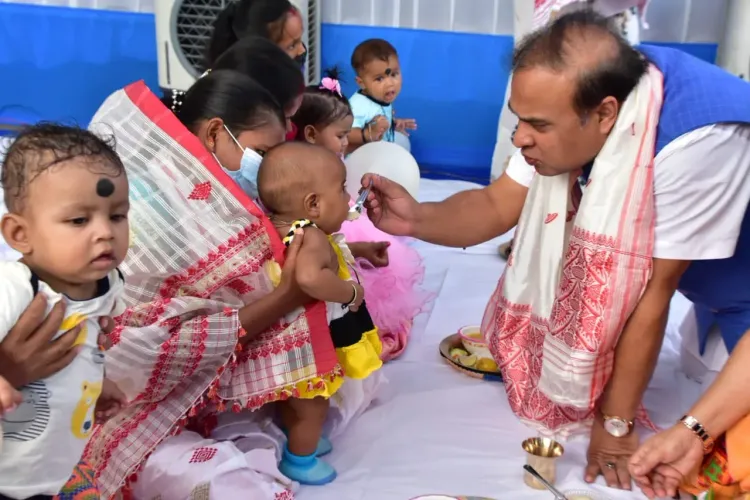
Synopsis
On Navratri's fourth day, Assam CM Himanta Biswa Sarma invoked Maa Kushmanda to spotlight POSHAN Abhiyaan, Anganwadi delivery, and the 2026 Poshan Maah slogan 'Hamari Anganwadi, Hamari Jimmedari', calling anaemia and malnutrition a shared community duty.
Key Takeaways
Navratri fourth day (14 Oct 2026): CM Himanta Biswa Sarma connected Maa Kushmanda's symbolism of nourishment to Assam's nutrition programmes.
POSHAN Abhiyaan , launched in 2018, is the central government's flagship scheme targeting stunting, under-nutrition and anaemia in children and mothers.
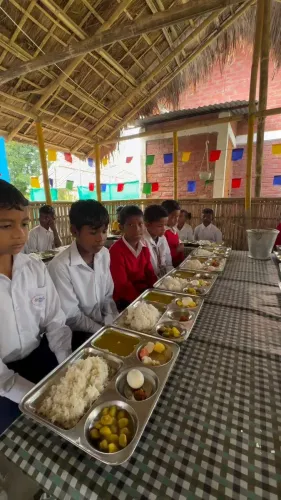
Assam's Anganwadi centres deliver supplementary nutrition, hot cooked meals, health check-ups and counselling to pregnant women, lactating mothers, adolescent girls and children under six.
This year's Poshan Maah (observed every September since 2018) carried the slogan 'Hamari Anganwadi, Hamari Jimmedari' — framing nutrition as a family and community duty, not just a government programme.
CM Sarma pledged to 'free our women and children from anaemia and malnutrition', directing the resolve of the festival season toward a concrete public-health commitment.
On the fourth day of Navratri, Assam Chief Minister Himanta Biswa Sarma wove together devotion and public-health resolve — invoking Maa Kushmanda, the goddess said to have created the universe with her smile, to call on every family and village in Assam to take shared ownership of the fight against anaemia and malnutrition. The post, shared on Wednesday, 14 October 2026, anchors religious observance firmly to the state's delivery of POSHAN Abhiyaan through its Anganwadi network.
What Navratri's fourth day means for Assam's nutrition message
Kushmanda, in Hindu tradition, is venerated as the source of life, light, and nourishment — a theological frame CM Sarma used deliberately. 'She is the source of life, health and nourishment,' he wrote, before pivoting immediately: 'That nourishment begins in the womb and in a child's first years.' The leap from prayer to policy was swift and intentional, directing the devotional energy of Navratri toward a concrete public-health goal.
This is not incidental. Indian governments have periodically used cultural festivals to amplify maternal and child nutrition campaigns, and a BJP chief minister invoking a Navratri goddess to underline a central scheme carries both symbolic and political weight. The goddess becomes a hook; the Anganwadi becomes the answer.
POSHAN Abhiyaan on the ground: Assam's Anganwadi delivery chain
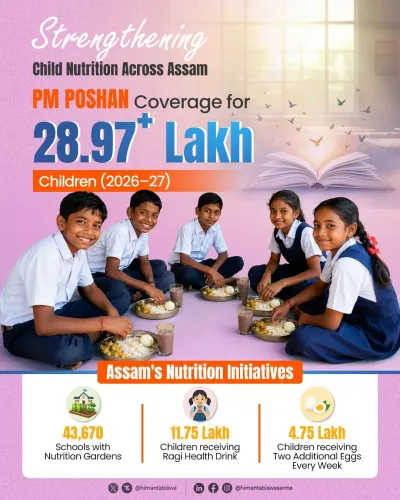
POSHAN Abhiyaan, launched by the Government of India in 2018, is the flagship central programme targeting stunting, under-nutrition, and anaemia in children, adolescent girls, pregnant women, and lactating mothers. Its village-level delivery arm is the Anganwadi centre, part of the decades-old Integrated Child Development Services architecture.
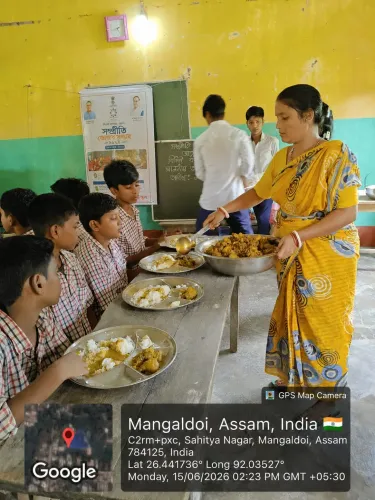
CM Sarma's post spells out what those centres do in Assam: supplementary nutrition, hot cooked meals, health check-ups, and counselling — reaching pregnant women, lactating mothers, adolescent girls, and children under six. Crucially, he highlighted individual tracking: 'Our Anganwadi workers and helpers track every beneficiary, so that no mother or child is left behind.' That last-mile accountability is the hardest part of any nutrition scheme, and naming the workers — not just the programme — is a pointed acknowledgement.
'Hamari Anganwadi, Hamari Jimmedari' — the Poshan Maah call to families
Poshan Maah, observed every September since 2018, is the annual community-mobilisation campaign tied to POSHAN Abhiyaan. This year's edition, CM Sarma noted, carried the slogan 'Hamari Anganwadi, Hamari Jimmedari' — 'Our Anganwadi, Our Responsibility.' The message is a deliberate shift in framing: good nutrition is not only a government programme, he wrote, but 'a shared duty of every family and every village.'
That framing matters because nutrition outcomes in northeastern India — where anaemia rates among women and children have historically been elevated — cannot be moved by government delivery alone. Behaviour change at the household level, around diet, breastfeeding, and adolescent health, is where schemes succeed or stall. The slogan asks communities to close that gap.
The resolve CM Sarma is asking Assam to carry beyond the festival
'A healthy mother raises a healthy child, and healthy children build a strong Assam,' CM Sarma wrote, closing with a specific pledge: to 'free our women and children from anaemia and malnutrition.' Navratri ends; the resolve, he is saying, should not.
Whether Assam moves the needle on malnutrition and anaemia indicators after this year's Poshan Maah activities will be the measure that matters most. The prayers are offered. The accountability, for Anganwadi workers, families, and the state government alike, runs all year.
Point of View
Hamari Jimmedari' slogan is particularly shrewd — it pre-empts accountability by distributing ownership to communities, making nutrition outcomes a shared failure rather than a government one alone. For Assam, where malnutrition and anaemia have historically been persistent challenges, the real test is whether Poshan Maah activities translate into measurable indicator improvements, or remain a well-packaged annual ritual.
NationPress
14 Oct 2026
Frequently Asked Questions
What is POSHAN Abhiyaan and how does it work in Assam?
POSHAN Abhiyaan is the Government of India's flagship nutrition programme launched in 2018 to reduce stunting, under-nutrition and anaemia. In Assam, it is delivered through Anganwadi centres that provide supplementary nutrition, hot cooked meals, health check-ups and counselling to pregnant women, lactating mothers, adolescent girls and children under six.
What is Poshan Maah and when is it observed?
Poshan Maah is an annual community-mobilisation campaign observed every September since 2018. It promotes awareness of POSHAN Abhiyaan goals and encourages families and villages to actively participate in improving nutrition outcomes.
What does 'Hamari Anganwadi, Hamari Jimmedari' mean?
'Hamari Anganwadi, Hamari Jimmedari' translates to 'Our Anganwadi, Our Responsibility.' It was this year's Poshan Maah slogan, emphasising that good nutrition is a shared duty of every family and village, not only a government programme.
Why did CM Himanta Biswa Sarma mention Maa Kushmanda in relation to nutrition?
Maa Kushmanda is worshipped on the fourth day of Navratri and is venerated as the goddess of creation, light and nourishment. CM Sarma drew a parallel between her symbolism and the government's nutrition mission, using the festival as an occasion to reinforce the POSHAN Abhiyaan message.
What are Anganwadi centres and who do they serve?
Anganwadi centres are village-level facilities under the Integrated Child Development Services that deliver nutrition, health and counselling services. They serve children under six, pregnant women, lactating mothers and adolescent girls, with workers tracking each beneficiary individually.