CM Himanta Visits Assam Flood Relief Camps, Orders Family-wise Loss Survey
Synopsis
Assam Chief Minister Himanta Biswa Sarma visited state flood relief camps on 23 July 2026, meeting displaced families and directing all MLAs and District Administrations to conduct household-level loss surveys to guide targeted rehabilitation under SDRF norms.
Key Takeaways
CM Himanta Biswa Sarma personally visited Assam flood relief camps on 23 July 2026 to meet displaced families.
All MLAs and District Administrations have been tasked with recording individual family losses from the floods.
The household-level survey is intended to enable targeted assistance for rebuilding lives, moving beyond aggregate relief distribution.
Relief operations are backed by the State Disaster Response Fund (SDRF) under the Disaster Management Act, 2005 .
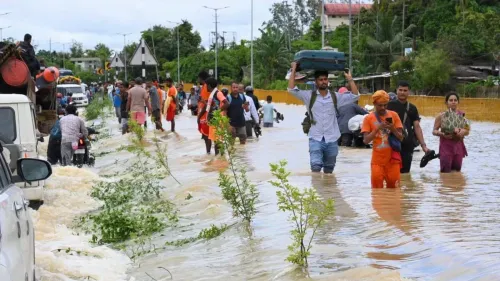
The Brahmaputra river and its tributaries cause near-annual large-scale flooding in Assam , making flood response a perennial governance priority.
Rollout of family-wise compensation and long-term embankment or drainage projects are the key developments to watch next.
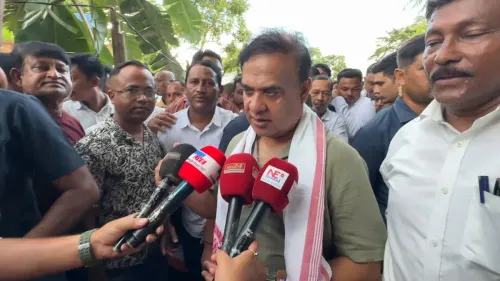
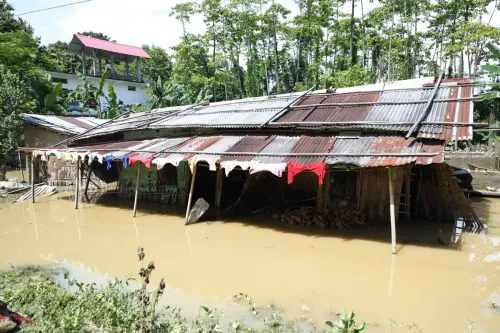
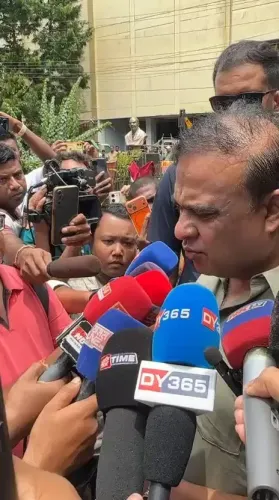
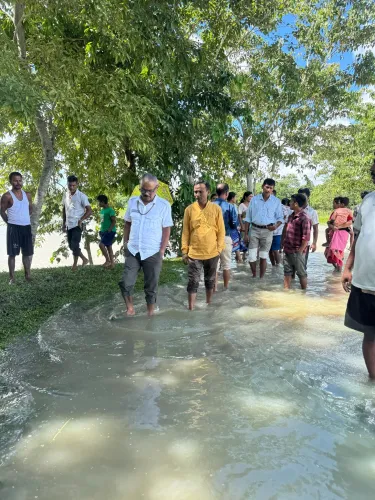
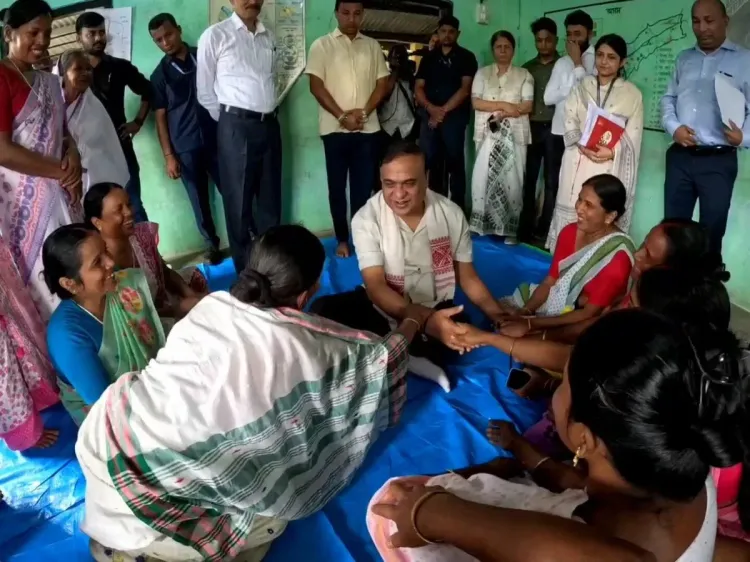
Assam Chief Minister Himanta Biswa Sarma on Thursday, 23 July 2026, visited families sheltered in state-run relief camps amid the ongoing #AssamFloods, holding direct conversations with displaced residents to assess the individual impact of the flooding on their lives and livelihoods.
Context
Posting on X, CM Sarma stated that all Members of the Legislative Assembly (MLAs) and District Administrations across the state are actively documenting the losses suffered by each family in the relief camps. The stated objective is to use this granular data to design targeted assistance that helps families rebuild. 'All our MLAs and District Administrations are taking note of the losses suffered by each family, so that we can help them rebuild their lives,' he wrote.
The visit underscores a shift toward household-level assessment rather than aggregate relief distribution — an approach aimed at ensuring that compensation reaches those most severely affected by the annual monsoon deluge.
Policy Backdrop
Assam's flood relief architecture operates under the Disaster Management Act, 2005, which empowers state governments to deploy the State Disaster Response Fund (SDRF) for camp management, ex-gratia payments, and rehabilitation support. Successive administrations in Guwahati have used household surveys to calibrate SDRF disbursements, particularly for loss of crops, livestock, and housing.
The Brahmaputra river and its tributaries inundate large parts of Assam almost every monsoon season, making flood response one of the most resource-intensive functions of the state government. The current administration under CM Sarma, who took office in 2021, has continued and expanded the practice of deploying elected representatives alongside district officials for on-ground loss verification.
Stakeholders and Impact
Flood-affected families in relief camps are the immediate beneficiaries of the survey exercise. The quality and speed of the household-level documentation will directly determine how quickly and equitably compensation packages are disbursed under SDRF norms.
District Administrations bear the operational burden of conducting the surveys, coordinating with MLAs, and compiling loss registers. Their capacity and bandwidth during an active flood event is a critical variable in how swiftly the data translates into actual relief. MLAs, as elected representatives of the affected constituencies, serve as a political accountability layer in the process, ensuring local knowledge informs the assessment.
What's Next
The immediate watch point is the rollout of family-wise compensation or housing assistance once the loss registers compiled by MLAs and district officials are consolidated. Beyond immediate relief, observers will track whether the current flood season prompts fresh announcements on long-term structural interventions — including embankment reinforcement and drainage improvement projects — that successive Assam governments have pledged but struggled to fully execute.
With the monsoon season still active, the scale of displacement and the pace of relief delivery will be closely watched as a test of the state's disaster management machinery under CM Himanta Biswa Sarma's leadership.
Point of View
Personalised governance during a crisis that recurs every monsoon — a pattern that has become a signature of his administration since 2021. By embedding elected representatives in the loss-assessment process, the government creates both an accountability mechanism and a direct political touchpoint with the most vulnerable constituents. The approach aligns with the broader BJP model of combining administrative machinery with grassroots political mobilisation during disaster response. The real test, however, will be the speed and equity of actual disbursements — an area where the gap between survey and delivery has historically been a point of criticism in Assam's flood management record.
NationPress
23 Jul 2026
Frequently Asked Questions
Why is CM Himanta Biswa Sarma visiting Assam flood relief camps?
CM Himanta Biswa Sarma visited flood relief camps on 23 July 2026 to meet displaced families and understand the individual impact of the Assam floods, as part of a state effort to conduct household-level loss surveys for targeted rehabilitation.
What are MLAs doing in Assam flood relief camps?
MLAs across Assam have been directed by CM Sarma to work alongside District Administrations to document the specific losses suffered by each family sheltered in relief camps, so that compensation can be tailored to individual needs.
How does Assam provide compensation to flood-affected families?
Assam disburses relief and compensation through the State Disaster Response Fund (SDRF) under the Disaster Management Act, 2005, with ex-gratia payments and rehabilitation support calibrated based on household-level loss assessments.
How often does Assam face severe flooding?
Assam experiences severe monsoon flooding almost every year, primarily due to the Brahmaputra river and its tributaries overflowing, causing large-scale displacement, crop loss, and property damage across multiple districts.
What long-term measures is Assam taking to address recurring floods?
Observers are watching for announcements on embankment reinforcement and drainage improvement projects, which successive Assam governments have pledged as long-term solutions to the state's chronic flood vulnerability.