CM Himanta's AB-PMJAY model earns national Parliament nod

Synopsis
The Parliamentary Standing Committee on Health and Family Welfare has praised Assam's practice of letting public hospitals retain and reinvest AB-PMJAY reimbursements as a 'highly pragmatic and replicable model,' recommending the Health Ministry issue SOPs for national adoption. CM Himanta Biswa Sarma welcomed the recognition.
Key Takeaways
The Parliamentary Standing Committee on Health and Family Welfare called Assam's AB-PMJAY reinvestment model 'highly pragmatic and replicable.' Assam allows public hospitals to retain AB-PMJAY reimbursements and reinvest them in infrastructure, equipment, and patient welfare rather than returning funds to general government accounts.
The Committee has recommended the Ministry of Health and Family Welfare issue SOPs enabling all states to adopt this approach.
AB-PMJAY was launched nationally in 2018 to cover secondary and tertiary care for economically vulnerable families.
Committee Chairman Prof.
Ram Gopal Yadav was personally acknowledged by CM Himanta Biswa Sarma for the recognition.
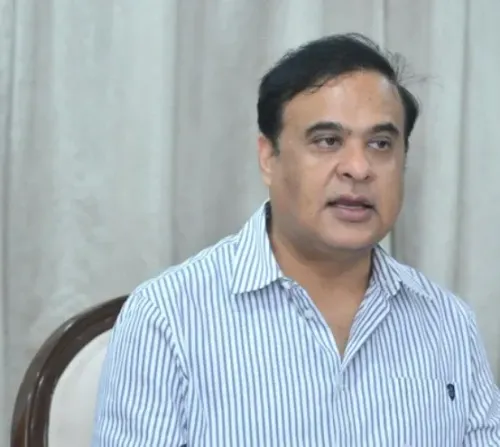
A state-level tweak to India's flagship health insurance scheme has just cleared the highest legislative review bar in the country. Assam Chief Minister Himanta Biswa Sarma announced on Thursday, 13 August 2026 that the Parliamentary Standing Committee on Health and Family Welfare has formally described Assam's practice of allowing public hospitals to retain and reinvest AB-PMJAY reimbursements — in infrastructure, medical equipment, and patient welfare — as a 'highly pragmatic and replicable model.'
What Assam's hospitals actually do differently
Under the national Ayushman Bharat Pradhan Mantri Jan Arogya Yojana (AB-PMJAY), launched in 2018, public hospitals treat eligible patients and receive reimbursements from the scheme. In most states, those funds flow back into general government accounts. Assam's model breaks that cycle: reimbursements stay within the hospital that earned them, ring-fenced for local reinvestment. The logic is straightforward — a hospital that treats more patients earns more, keeps more, and upgrades faster. The Parliamentary Committee found that logic sound enough to recommend it for the entire country.
The Committee's recommendation to the Health Ministry
The Standing Committee has asked the Ministry of Health and Family Welfare (@MoHFW_INDIA) to issue Standard Operating Procedures (SOPs) so that public hospitals across all states can adopt this retention-and-reinvestment approach. That is a meaningful step: a parliamentary recommendation to the central ministry creates institutional pressure for action, even if it stops short of a binding directive. Prof. Ram Gopal Yadav, Chairman of the Committee, received specific thanks from CM Sarma for the recognition.
Why a state model going national matters
India's centrally sponsored health schemes are designed at the top and implemented at the bottom — state-level innovations rarely travel upward through formal channels. When a Parliamentary committee endorses a specific state's operational modification and recommends central guidelines to replicate it, that is the system working as intended, but it is also rare. For Assam, a northeastern state that has historically sat at the margins of national policy conversations, the validation carries weight beyond health administration.
The broader pattern is one of states finding workarounds to chronic underinvestment in public hospital infrastructure — and the centre, through committees like this one, beginning to codify the best of those workarounds into policy. Whether the Ministry of Health and Family Welfare moves swiftly to draft and circulate those SOPs will determine whether this stays a parliamentary footnote or becomes a genuine national shift in how public hospitals are funded.
The next move belongs to New Delhi.
Point of View
A northeastern state being cited as a policy exemplar for the rest of India is politically useful. More substantively, the recommendation tests whether India's federal health architecture can actually learn from its periphery: the speed and seriousness with which the Health Ministry drafts those SOPs will reveal how much institutional weight parliamentary health committee recommendations actually carry.
NationPress
13 Aug 2026
Frequently Asked Questions
What is Assam's AB-PMJAY model that Parliament praised?
Assam allows public hospitals to retain the reimbursements they receive under the Ayushman Bharat Pradhan Mantri Jan Arogya Yojana scheme and reinvest those funds locally in hospital infrastructure, medical equipment, and patient welfare, rather than returning the money to general government accounts.
What did the Parliamentary Standing Committee on Health recommend?
The Committee recommended that the Ministry of Health and Family Welfare issue Standard Operating Procedures (SOPs) so that public hospitals across all Indian states can adopt Assam's retention-and-reinvestment approach.
Who chairs the Parliamentary Standing Committee on Health and Family Welfare?
Prof. Ram Gopal Yadav chairs the Parliamentary Standing Committee on Health and Family Welfare and was personally thanked by Assam CM Himanta Biswa Sarma for the committee's recognition.
What happens next after the committee's recommendation?
The Ministry of Health and Family Welfare is expected to consider issuing SOPs based on the committee's recommendation. Issuance of those guidelines would allow public hospitals in other states to formally adopt the Assam model.