CM Karnataka: Jungle Safaris Resume in Bandipur, Nagarhole
Synopsis
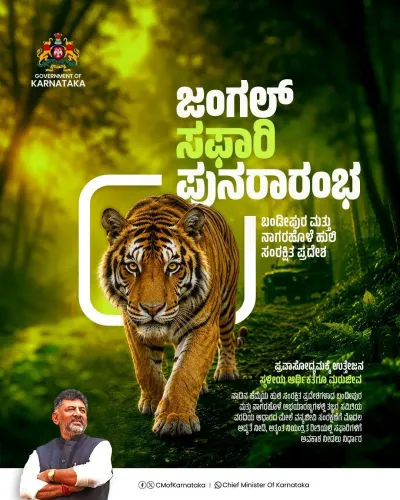
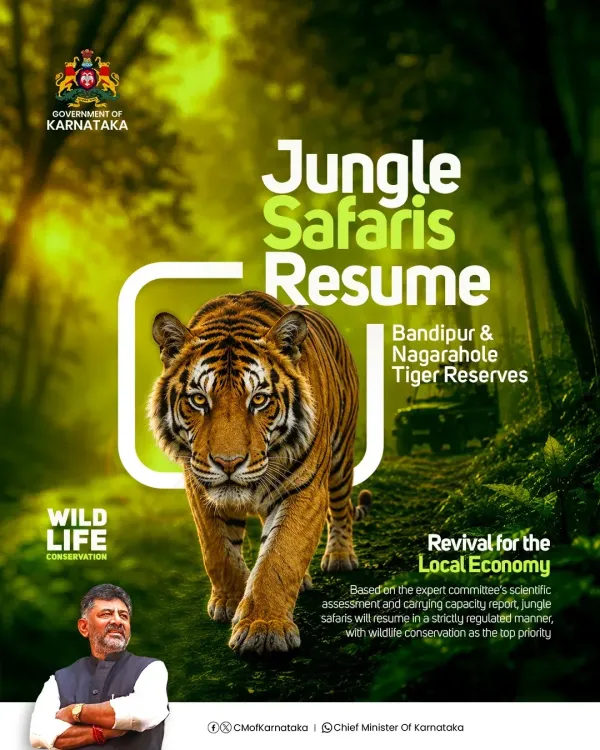
Karnataka's Chief Minister's Office announced on 27 June 2026 that jungle safaris have resumed at Bandipur and Nagarhole Tiger Reserves. The decision is guided by scientific carrying capacity reports and expert recommendations, aiming to balance biodiversity protection with sustainable eco-tourism and local livelihoods.
Key Takeaways
Jungle safaris have officially resumed at Bandipur Tiger Reserve and Nagarhole Tiger Reserve as of 27 June 2026 .
The Karnataka government says the resumption is guided by scientific carrying capacity reports and expert recommendations.
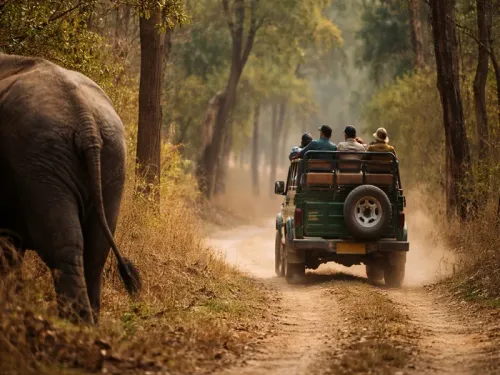
Safaris will be conducted in a strictly regulated manner to protect biodiversity and preserve wildlife habitats.
The move is also aimed at supporting local livelihoods and promoting sustainable eco-tourism across Karnataka.
Both reserves are part of the Nilgiri Biosphere Reserve and are governed under national NTCA tourism guidelines that mandate carrying capacity studies.
The Chief Minister's Office of Karnataka announced on Saturday, 27 June 2026 that jungle safaris have resumed at Bandipur Tiger Reserve and Nagarhole Tiger Reserve, with the government citing scientific assessments, carrying capacity reports, and expert recommendations as the basis for the decision.
Context
The official post from Karnataka's Chief Minister's Office stated that safaris would be 'conducted in a strictly regulated manner to protect biodiversity, preserve wildlife habitats, support local livelihoods and promote sustainable eco-tourism in Karnataka.' The resumption brings relief to wildlife tourism operators and enthusiasts who had been awaiting clarity on access to two of south India's most celebrated protected landscapes.
Bandipur Tiger Reserve, established in 1974 as one of India's first reserves under Project Tiger, lies in Chamarajanagar district and is known for one of the highest tiger densities in the country. Nagarhole Tiger Reserve, also known as Rajiv Gandhi National Park and notified in 1999, is contiguous with Bandipur and together the two form a critical corridor within the Nilgiri Biosphere Reserve.
Policy Backdrop
The decision is grounded in a framework that has been decades in the making. Project Tiger, launched in 1973, brought formal conservation management to Bandipur and set the template for tiger reserve governance across India. The Wildlife Protection Act, amended in 2006, created the National Tiger Conservation Authority (NTCA) — the statutory body under the Ministry of Environment, Forest and Climate Change — with powers to regulate tourism inside tiger reserves.
In 2012, the NTCA issued detailed tourism guidelines mandating scientific carrying capacity studies before safaris could be permitted in core zones. Karnataka's invocation of 'carrying capacity reports and expert recommendations' in its announcement signals alignment with these national norms, positioning the state's approach as science-first rather than demand-driven.
Stakeholders and Impact
The resumption of safaris touches several groups simultaneously. Wildlife tourists and naturalist communities gain renewed access to habitats that harbour tigers, elephants, leopards, and rare bird species within the Western Ghats biodiversity hotspot. Local communities on the fringes of both reserves — many of whom depend on eco-tourism for seasonal income through guide services, homestays, and transport — stand to benefit directly from the revival of visitor footfall.
Conservation NGOs and forest department staff will watch closely to ensure that the regulated framework holds in practice. Karnataka has previously positioned its Western Ghats reserves as models for balancing strict habitat protection with managed tourism revenue that channels funds back into fringe village economies. The dual mandate — conservation and livelihood — is now formally embedded in the government's stated rationale.
What's Next
Attention will now turn to how strictly the carrying capacity limits are enforced on the ground, particularly during peak wildlife tourism season. Nationally, the next All India Tiger Estimation report will provide updated population data that could influence future NTCA guidelines on permissible visitor numbers across Karnataka's reserves.
The Karnataka government's framing of this resumption — anchored in scientific assessment rather than tourism demand — sets an expectation of transparent, data-backed management. Whether that promise translates into durable conservation outcomes will depend on consistent monitoring, adequate forest staff deployment, and community participation in both reserves.
Point of View
The political calculus is clear: credibility with conservationists and international wildlife tourists requires demonstrable adherence to process. The real test will be whether on-ground enforcement matches the carefully worded official announcement.
NationPress
27 Jun 2026
Frequently Asked Questions
Why have jungle safaris resumed in Bandipur and Nagarhole?
The Karnataka government announced the resumption based on scientific carrying capacity reports and recommendations from wildlife experts, ensuring safaris are conducted in a regulated manner that protects biodiversity and supports local livelihoods.
What is the carrying capacity rule for tiger reserve safaris in India?
The National Tiger Conservation Authority mandated in 2012 that all tiger reserves must conduct scientific carrying capacity studies before allowing safaris in core zones, setting limits on daily visitor numbers to minimise habitat disturbance.
Are Bandipur and Nagarhole connected reserves?
Yes. Bandipur Tiger Reserve (established 1974) and Nagarhole Tiger Reserve (notified 1999) are contiguous and together form a major wildlife corridor within the Nilgiri Biosphere Reserve in the Western Ghats.
Who oversees safari regulations in Indian tiger reserves?
The National Tiger Conservation Authority (NTCA) , a statutory body under the Ministry of Environment, Forest and Climate Change, sets and enforces tourism guidelines for all tiger reserves in India, including those in Karnataka.
How do jungle safaris support local communities near tiger reserves?
Regulated eco-tourism generates income for fringe village communities through employment as guides, drivers, and hospitality workers, with Karnataka positioning this model as a way to link conservation outcomes with local livelihood security.