CM Majhi Champions Subhadra Yojana as Women's Self-Reliance Engine
Synopsis
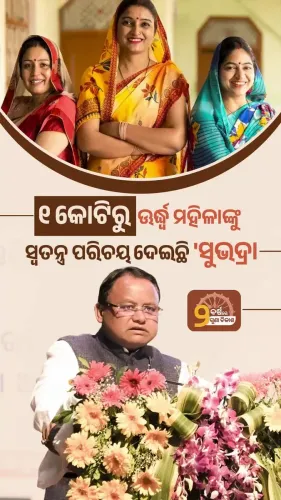
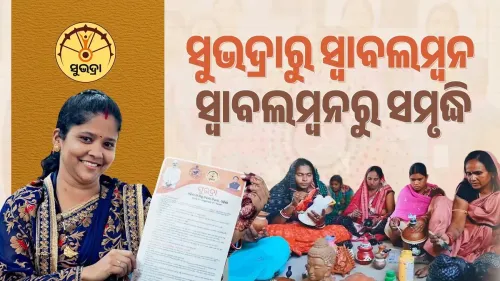
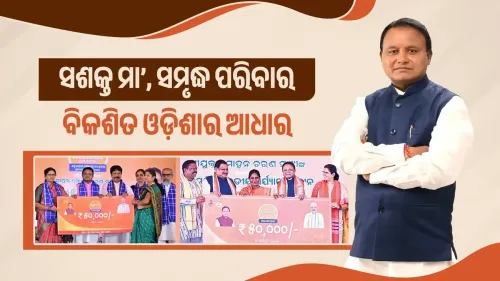
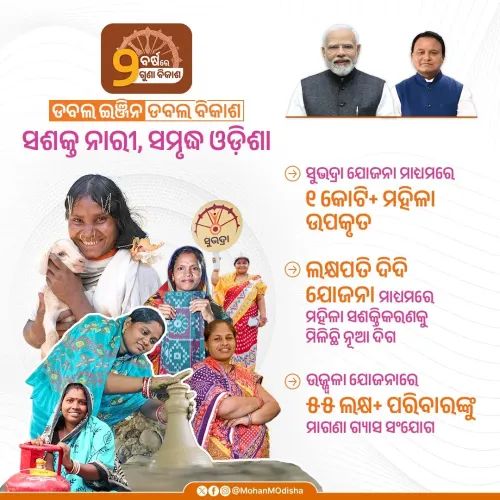
Odisha Chief Minister Mohan Charan Majhi on 30 September 2026 reframed Subhadra Yojana — the BJP government's flagship women-welfare scheme launched in 2024 — as a foundation for self-reliance, citing women using the financial support to start small businesses and build economic independence.
Key Takeaways
Subhadra Yojana was launched in 2024 by the Majhi-led BJP government in Odisha as a flagship women-welfare scheme providing direct financial assistance.
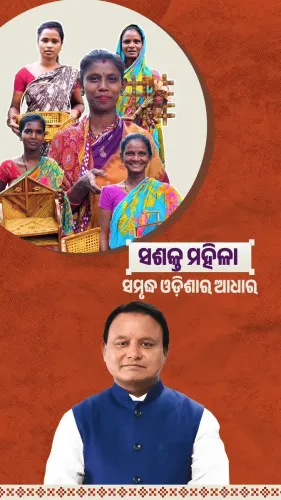
CM Mohan Charan Majhi described the scheme on 30 September 2026 as 'a new foundation for women's self-reliance,' not merely financial aid.
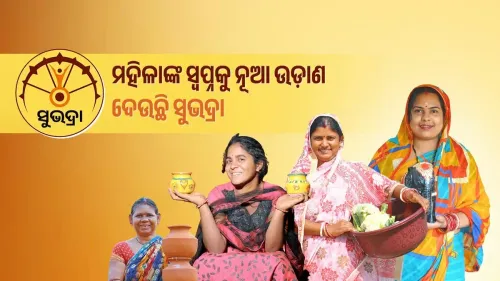
The scheme is designed to enable women to use assistance as seed capital for small businesses and self-generated employment.
Odisha fits a broader post-2024 pattern of Indian state governments pairing direct benefit transfers with entrepreneurship narratives in women-centric schemes.
Key metrics — disbursement rates, business formation numbers, and budget allocations — are yet to be publicly verified and are expected in upcoming legislative sessions.
A welfare scheme built on a simple bet — that financial access, not just financial aid, transforms lives — is drawing fresh attention from Odisha Chief Minister Mohan Charan Majhi, who on Wednesday, 30 September 2026 used the platform X to reframe Subhadra Yojana not as a handout, but as a launchpad for women's economic independence.
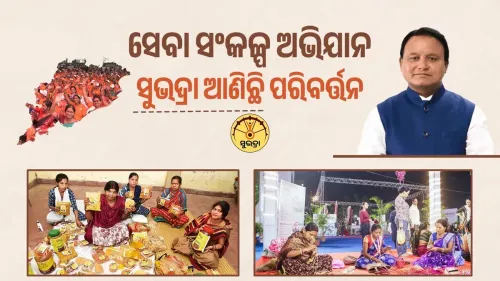
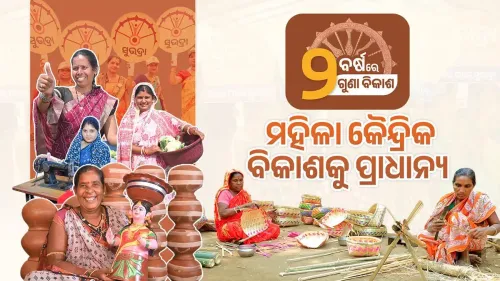
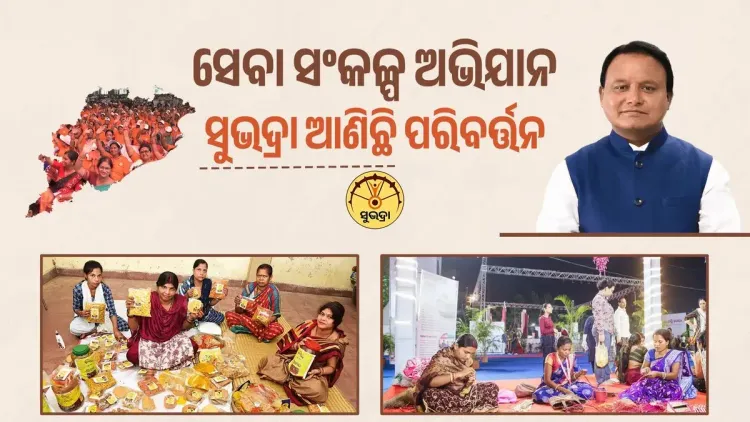
Writing in Odia, CM Majhi declared: 'Subhadra Yojana kebala eka arthika sahayata nuhe, barantu mahilanka swabalamanara eka nua adhara' — 'Subhadra Yojana is not merely financial assistance; it is a new foundation for women's self-reliance.' The post, tagged under #SevaSankalpAbhiyan and #NationFirst, described women using the scheme's support as seed capital to start small businesses and generate their own employment.
What Subhadra Yojana Actually Does
Subhadra Yojana was launched in 2024 as one of the flagship commitments of the BJP government in Odisha following its assembly election victory that year. The scheme channels direct financial assistance to eligible women in the state, with an explicit design goal of reducing long-term dependency by enabling micro-enterprise activity.
The Majhi government has positioned it as a centrepiece of its women-welfare architecture — distinct from pure income-transfer programmes in that it explicitly pairs cash support with a self-reliance narrative. CM Majhi's post on Wednesday reinforces that framing, describing the assistance as 'filling women's minds with self-confidence.'
The Larger Pattern Behind the Push
Odisha is not alone in this approach. Across Indian states, particularly after 2024, women-centric financial schemes have increasingly blended direct benefit transfers with entrepreneurship messaging — a shift from earlier models that focused purely on consumption support. The political logic is clear: a beneficiary who starts a business is a more durable constituency than one who receives a one-time grant.
For the Majhi government, which is still consolidating its identity in a state long dominated by the Biju Janata Dal, Subhadra Yojana serves a dual purpose — demonstrating welfare delivery while building a grassroots narrative of swabalamanara patha ('the path of self-reliance') among Odisha's women voters.
What Remains to Be Measured
The Chief Minister's post is rich in aspiration. The harder numbers — how many women have actually formed businesses, what the disbursement rate looks like, and whether state budget allocations have kept pace — are the metrics that will determine whether Subhadra Yojana's story is one of genuine transformation or well-packaged intent. Those figures are expected to surface in coming legislative sessions and budget presentations.
For now, Odisha's women entrepreneurs are the scheme's most consequential audience — and their experience on the ground will write the chapter that no government post can.
Point of View
Income gains — will match the aspirational language before the next electoral cycle tests the claim.
NationPress
30 Sept 2026
Frequently Asked Questions
What is Subhadra Yojana in Odisha?
Subhadra Yojana is a flagship women-welfare scheme launched by the Odisha BJP government in 2024 under Chief Minister Mohan Charan Majhi. It provides direct financial assistance to eligible women to support self-reliance and small business activity.
Who launched Subhadra Yojana?
Subhadra Yojana was launched by the Odisha government led by Chief Minister Mohan Charan Majhi after the BJP's victory in the 2024 Odisha assembly elections.
What did CM Majhi say about Subhadra Yojana?
On 30 September 2026, CM Majhi posted on X that Subhadra Yojana is 'not merely financial assistance' but 'a new foundation for women's self-reliance,' describing beneficiaries using the support to start small businesses.
How does Subhadra Yojana help women entrepreneurs in Odisha?
The scheme provides financial assistance that women can use as seed capital to start small businesses, with the stated goal of generating self-employment and reducing long-term economic dependency.
What is Seva Sankalp Abhiyan?
Seva Sankalp Abhiyan is a campaign hashtag used by the Odisha BJP government to highlight its public welfare and service-delivery initiatives, including Subhadra Yojana.