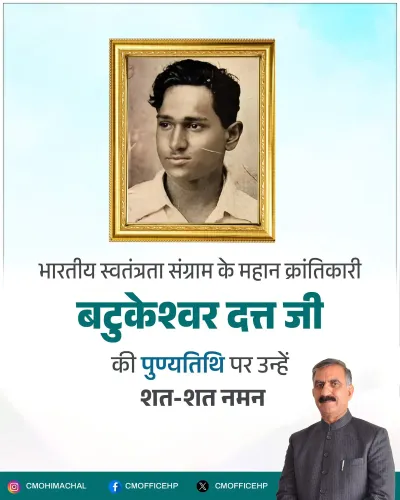
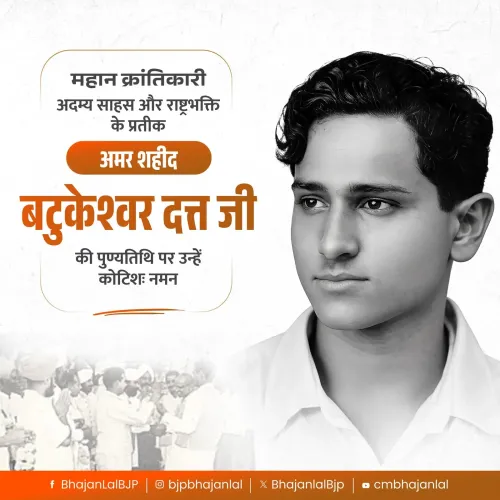
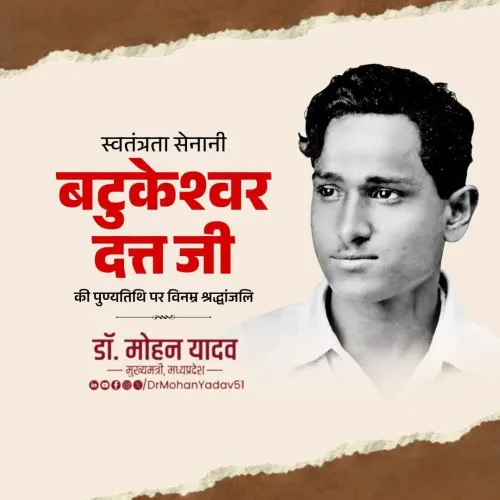
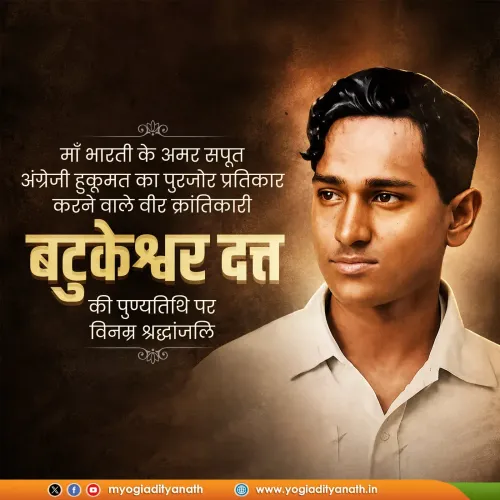
CM Majhi pays tribute to revolutionary Batukeshwar Dutt
Synopsis
Odisha Chief Minister Mohan Charan Majhi on 18 November 2026 honoured revolutionary freedom fighter Batukeshwar Dutt on his 116th birth anniversary, recalling the 1929 Central Legislative Assembly bombing alongside Bhagat Singh as an enduring symbol of courage and patriotism.
Key Takeaways
Batukeshwar Dutt was born on 18 November 1910 and is remembered as one of India's foremost revolutionary freedom fighters.
Dutt and Bhagat Singh threw smoke bombs in the Central Legislative Assembly on 8 April 1929 to protest the Public Safety Bill and the Trade Disputes Bill .
Dutt was sentenced to transportation for life and held in the Cellular Jail, Andaman Islands , before being released in 1938 .
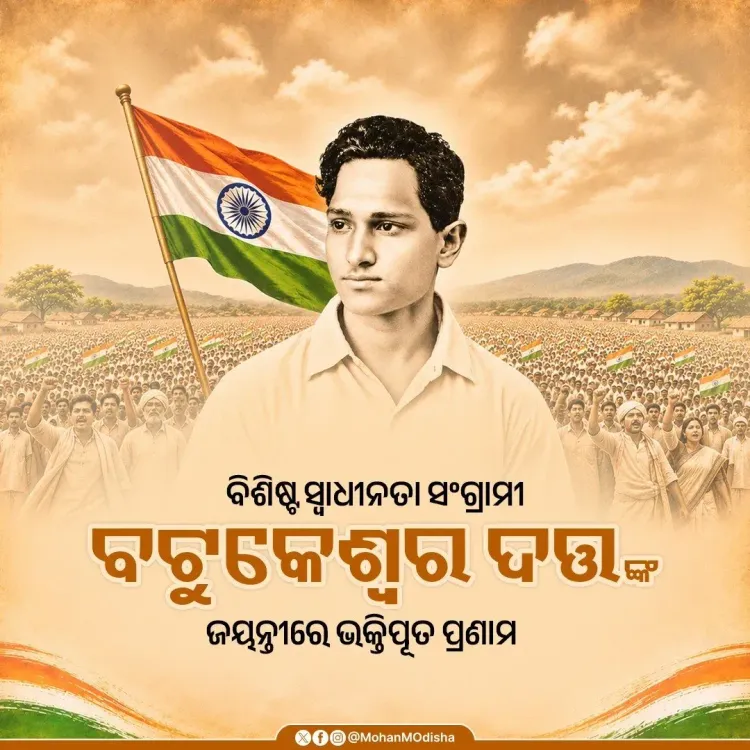
Odisha CM Mohan Charan Majhi posted the tribute in both Odia and English on 18 November 2026.
Indian leaders across parties observe a long-standing tradition of publicly commemorating independence-era revolutionaries on their anniversaries.
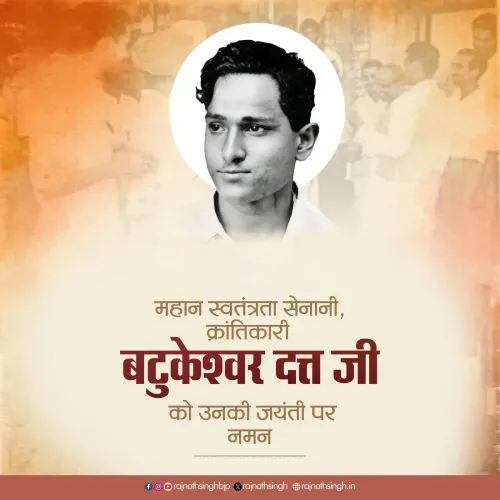
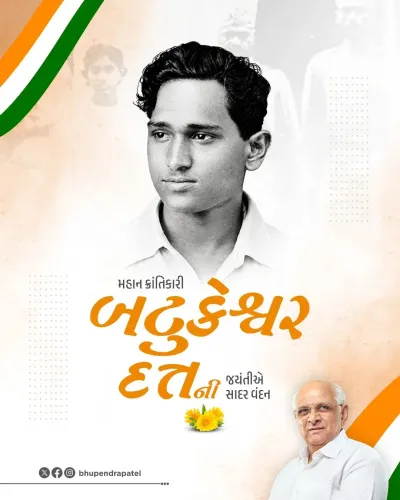
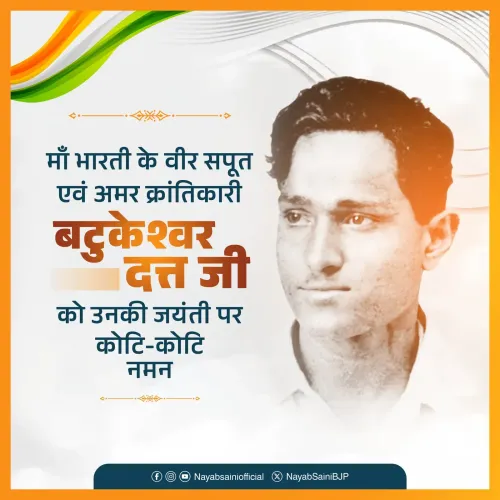
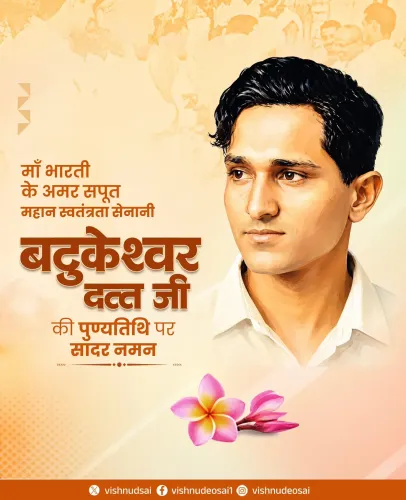
On the 116th birth anniversary of Batukeshwar Dutt, Odisha Chief Minister Mohan Charan Majhi on Wednesday, 18 November 2026 offered solemn remembrance to one of India's most daring revolutionary freedom fighters — a man who walked into the Central Legislative Assembly with Bhagat Singh and changed the course of history.
Posting in both Odia and English, CM Majhi wrote: 'Humble tributes to the great freedom fighter and revolutionary Batukeshwar Dutt on his birth anniversary. His courage, sacrifice and unwavering patriotism will remain an everlasting inspiration for generations to come.'
The man who bombed a parliament to be heard
Born on 18 November 1910, Batukeshwar Dutt is remembered for an act of calculated audacity that shook the British colonial establishment to its core. On 8 April 1929, Dutt and Bhagat Singh threw smoke bombs from the visitors' gallery of the Central Legislative Assembly in Delhi to protest the Public Safety Bill and the Trade Disputes Bill — legislation the colonial government intended to use to crush labour unrest and silence political dissent.
The intent was never mass harm. The leaflets they scattered read: 'It takes a loud voice to make the deaf hear.' Both men stood their ground, made no attempt to flee, and were arrested on the spot. Dutt was subsequently sentenced to transportation for life — exile to the Andaman and Nicobar Islands' Cellular Jail — before being released in 1938.
A legacy that outlasted the empire
Unlike many of his contemporaries, Dutt lived to see independence — but spent years in poor health and relative obscurity, a quiet contrast to the thunderclap of his youth. His story is a reminder that the independence movement was carried not just by those who made it into history textbooks, but by those whose sacrifice ran deeper than their fame.
Indian elected officials across party lines observe a long-standing national practice of publicly commemorating such figures on birth and death anniversaries, keeping the memory of the anti-colonial struggle in public discourse. CM Majhi's tribute follows that tradition, anchoring Dutt's revolutionary courage to a living call for patriotism.
Point of View
Honouring Dutt on his birth anniversary connects the BJP's broader nationalist narrative to the pre-independence revolutionary left, a strand of the freedom movement that transcends party ideology. Such commemorations also keep pressure on state governments to reflect these legacies in education and public infrastructure. The consistency of this practice across administrations signals its deep institutional roots in Indian political culture.
NationPress
18 Nov 2026
Frequently Asked Questions
Who was Batukeshwar Dutt?
Batukeshwar Dutt was an Indian revolutionary freedom fighter born on 18 November 1910. He is best known for throwing smoke bombs alongside Bhagat Singh in the Central Legislative Assembly in 1929 to protest repressive British colonial legislation, and was subsequently sentenced to transportation for life.
Why did Batukeshwar Dutt bomb the Central Legislative Assembly?
Dutt and Bhagat Singh carried out the 8 April 1929 assembly action to protest the Public Safety Bill and the Trade Disputes Bill, which were seen as tools to suppress labour movements and political dissent. Their stated aim was to 'make the deaf hear', not to cause casualties.
When is Batukeshwar Dutt's birth anniversary?
Batukeshwar Dutt's birth anniversary falls on 18 November. He was born on 18 November 1910.
What did Odisha CM Mohan Majhi say about Batukeshwar Dutt?
CM Mohan Charan Majhi posted a tribute on 18 November 2026 calling Dutt a 'great freedom fighter and revolutionary' and stating that his 'courage, sacrifice and unwavering patriotism will remain an everlasting inspiration for generations to come.'
What happened to Batukeshwar Dutt after the assembly bombing?
Batukeshwar Dutt was arrested immediately after the 1929 assembly action, tried, and sentenced to transportation for life — imprisonment in the Cellular Jail in the Andaman Islands. He was released in 1938 and lived to see India's independence.