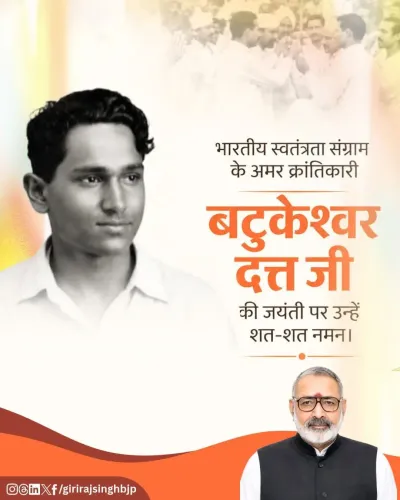
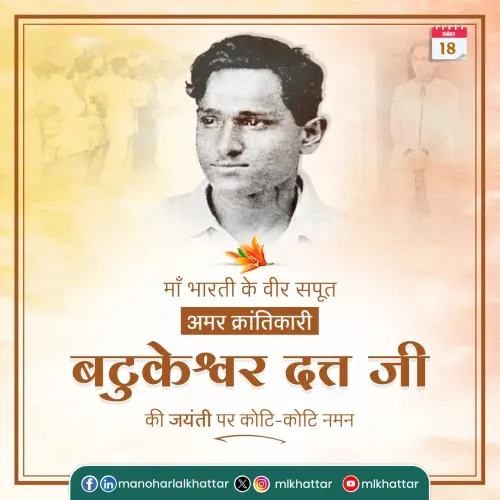
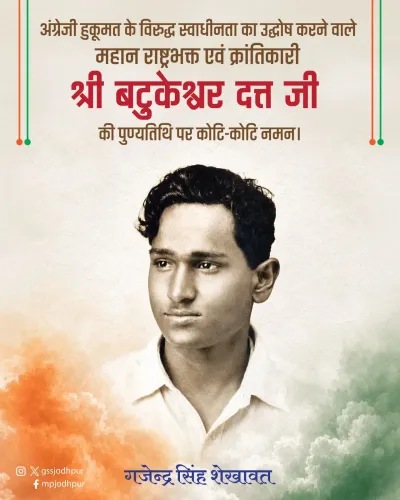
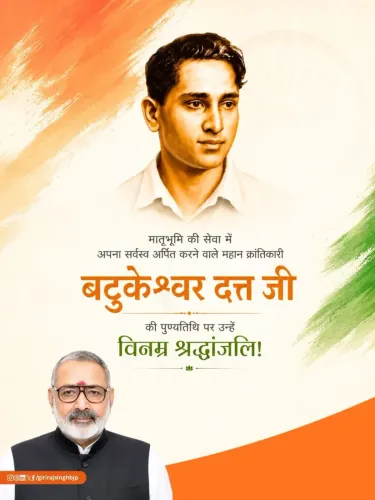
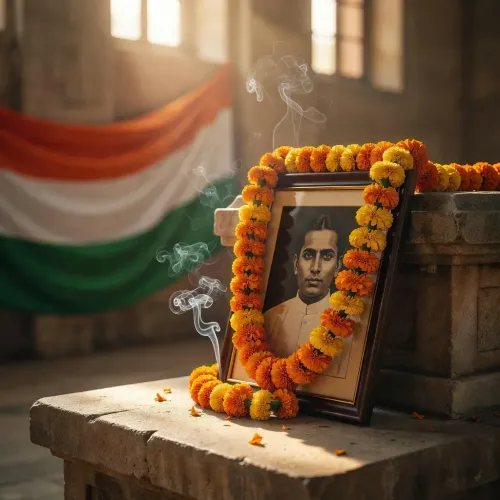
Rajnath Singh pays tribute to freedom fighter Batukeshwar Dutt
Synopsis
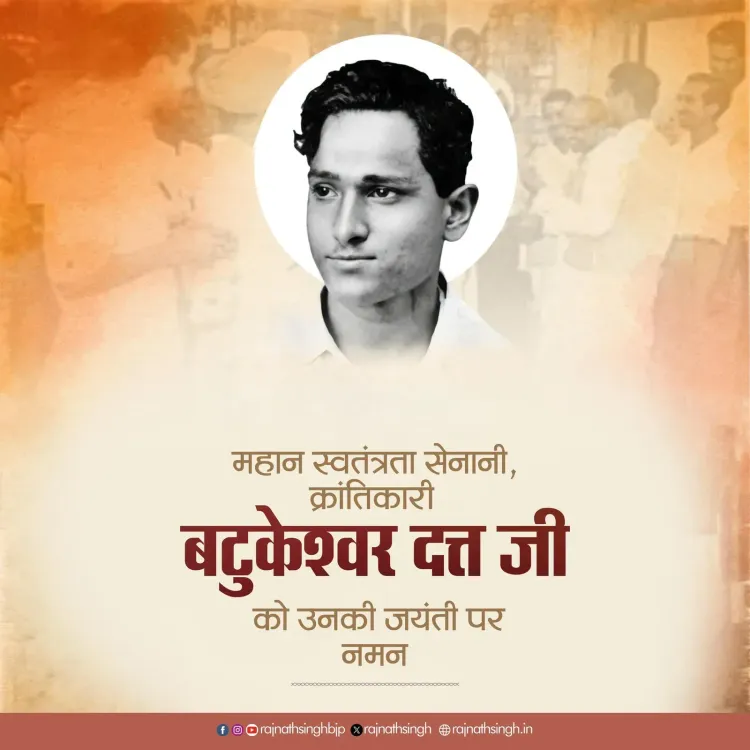
Union Defence Minister Rajnath Singh paid tribute to revolutionary freedom fighter Batukeshwar Dutt on his birth anniversary on 18 November, honouring his role in the 1929 Assembly bombing protest alongside Bhagat Singh and his lifelong sacrifice for India's independence.
Key Takeaways
Rajnath Singh posted a tribute to Batukeshwar Dutt on his birth anniversary on 18 November 2026 .
Dutt was a member of the Hindustan Socialist Republican Association (HSRA) and a close associate of Bhagat Singh .
He co-executed the 1929 Central Legislative Assembly bombing — a deliberate protest action to court colonial arrest and amplify political demands.
Dutt was sentenced to transportation for life and endured prolonged imprisonment, including hunger strikes, without abandoning his resolve.
Singh described Dutt's courage, sacrifice and national loyalty as forever 'inscribed in golden letters' in India's freedom struggle history.
Annual tributes to revolutionary nationalists reflect a broader political pattern of recognising India's plural independence movement.
A bomb in the Central Legislative Assembly, a courtroom defiance, and years of brutal imprisonment — Batukeshwar Dutt paid a price few could imagine for India's freedom. On his birth anniversary, Union Defence Minister Rajnath Singh on Wednesday, 18 November 2026, offered a respectful homage to the revolutionary, remembering him as a symbol of indomitable courage against British oppression.
In his post, Singh wrote: 'महान क्रांतिकारी एवं अमर स्वतंत्रता सेनानी बटुकेश्वर दत्त जी की जयंती पर उन्हें सादर नमन' — 'On the birth anniversary of the great revolutionary and immortal freedom fighter Batukeshwar Dutt, I bow to him with reverence.' The Defence Minister noted that even the harshest torments of imprisonment could not shake Dutt's resolve, and that his struggle and 'unbreakable loyalty to the nation' would remain 'forever inscribed in golden letters in the history of India's freedom struggle.'
The man who stood beside Bhagat Singh
Batukeshwar Dutt was a key member of the Hindustan Socialist Republican Association (HSRA), the revolutionary organisation that sought to challenge British colonial rule through direct, dramatic action. He is best remembered for the 1929 Central Legislative Assembly bombing in Delhi — a protest action carried out alongside Bhagat Singh in which the two men threw smoke bombs and leaflets to court arrest and use the colonial courtroom as a stage for their political demands.
The intent was never to harm, but to be heard. Dutt and Singh surrendered on the spot, transforming the incident into one of the most audacious acts of political theatre in the independence movement. The colonial authorities sentenced Dutt to transportation for life, and he endured years of extreme hardship across Indian prisons — including a prolonged hunger strike — without abandoning his convictions.
A legacy written outside the textbook mainstream
India's independence movement is most widely associated in popular memory with the non-violent path of Mahatma Gandhi. Tributes like today's reflect a consistent effort by political leaders across the spectrum to ensure that the revolutionary strand — Bhagat Singh, Chandrashekhar Azad, Sukhdev, and Batukeshwar Dutt — receives its due place in national memory. Such annual observances serve as a reminder that the freedom struggle was plural: many methods, one goal.
Dutt outlived partition and independence but spent his later years in relative obscurity. His birth anniversary on 18 November remains a moment for India to revisit a chapter of the freedom struggle defined by youth, sacrifice, and an unwillingness to be silent.
Point of View
Alongside the Gandhian mainstream. By invoking Dutt's 'unbreakable loyalty' and 'golden letters in history,' the Defence Minister signals a political investment in keeping the armed-resistance strand of the freedom struggle visible in public consciousness. Such observances carry symbolic weight: they reinforce a particular reading of nationalism that valorises sacrifice and direct confrontation with colonial power. For a senior Cabinet leader to make this tribute personal and prominent — rather than issuing a terse official line — also speaks to the growing cultural premium placed on revolutionary iconography in Indian political discourse.
NationPress
18 Nov 2026
Frequently Asked Questions
Who was Batukeshwar Dutt?
Batukeshwar Dutt was an Indian revolutionary freedom fighter and member of the Hindustan Socialist Republican Association (HSRA). He is best known for participating in the 1929 Central Legislative Assembly bombing alongside Bhagat Singh as a dramatic protest against British colonial rule.
What was the 1929 Central Legislative Assembly bombing?
In April 1929, Batukeshwar Dutt and Bhagat Singh threw smoke bombs and leaflets inside the Central Legislative Assembly in Delhi. The act was designed not to cause casualties but to court arrest and use the colonial courtroom as a platform to publicise their revolutionary demands.
Why did Rajnath Singh pay tribute to Batukeshwar Dutt?
Union Defence Minister Rajnath Singh paid tribute on the occasion of Batukeshwar Dutt's birth anniversary on 18 November, honouring his courage, sacrifice and contribution to India's independence struggle.
What happened to Batukeshwar Dutt after the Assembly bombing?
Dutt surrendered to colonial authorities after the bombing, was tried, and sentenced to transportation for life. He endured years of harsh imprisonment, including hunger strikes, but never abandoned his convictions.