Pralhad Joshi: India Hit 50% Clean Energy Target 5 Years Early
Synopsis
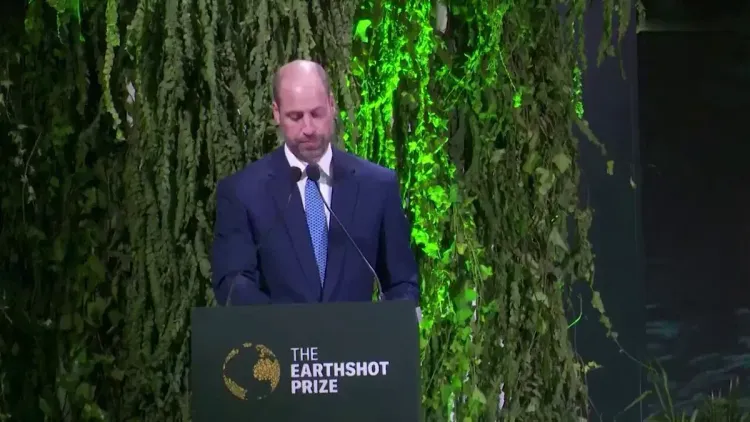
Prince William, at Earthshot Mumbai, praised India for achieving 50% installed electricity capacity from non-fossil fuels five years ahead of schedule and a near 50-fold solar expansion. Minister Pralhad Joshi highlighted the milestone as part of PM Modi's clean energy revolution aimed at community empowerment and sustainable growth.
Key Takeaways
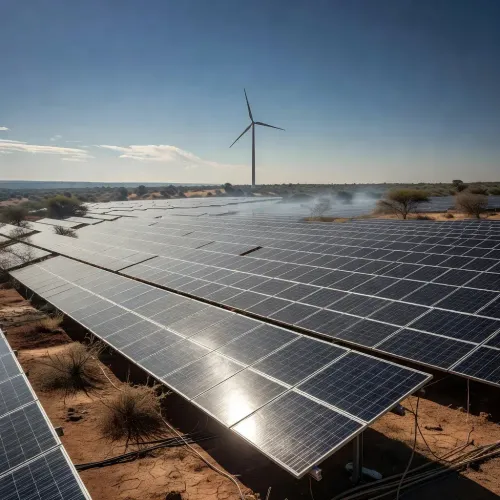
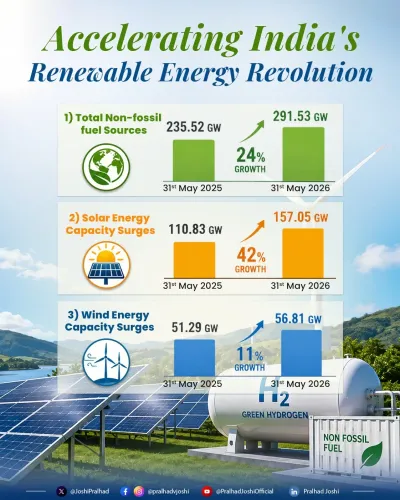
India achieved 50% of installed electricity capacity from non-fossil fuel sources five years ahead of its original 2030 schedule.
India's solar capacity has grown nearly 50-fold in just over a decade , as cited by Prince William at Earthshot Mumbai .
The milestone is part of India's Panchamrit strategy announced at COP26 in 2021 , which also targets 500 GW non-fossil fuel capacity by 2030 .
India co-founded the International Solar Alliance with France in 2015 as an early marker of its solar diplomacy ambitions.
Minister Pralhad Joshi linked the energy achievement to broader goals: improving lives, creating opportunities, and empowering communities.
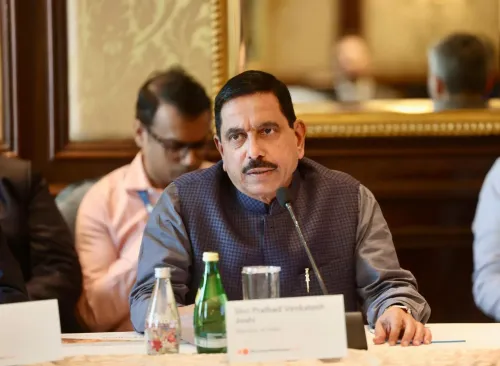
India's clean energy story just earned a prime-time spotlight on the global stage. At Earthshot Mumbai, Prince William singled out India's renewable energy achievement — reaching 50% of installed electricity capacity from non-fossil fuel sources five years ahead of schedule, while scaling solar capacity nearly 50-fold in just over a decade. Union Consumer Affairs and New and Renewable Energy Minister Pralhad Joshi amplified the moment on Wednesday, November 18, 2026, calling it part of a transformative revolution driven under Prime Minister Narendra Modi's leadership.
Prince William at Earthshot Mumbai: What He Said About India
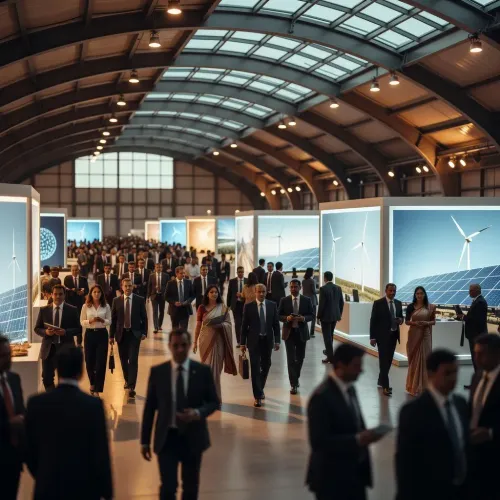
The Earthshot Prize, founded by Prince William in 2020 to fund and scale solutions to the world's most pressing environmental challenges, chose Mumbai as the venue for this edition — itself a signal of India's growing centrality in the global green transition. The Prince's remarks underscored two headline numbers: the 50% non-fossil fuel milestone and a nearly 50-fold expansion of solar capacity over roughly ten years. These figures, cited at a high-visibility international forum, place India's energy transformation under a rare convergence of domestic ambition and international validation.
From Panchamrit to Ahead of Schedule: India's Renewable Climb
The policy scaffolding behind this moment stretches back over a decade. When India co-founded the International Solar Alliance with France in 2015, it was a declaration of intent. At COP26 in 2021, the government sharpened that intent into the Panchamrit strategy — a five-point climate commitment that included reaching 500 GW of non-fossil fuel capacity by 2030 and achieving net-zero emissions by 2070. The 50% installed capacity target was embedded in India's updated Nationally Determined Contribution, originally set for 2030. Clearing it five years early rewrites the timeline entirely.
Minister Joshi framed the achievement as more than an electricity statistic: 'It is about improving lives, creating opportunities, empowering communities and building a sustainable future.' That framing connects grid expansion to rural access and economic empowerment — the political and humanitarian dividend of a gigawatt-scale buildout.
What the 500 GW Target Means From Here
With the 50% installed capacity milestone now crossed ahead of schedule, attention shifts to the absolute target: 500 GW of non-fossil fuel capacity by 2030. Early achievement of the percentage-share goal suggests the trajectory is steepening — but the absolute gigawatt gap still demands sustained investment, grid integration, and storage deployment. The Earthshot platform, with its prize funding and global media reach, adds a fresh layer of international financing and partnership interest at precisely the moment India needs to maintain momentum.
For renewable energy developers, rural communities newly connected to cleaner power, and India's negotiators at future climate summits, the Earthshot moment is both a report card and a runway.
Point of View
Turning a COP26 pledge into a verifiable ahead-of-schedule achievement at a high-profile international venue. The Earthshot moment is strategically useful for the Modi government: international validation from a globally recognised figure shores up India's positioning as a climate leader even as it navigates pressure on absolute emissions. Minister Joshi's framing — linking gigawatts to communities — is a deliberate signal that the renewable buildout is also an electoral and development story, not just a climate one. The harder test now is the 500 GW absolute target, where grid storage and transmission infrastructure will determine whether the momentum holds.
NationPress
18 Nov 2026
Frequently Asked Questions
What milestone did India achieve in clean energy that Prince William mentioned at Earthshot Mumbai?
Prince William noted that India achieved 50% of its installed electricity capacity from non-fossil fuel sources five years ahead of its original 2030 schedule, and expanded solar capacity nearly 50-fold in just over a decade.
What is the Earthshot Prize and why was it held in Mumbai?
The Earthshot Prize was founded by Prince William in 2020 to fund and scale solutions to major environmental challenges. Its Mumbai edition reflects India's growing role as a global clean energy leader and innovation hub.
What is India's Panchamrit climate strategy?
India's Panchamrit strategy, announced at COP26 in 2021, is a five-point climate commitment that includes reaching 500 GW of non-fossil fuel capacity by 2030 and achieving net-zero emissions by 2070.
What is the International Solar Alliance and India's role in it?
The International Solar Alliance is a treaty-based international organisation co-founded by India and France in 2015 to accelerate solar energy deployment globally, with India serving as a founding co-chair.
What is India's next renewable energy target after hitting 50% non-fossil fuel capacity?
India's next major milestone is reaching an absolute 500 GW of non-fossil fuel electricity capacity by 2030, as committed under the Panchamrit strategy at COP26.