CM Majhi Launches Model Village Mission for Odisha
Synopsis
Odisha Chief Minister Mohan Charan Majhi on 28 May 2026 launched the Model Village Mission, pledging modern infrastructure, self-governance, and cultural dignity for rural Odisha. The initiative targets the state's vast rural population and builds on national rural development templates under the BJP government's first term in Odisha.
Key Takeaways
Odisha CM Mohan Charan Majhi announced the Model Village Mission on 28 May 2026 via his official X account.
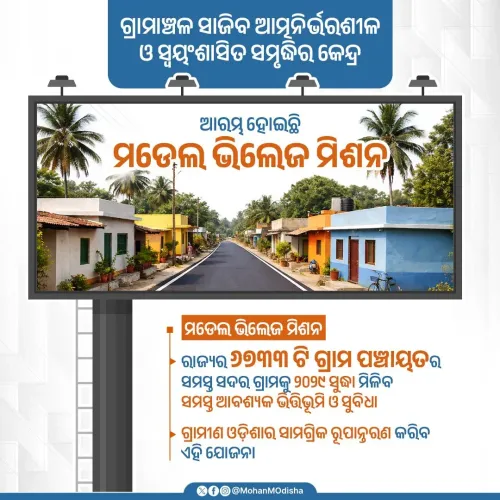
The mission aims to make each village self-reliant and self-governed , with modern amenities, improved infrastructure, and community spaces.
The initiative is framed around Odia cultural identity and rural self-respect ( swabhiman ), not just infrastructure delivery.
Over 80 per cent of Odisha's population is rural, making village-focused policy central to both governance and electoral strategy.
The mission is expected to combine central scheme funds with state resources, drawing on templates like Sansad Adarsh Gram Yojana and PMAY-Gramin .
Key details — pilot village list, 2026-27 budget allocation , and central scheme integration — are yet to be officially disclosed.
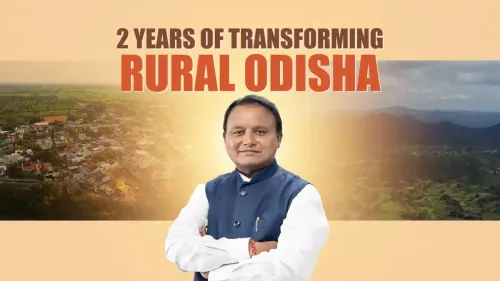
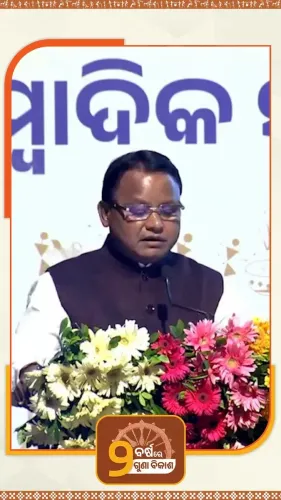
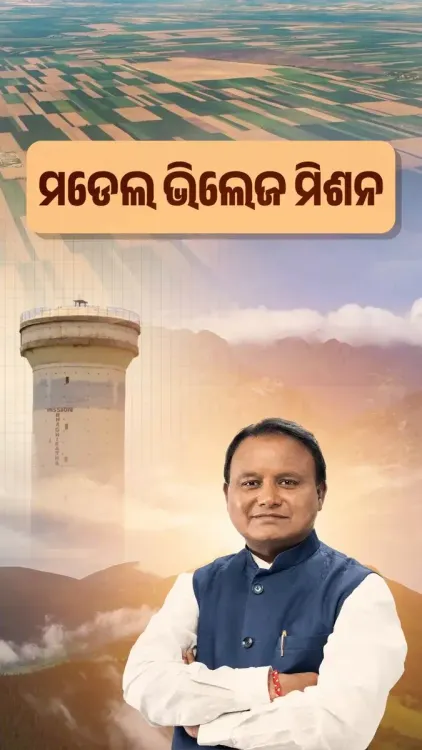
Odisha Chief Minister Mohan Charan Majhi on Thursday, 28 May 2026 announced the launch of the Model Village Mission, a state initiative aimed at transforming rural Odisha into self-reliant, self-governed centres of prosperity. The Chief Minister framed the mission as a historic step to provide villages with modern amenities, dignity, and a new direction of development. The announcement was made via his official X account and was accompanied by a video presentation of the initiative.
In his post, written in Odia, CM Majhi declared: 'ଗାଁ ହେଉଛି ଓଡ଼ିଶାର ଆତ୍ମା, ସଂସ୍କୃତି ଓ ସ୍ୱାଭିମାନର ପରିଚୟ' — 'The village is the soul, culture, and identity of Odisha's self-respect.' He added that the mission had been launched to give villages 'modern facilities, honour, and a new horizon of prosperity,' with each gram to be developed with basic amenities, improved infrastructure, and modern community spaces.
Context
The Model Village Mission arrives roughly two years into the BJP's first-ever government in Odisha, which came to power in June 2024 ending nearly two and a half decades of Biju Janata Dal rule. Chief Minister Majhi has consistently centred his administration's identity around rural welfare and cultural pride, positioning the state's villages not merely as administrative units but as repositories of Odia heritage. With more than 80 per cent of Odisha's population living in rural areas, the political and developmental stakes of any village-focused programme are substantial.
Policy Backdrop
The mission draws on a well-established national policy lineage. The Sansad Adarsh Gram Yojana, launched in 2014, provided an early template for holistic village adoption and development, encouraging replicable models of rural transformation. Central schemes such as Pradhan Mantri Awas Yojana-Gramin, active since 2015, have supplied rural housing and infrastructure benchmarks that state-level missions frequently build upon. The Model Village Mission is expected to combine central scheme funding with state resources to create showcase villages designed for later scaling across Odisha's approximately 47,000 revenue villages.
Indian states have repeatedly launched model-village programmes as a strategy to visibly narrow urban-rural gaps. What distinguishes CM Majhi's framing is the explicit linkage of infrastructure delivery with cultural identity and swabhiman — self-respect — a rhetorical choice that aligns with the broader BJP emphasis on pride-based governance narratives.
Stakeholders and Impact
The primary beneficiaries of the mission are rural households and gram panchayats across Odisha, who stand to gain access to improved roads, community spaces, sanitation, and connectivity. Panchayati raj institutions are expected to play a central role in the self-governance dimension of the mission, consistent with the constitutional mandate for village-level autonomy under the 73rd Amendment. Agricultural communities, women's self-help groups, and rural youth are among the stakeholder groups that model-village programmes in other states have targeted for economic and social uplift.
The mission also carries political significance for the BJP government, which must demonstrate tangible rural delivery ahead of future electoral cycles in a state where village-level credibility is decisive. The use of the hashtag #SamruddhaOdisha — 'Prosperous Odisha' — signals the government's intent to brand this as a flagship development identity.
What's Next
Key details that will determine the mission's scope and credibility include the selection criteria for pilot villages, the state's budget allocations in the 2026-27 fiscal cycle, and the degree of integration with existing central rural development schemes. Observers will also watch whether the mission establishes independent monitoring mechanisms or relies on existing panchayat reporting structures. The government's ability to publish a concrete first list of model villages and disburse funds in a time-bound manner will be the earliest indicator of implementation seriousness.
If the Model Village Mission delivers measurable outcomes in its pilot phase, it could become a replicable template for other BJP-governed states pursuing rural transformation under the broader Viksit Bharat development framework envisioned for 2047.
Point of View
The government is crafting a narrative that is harder to contest on delivery timelines alone. The initiative follows a well-worn Indian policy pattern of showcase village programmes, but the explicit self-governance dimension — if backed by genuine panchayat empowerment — could differentiate it from predecessors. The real test will come when pilot village lists, fund flows, and independent assessments enter the public domain.
NationPress
19 Sept 2026
Frequently Asked Questions
What is the Model Village Mission in Odisha?
The Model Village Mission is a state government initiative launched by Odisha Chief Minister Mohan Charan Majhi in May 2026 to transform rural villages into self-reliant, self-governed centres with modern infrastructure, basic amenities, and community spaces.
Who launched the Model Village Mission?
Odisha Chief Minister Mohan Charan Majhi, a BJP leader who has headed the state government since June 2024, launched the Model Village Mission on 28 May 2026.
What does the Model Village Mission aim to achieve?
The mission aims to provide Odisha's villages with modern facilities, improved infrastructure, community spaces, and a framework for self-governance and self-reliance, reducing the urban-rural development gap in the state.
How does the Model Village Mission relate to central government schemes?
The mission is expected to build on national templates such as Sansad Adarsh Gram Yojana and Pradhan Mantri Awas Yojana-Gramin, potentially combining central scheme funds with state resources to develop showcase villages for later scaling.
Which villages will be selected under the Model Village Mission in Odisha?
The selection criteria and the first list of pilot villages under the Model Village Mission have not yet been officially disclosed; these details, along with budget allocations for 2026-27, are among the key announcements being awaited.