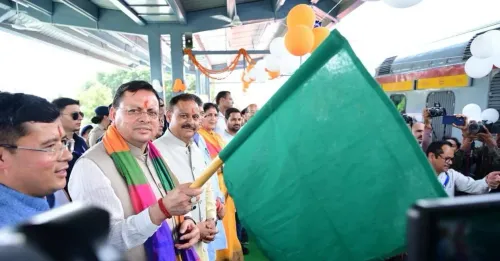
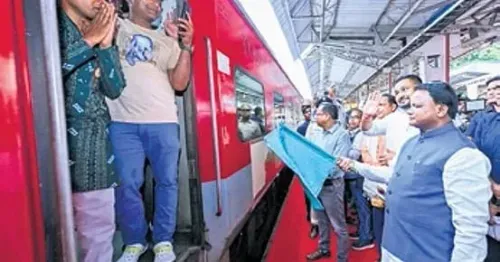
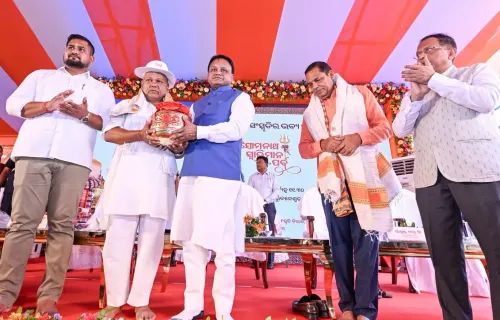
CM Majhi launches pilgrim train service for Somnath Swabhiman Parba

Synopsis
Chief Minister Mohan Charan Majhi attended the inauguration of a dedicated pilgrim rail service to the Somnath Jyotirlinga on 15 June 2026, on the occasion of Somnath Swabhiman Parba, reinforcing Odisha's push for state-facilitated religious tourism connectivity.
Key Takeaways
CM Mohan Charan Majhi attended the launch of a dedicated pilgrim train service to Somnath on 15 June 2026 .
The event was held on the occasion of Somnath Swabhiman Parba , a cultural and religious observance linked to the revered Jyotirlinga shrine.
Somnath Temple , located in Prabhas Patan, Gujarat , is one of the twelve sacred Jyotirlinga shrines dedicated to Lord Shiva.
The initiative is part of a broader pattern of BJP-governed states coordinating with Indian Railways to run special pilgrim trains to major pilgrimage centres.
Odia pilgrims and devotees are the primary beneficiaries, gaining easier and more affordable access to the Somnath shrine.
The model could be extended to other Jyotirlinga sites such as Kashi , Ujjain , and Dwarka in future phases.
Chief Minister Mohan Charan Majhi of Odisha attended the inauguration of a dedicated rail travel facility for pilgrims on the occasion of the Somnath Swabhiman Parba on Monday, 15 June 2026. The launch marks a new chapter in state-facilitated religious tourism, connecting Odia devotees with the revered Somnath Jyotirlinga shrine in Gujarat.
The Chief Minister's Office of Odisha posted on X, announcing that CM Majhi was participating in the ଶୁଭାରମ୍ଭ କାର୍ଯ୍ୟକ୍ରମ ('inauguration programme') of the pilgrim rail arrangement, live-streaming the event for wider public access.
Context
The Somnath Swabhiman Parba is a cultural and religious observance centred on the Somnath Temple, one of the twelve sacred Jyotirlinga shrines dedicated to Lord Shiva. Located in Prabhas Patan, Gujarat, the temple holds deep significance for Hindu devotees across India, including a large number of pilgrims from Odisha. The occasion of 'Swabhiman Parba' — loosely translated as a 'festival of self-respect and pride' — has provided the symbolic backdrop for this rail connectivity initiative.
Policy Backdrop
The launch fits into a broader pattern of state governments coordinating with Indian Railways to operate special pilgrim trains linking eastern India with western pilgrimage centres. Such dedicated services to major Jyotirlinga sites have been periodically introduced since the early 2010s as part of religious tourism facilitation efforts. BJP-governed states, in particular, have accelerated such coordination as part of cultural connectivity agendas, and Odisha — under its first-ever BJP Chief Minister since June 2024 — is now extending this approach to its own pilgrim base.
CM Majhi took office after the Bharatiya Janata Party secured a decisive victory in the Odisha Legislative Assembly elections of 2024, ending decades of Biju Janata Dal rule in the state. His government has since signalled a closer alignment with central government priorities, including in the domain of religious tourism and infrastructure.
Stakeholders and Impact
The primary beneficiaries of this rail facility are Odia pilgrims and devotees who previously had to arrange private or multi-leg travel to reach Somnath. A dedicated train service reduces both the cost and logistical burden for ordinary devotees, particularly senior citizens and those from smaller towns and villages across Odisha. The move is also expected to boost religious tourism revenue along the route and strengthen the cultural and spiritual ties between Odisha and Gujarat.
What's Next
Observers will watch whether this inauguration marks the beginning of a series of such rail connections from Odisha to other Jyotirlinga sites across the country. Any measurable increase in pilgrim footfall at Somnath from Odisha in the coming months will be a key indicator of the initiative's success. The state government may also use this model to expand religious tourism linkages to sites such as Kashi, Ujjain, and Dwarka in future phases.
Point of View
Which has long used religious tourism infrastructure as both a governance deliverable and a political symbol. For a state that only recently transitioned to BJP rule after decades, this move serves the dual purpose of demonstrating administrative action and deepening the party's connect with a devout electorate. The choice of 'Swabhiman Parba' as the occasion is also notable — invoking pride and identity adds a cultural weight that goes beyond mere logistical convenience. Nationally, this fits a pattern of eastern states being woven into the pilgrimage economy of western and northern India, reshaping religious geography through rail policy.
NationPress
14 Sept 2026
Frequently Asked Questions
What is Somnath Swabhiman Parba?
Somnath Swabhiman Parba is a cultural and religious observance associated with the Somnath Jyotirlinga temple in Gujarat, celebrating pride and devotion connected to one of Hinduism's most sacred shrines.
What train service did CM Majhi launch for Somnath?
CM Mohan Charan Majhi inaugurated a dedicated pilgrim rail travel facility connecting Odisha to the Somnath Jyotirlinga shrine in Gujarat on 15 June 2026, on the occasion of Somnath Swabhiman Parba.
Where is the Somnath Temple located?
The Somnath Temple is located in Prabhas Patan, Gujarat, and is one of the twelve Jyotirlinga shrines dedicated to Lord Shiva, making it one of the holiest sites in Hinduism.
Who is Mohan Charan Majhi?
Mohan Charan Majhi is the Chief Minister of Odisha since June 2024, becoming the first BJP leader to hold the office after the party's landmark victory in the state assembly elections.
Will Odisha launch more pilgrim trains to other Jyotirlinga sites?
While no official announcement has been made, observers expect the Odisha government may extend this rail connectivity model to other Jyotirlinga sites such as Kashi, Ujjain, and Dwarka in future phases.