CM Mohan Majhi lays foundation for Pipili Chandua Handicraft Hub

Synopsis
Chief Minister Mohan Majhi laid the foundation stone for the Rs 80 crore Pipili Chandua Handicraft Hub in Puri district, aiming to connect Odisha's iconic GI-tagged applique craft with global markets and empower over 6,000 artisans and women self-help groups.
Key Takeaways
CM Mohan Majhi laid the foundation stone for the Pipili Chandua Handicraft Hub on June 5, 2026 .
The hub will be built at an investment of Rs 80 crore in Pipili, Puri district, Odisha .
The project aims to connect Chandua craft with global markets through modern production and marketing infrastructure.
More than 6,000 artisans and women self-help groups in Pipili and surrounding areas are expected to benefit.
Pipili's Chandua applique craft holds a Geographical Indication tag since 2008 , giving it protected status in trade.
The project is part of the state government's 'Samruddha Odisha' (Prosperous Odisha) development agenda.
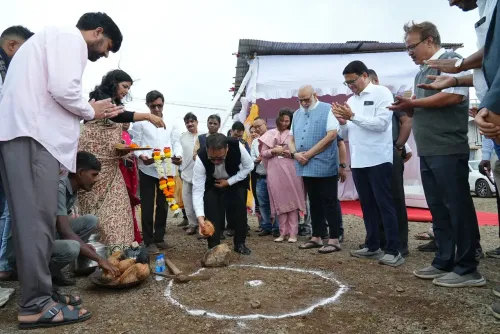
The Chief Minister's Office of Odisha announced on Friday, June 5, 2026, that Chief Minister Mohan Majhi has laid the foundation stone for the Pipili Chandua Handicraft Hub in Pipili, Puri district — a modern facility to be built at an investment of Rs 80 crore aimed at taking the iconic Odia applique craft to global markets.
Context
The CMO's post in Odia reads: 'ବିଶ୍ୱ ବିଦିତ ହେବ ଓଡ଼ିଆ ଅସ୍ମିତାର ଅନନ୍ୟ ପ୍ରତୀକ ପିପିଲି ଚାନ୍ଦୁଆ ଶିଳ୍ପ' ['The world will come to know the unique symbol of Odia identity — the Pipili Chandua craft']. The foundation stone laying by CM Majhi marks a formal state commitment to scaling up one of Odisha's most recognisable traditional art forms. The hub is envisaged as a state-of-the-art facility designed to modernise production, display, and marketing infrastructure for Chandua artisans.
Pipili, a small town on the Bhubaneswar–Puri highway, has for centuries been synonymous with the vibrant applique textile craft locally known as Chandua — colourful fabric cut-outs stitched into canopies, wall hangings, and decorative items. The craft received a Geographical Indication (GI) tag in 2008, giving it legal recognition and protecting its distinct identity in domestic and international trade.
Policy Backdrop
Odisha has pursued a sustained policy of building dedicated infrastructure for GI-tagged handicrafts, treating cultural heritage as both an economic asset and a rural employment driver. The Pipili hub fits squarely within this framework, which links traditional artisan clusters to organised markets, tourism circuits, and export channels. The broader national push under craft-promotion programmes has also encouraged state governments to invest in cluster development for handicraft communities.
The Rs 80 crore outlay is among the larger single-project investments in Odisha's handicraft sector and signals the state government's intent to position Chandua as a premium export product rather than a cottage-level craft. The project aligns with the hashtag #ସମୃଦ୍ଧଓଡ଼ିଶା ['Samruddha Odisha' — Prosperous Odisha], a branding theme the current administration has used across development announcements.
Stakeholders and Impact
According to the CMO's announcement, the hub is expected to economically empower more than 6,000 artisans and women self-help groups in Pipili and surrounding areas. Women SHGs have historically been the backbone of Chandua production, handling intricate stitching and finishing work, and formalised infrastructure is expected to improve their bargaining power and access to buyers. The project also carries significance for the Puri district economy, which is already anchored by the Jagannath Temple pilgrimage circuit — Chandua products are a staple souvenir for millions of visitors annually.
Artisan communities stand to gain from better display facilities, direct buyer-seller interfaces, and potential e-commerce integration that a modern hub can provide. Organised marketing infrastructure typically reduces dependence on middlemen, allowing craftspersons to retain a greater share of the product's final value.
What's Next
Attention will now turn to the construction timeline and the date by which the hub becomes operational. Stakeholders and craft observers will watch for announcements of buyer-seller meets, export promotion drives, or tie-ups with e-commerce platforms targeting international markets for Chandua products. The state government's ability to operationalise the hub on schedule and connect it to global retail channels will determine whether the Rs 80 crore investment translates into sustained income gains for the artisan community.
If delivered as envisioned, the Pipili Chandua Handicraft Hub could serve as a replicable model for other GI-tagged craft clusters across Odisha — and potentially across India — demonstrating how state infrastructure investment can revitalise traditional crafts without diluting their cultural authenticity.
Point of View
The project offers a politically resonant narrative that fuses cultural pride with rural economic empowerment, particularly for women SHGs who form the craft's labour backbone. The GI tag that Chandua already holds gives the hub a built-in marketing advantage in premium international markets, making export potential credible rather than aspirational. Whether the state can deliver on operationalisation and market linkage will be the real test of this initiative's long-term impact.
NationPress
21 Sept 2026
Frequently Asked Questions
What is the Pipili Chandua Handicraft Hub?
The Pipili Chandua Handicraft Hub is a modern facility being built in Pipili, Puri district, Odisha, at an investment of Rs 80 crore to scale production and marketing of the traditional Chandua applique craft and connect it with global markets.
Who laid the foundation stone for the Pipili Chandua Hub?
Odisha Chief Minister Mohan Majhi laid the foundation stone for the Pipili Chandua Handicraft Hub on June 5, 2026.
What is Pipili Chandua and why is it famous?
Pipili Chandua is a traditional applique textile craft from Pipili town in Puri district, Odisha, known for colourful fabric cut-outs stitched into canopies, wall hangings, and decorative items. It received a Geographical Indication tag in 2008.
How many artisans will benefit from the Pipili Chandua Hub?
According to the Chief Minister's Office of Odisha, more than 6,000 artisans and women self-help groups in Pipili and surrounding areas are expected to benefit from the hub.
What is the investment for the Pipili Chandua Handicraft Hub?
The Pipili Chandua Handicraft Hub is planned with an investment of Rs 80 crore by the Odisha state government.