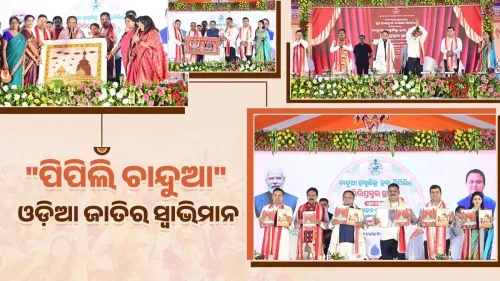
CM Majhi Announces Chandua Handicraft Hub in Pipili
Synopsis
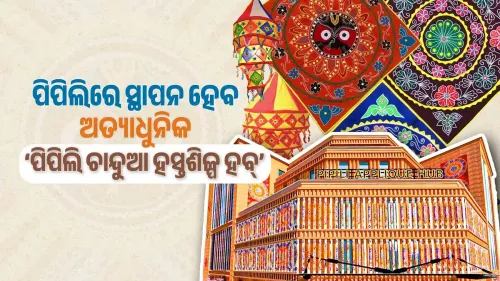
Odisha Chief Minister Mohan Charan Majhi announced a proposed Chandua Handicraft Hub in Pipili on June 7, 2026, pledging to preserve the state's GI-tagged applique craft tradition while generating new markets and economic opportunities for local artisans.
Key Takeaways
Odisha CM Mohan Charan Majhi announced a proposed Chandua Handicraft Hub in Pipili, Puri district on June 7, 2026 .
Pipili is the historic centre of Chandua applique embroidery, which received a Geographical Indication tag around 2008 .
The hub aims to preserve heritage, create new markets, and empower traditional artisans in Odisha's craft clusters.
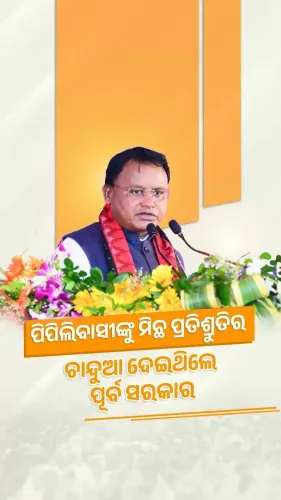
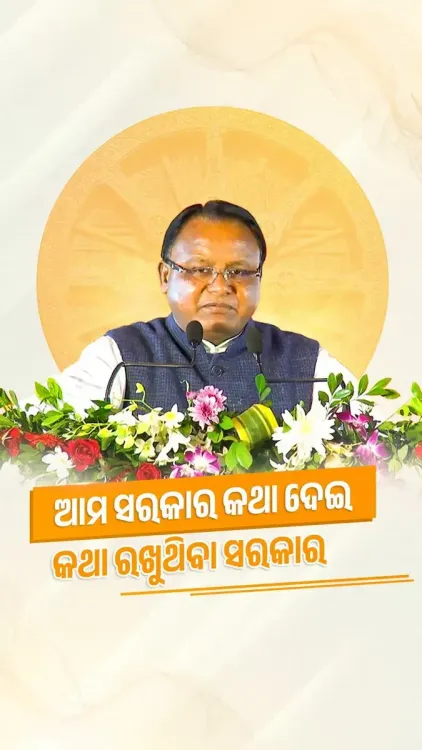
CM Majhi stressed his government's record of completing projects within set timelines, not just laying foundation stones.
Exact funding, construction timelines, and operational details of the hub have not yet been disclosed.
The project could strengthen Odisha's cultural export ambitions, particularly given Pipili's proximity to the Puri Jagannath tourism circuit.
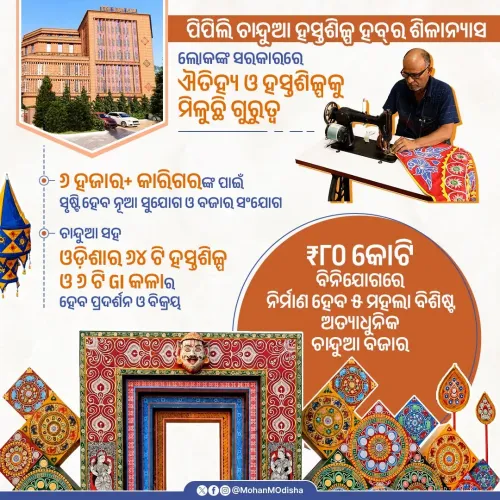
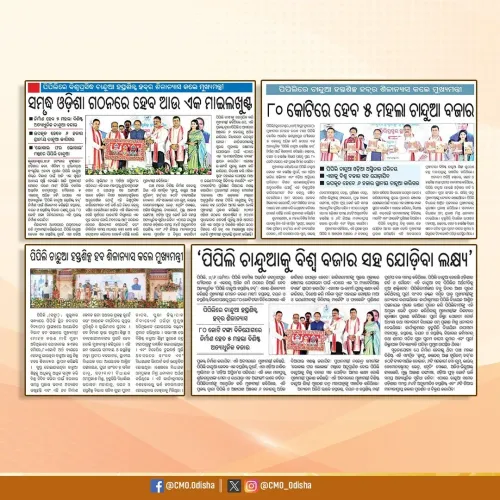
Odisha Chief Minister Mohan Charan Majhi announced on Sunday, June 7, 2026, that a Chandua Handicraft Hub is proposed for Pipili, framing it as a historic step to preserve the state's applique heritage while creating new markets and economic opportunities for traditional artisans.
Posting in Odia on X, Chief Minister Majhi stated: 'ଆମ ସରକାର କେବଳ ଶିଳାନ୍ୟାସ କରିବାରେ ବିଶ୍ୱାସ କରେନାହିଁ' ['Our government does not believe only in laying foundation stones'] — adding that his administration holds a record of completing projects within set timelines and inaugurating them. He described the proposed hub as a facility that would 'protect heritage, empower artisans, and carry Odisha's pride to the world stage.'
Context
Pipili, a town in Puri district, is the historic heartland of Chandua applique embroidery — a craft tradition in which artisans cut and stitch colourful cloth pieces into elaborate decorative patterns used in temple festivals and export goods. The craft received a Geographical Indication (GI) tag around 2008, formally recognising its unique regional identity and offering a measure of legal protection to its producers.
Despite the GI recognition, Pipili's artisan clusters have long faced challenges including inconsistent market access, limited infrastructure, and competition from machine-made imitations. The proposed hub is positioned as an institutional response to these structural gaps.
Policy Backdrop
Across India, state governments have pursued cluster-based development models to link craft heritage with artisan livelihoods — a pattern that aligns with both state industrial policies and central government schemes supporting GI-tagged products and handicraft exports. Odisha has a track record of promoting its distinctive crafts, including Pattachitra painting and Sambalpuri textiles, through dedicated infrastructure and design intervention programmes.
Chief Minister Majhi, who assumed office in June 2024, has consistently emphasised project delivery over announcement — a political messaging choice that distinguishes his administration from predecessors he has implicitly critiqued for incomplete projects. Sunday's post reinforces that positioning by tying the hub announcement explicitly to a delivery record.
Stakeholders and Impact
The primary beneficiaries of the proposed Chandua Handicraft Hub would be the artisan families of Pipili and surrounding craft clusters who depend on applique work for their livelihoods. A dedicated hub is expected to provide shared infrastructure such as production space, design support, quality certification facilities, and direct market linkages — reducing dependence on middlemen.
Beyond local artisans, the hub carries cultural significance for Odisha's heritage tourism ecosystem, particularly given Pipili's proximity to the Puri Jagannath Corridor — one of the state's most visited pilgrimage and tourism circuits. Improved visibility for applique craft could strengthen both domestic and international export demand.
What's Next
The announcement is currently at the proposal stage, with details on land acquisition, funding allocation, and construction timelines yet to be made public. Observers will watch for formal project approvals in upcoming state budget sessions or assembly announcements. Chief Minister Majhi's emphasis on a delivery record signals that the administration intends to move the hub from proposal to inauguration within a defined window, though no specific deadline has been stated.
If realised, the Pipili Chandua Handicraft Hub could serve as a template for Odisha's broader ambition of positioning its GI-tagged crafts as cultural exports — carrying the state's identity to national and global markets.
Point of View
A recurring BJP talking point in Odisha since the 2024 assembly election. Anchoring the hub in Pipili, a town on the main Bhubaneswar-Puri highway and a gateway to the Jagannath pilgrimage circuit, is strategically sound: it maximises visibility for both the craft and the government's cultural credentials. The GI angle also positions the initiative within a broader national push to monetise India's intangible heritage through infrastructure, fitting comfortably into the Centre-state alignment that defines the current political moment in Odisha. Whether the hub moves swiftly from proposal to ground-breaking will be the real test of the delivery narrative Majhi is building.
NationPress
19 Sept 2026
Frequently Asked Questions
What is the Chandua Handicraft Hub in Pipili?
The Chandua Handicraft Hub is a proposed facility in Pipili, Puri district, Odisha, announced by Chief Minister Mohan Charan Majhi to preserve the traditional Chandua applique embroidery craft and create new markets and economic opportunities for local artisans.
What is Pipili famous for?
Pipili is a town in Puri district, Odisha, renowned as the birthplace of Chandua applique embroidery — a traditional craft where artisans stitch colourful cloth pieces into decorative patterns used in temple festivals and export goods. The craft holds a Geographical Indication tag.
What is the GI tag for Pipili applique craft?
Pipili's applique craft received a Geographical Indication tag around 2008, formally recognising its unique regional identity and providing legal protection to its producers against imitation.
What did CM Mohan Majhi say about the Pipili hub?
CM Majhi stated that his government does not merely believe in laying foundation stones but has a record of completing projects on time. He described the proposed hub as a historic step to protect heritage, empower artisans, and carry Odisha's pride to the world stage.
When did Mohan Charan Majhi become Chief Minister of Odisha?
Mohan Charan Majhi became Chief Minister of Odisha in June 2024 after the BJP won the state assembly election, ending the BJD's long tenure in power.