CM Majhi announces Pipili Chandua Handicraft Hub for Odisha
Synopsis
Odisha CM Mohan Charan Majhi has announced a state-of-the-art Pipili Chandua Handicraft Hub at Pipili, Puri district, to modernise the ancient GI-tagged applique craft integral to Jagannath temple rituals and the Rath Yatra, aiming to boost artisan livelihoods and global cultural reach.
Key Takeaways
Odisha CM Mohan Charan Majhi announced the Pipili Chandua Handicraft Hub on 8 June 2026 .
The hub will be located in Pipili, Puri district — the historic centre of the applique craft tradition.
Pipili Chandua holds a Geographical Indication (GI) tag and is ritually linked to the Jagannath Temple and Rath Yatra .
The facility is expected to provide upgraded infrastructure, artisan training and improved market access.
The announcement benefits the Pipili artisan community and the broader heritage tourism circuit around Puri.
Budget, timeline and detailed programme specifics are yet to be officially disclosed.
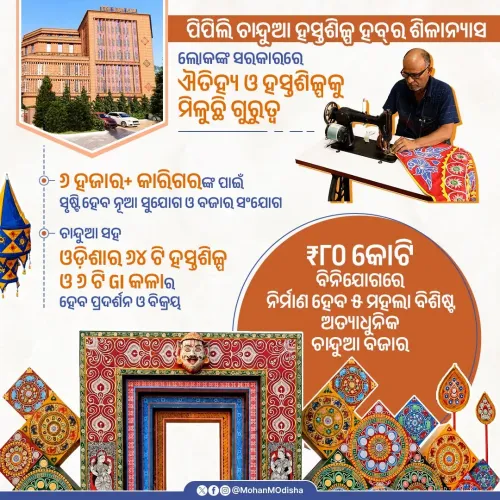
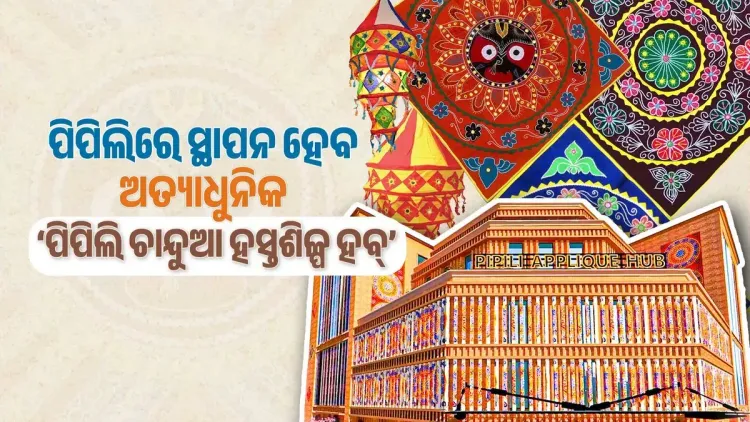
Odisha Chief Minister Mohan Charan Majhi on Monday, 8 June 2026, announced the establishment of a state-of-the-art 'Pipili Chandua Handicraft Hub' at Pipili in Puri district, calling it a new golden chapter for the ancient applique craft tradition that is inseparable from the rituals of Lord Jagannath and the Rath Yatra.
Posting in Odia on X, CM Majhi described Pipili Chandua as 'ଓଡ଼ିଶାର କଳା, ଐତିହ୍ୟ ଓ ଶ୍ରୀଜଗନ୍ନାଥ ସଂସ୍କୃତିର ଅନନ୍ୟ ପ୍ରତୀକ' — 'a unique symbol of Odisha's art, heritage and Shri Jagannath culture' — and said the craft has long carried the state's cultural identity to a global stage. He added that the proposed hub marks the beginning of a 'golden chapter' to further strengthen this proud tradition.
Context
Pipili, a small town on the Puri–Bhubaneswar highway, has for centuries been the nerve centre of the applique craft known as Chandua. Artisans here stitch vibrant cut-cloth motifs — elephants, flowers, deities — onto canopies, wall hangings and ceremonial accessories that are used in the daily sevas (rituals) at the Jagannath Temple, Puri, as well as in the chariot decorations during the annual Rath Yatra. The craft's deep ritual linkage has made it an enduring symbol of Odia cultural identity.
The Geographical Indications (GI) registry of India has already recognised Pipili applique, protecting its distinct origin and identity. Despite this recognition, artisans have long faced challenges related to modern infrastructure, design upgradation, and organised marketing access.
Policy Backdrop
The announcement of a dedicated Pipili Chandua Handicraft Hub fits within a broader pattern of state-led artisan-cluster policies that have gained momentum across India. Odisha has consistently backed its GI-tagged crafts — including Sambalpuri ikat, Pattachitra and Dhokra metalwork — through cluster development schemes aimed at combining skill training, design innovation and market linkages under one roof.
The proposed hub is expected to offer upgraded production infrastructure, structured training programmes for new and existing artisans, and improved access to domestic and export markets. Such facilities mirror similar state-level textile and handicraft hubs that have sought to scale traditional skills while preserving their ritual and cultural character.
Stakeholders and Impact
The primary beneficiaries of the hub would be the Pipili artisan community, which depends on Chandua craft for its livelihood. A modern, well-resourced facility could reduce production bottlenecks, attract younger craftspersons into the trade, and improve the quality and consistency of output for both temple use and the commercial market.
The heritage tourism sector in Puri — one of India's most visited pilgrimage circuits — stands to benefit as well. Enhanced craft visibility can deepen the cultural experience for the millions of devotees and tourists who visit the Jagannath Temple and attend the Rath Yatra each year, while also strengthening Odisha's positioning as a cultural-economy destination.
What's Next
Specific details regarding budget allocation, construction timeline, and the scope of training programmes for the hub are yet to be officially released. Observers will watch for the project's integration into Odisha's broader tourism and export promotion calendars, particularly ahead of the next Rath Yatra cycle. The announcement is also likely to prompt calls from artisan groups and cultural bodies for transparent implementation and direct community participation in the hub's governance.
If executed as envisioned, the Pipili Chandua Handicraft Hub could serve as a replicable model for other GI-tagged craft clusters in Odisha and beyond, linking ritual heritage with sustainable rural livelihoods and global cultural commerce.
Point of View
The government frames a livelihood scheme as a devotional act, broadening its appeal beyond artisan communities to the wider Odia Hindu electorate. The move also fits a national pattern of GI-cluster investments that seek to convert intangible cultural heritage into tangible export value. The real test will be in implementation: past artisan hub projects across India have struggled with delayed infrastructure and limited market integration, making transparent timelines and community governance essential for this initiative to deliver on its promise.
NationPress
22 Sept 2026
Frequently Asked Questions
What is the Pipili Chandua Handicraft Hub announced by Odisha CM?
The Pipili Chandua Handicraft Hub is a proposed modern facility to be set up at Pipili in Puri district, Odisha, aimed at upgrading infrastructure, training and marketing for the traditional Chandua applique craft. CM Mohan Charan Majhi announced it on 8 June 2026.
What is Pipili Chandua and why is it significant?
Pipili Chandua is a traditional applique craft from Pipili town in Odisha's Puri district. It is integral to the daily rituals at the Jagannath Temple and to the decorations used during the annual Rath Yatra, and holds a Geographical Indication (GI) tag recognising its distinct cultural origin.
How does Pipili Chandua relate to the Rath Yatra?
Chandua textiles from Pipili form an essential part of the ceremonial decorations on the chariots and in the temple offerings during Puri's Rath Yatra. Artisans craft canopies, hangings and accessories that are used in the sevas of Lord Jagannath throughout the year.
What benefits will the Pipili Chandua Hub bring to artisans?
The hub is expected to provide modern production infrastructure, structured skill-training programmes and organised market linkages — both domestic and for export — helping artisans improve output quality, attract younger craftspersons and secure better livelihoods.
Has the budget or timeline for the Pipili Chandua Hub been announced?
As of the announcement on 8 June 2026, specific details on budget allocation, construction timeline and programme scope have not been officially released. Further project details are awaited from the Odisha government.